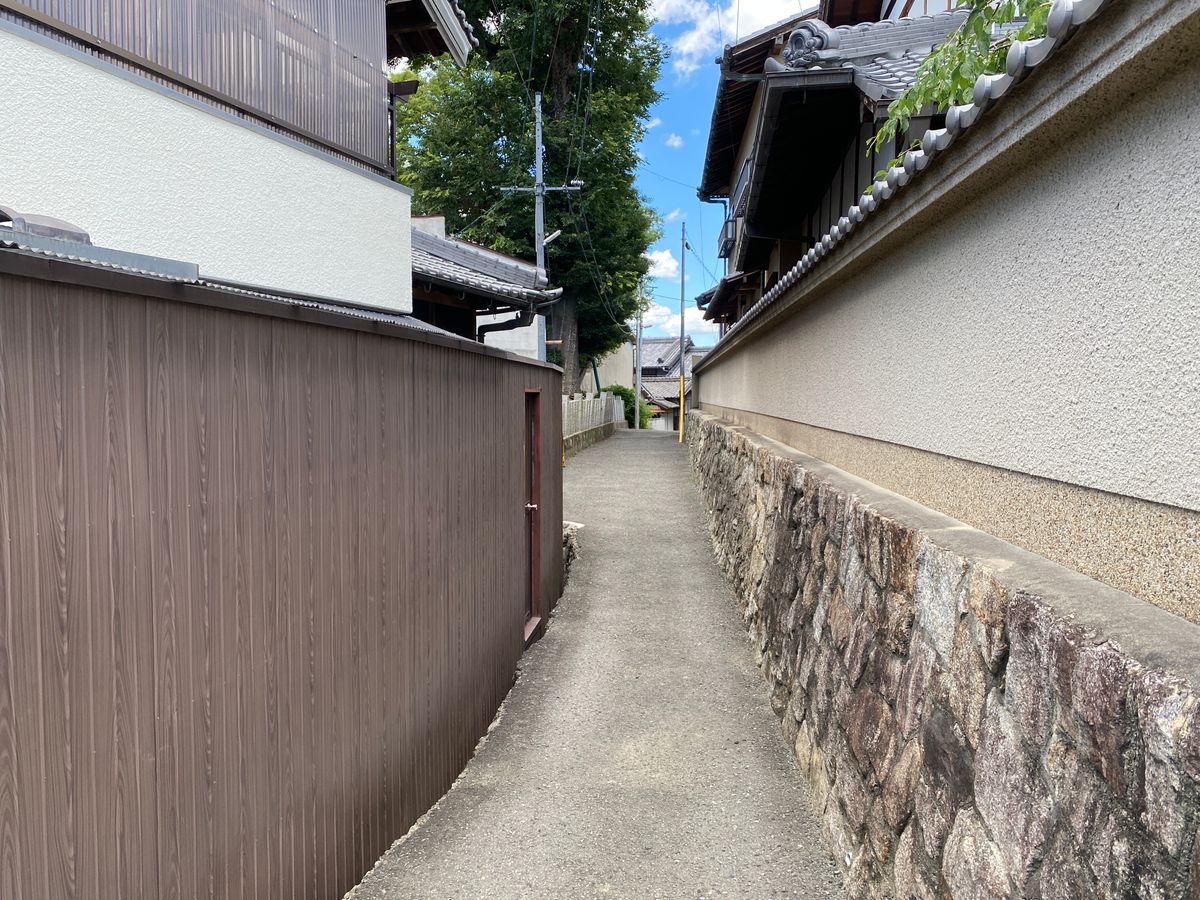
In 1616 a Korean potter found a white stone on a Kyushu hillside, and Japan started making porcelain. Four centuries on, the kilns still work and the street they line is quiet enough to walk end to end.
- Get there90 min from Hakata
- SeeUchiyama · tonbai walls
- StayArita or Saga
- Time1 day
Getting there
Arita sits inland in Saga Prefecture, and the approach is by limited express. The JR Midori runs direct from Hakata Station in about 90 minutes; from Saga it is closer to 30–35. Both put you at Arita Station, which sits at the southern end of the historic district — walk north from the ticket gate and you are already in it.
There are coin lockers at the station, which matters more than it sounds: the day is a long walk through showrooms, and porcelain is heavy. Kami-Arita, one stop north, is the better start if you want to work the street from the top down. The Izumiyama quarry — the hillside the whole story began on — is about 4 km out, ten minutes by taxi.
- From Hakata
- JR limited express 'Midori' — about 90 minutes, several daily
- From Saga
- JR limited express — about 30–35 minutes
- On arrival
- Uchiyama starts at the station; the walk is flat and about 2 km
- Quarry
- Izumiyama — 4 km, roughly 10 minutes by taxi
- Luggage
- Coin lockers at Arita Station
The Saga–Arita leg was previously listed as "roughly 40 minutes" — two independent Midori timetable samples (32 and 33 minutes) checked 18 Aug 2026 both ran shorter, so the range above is tightened accordingly.
What to actually see
The heart of Arita is Uchiyama, a single long street of kiln houses and showrooms that has been in the same business since the 1600s. Walk it slowly. The backstreets behind it are lined with tonbai walls, built from the broken firebrick of old climbing kilns.
Above the street, a short flight of steps crosses directly over the railway to Tozan Shrine — the potters' shrine, and the obvious first stop if you arrive by train. Give the backstreets 30 to 45 minutes and the shrine another twenty.
Then Izumiyama, where a white rock face still stands open on the hillside. It is not much to look at until you understand that every piece in every showroom below came out of it.
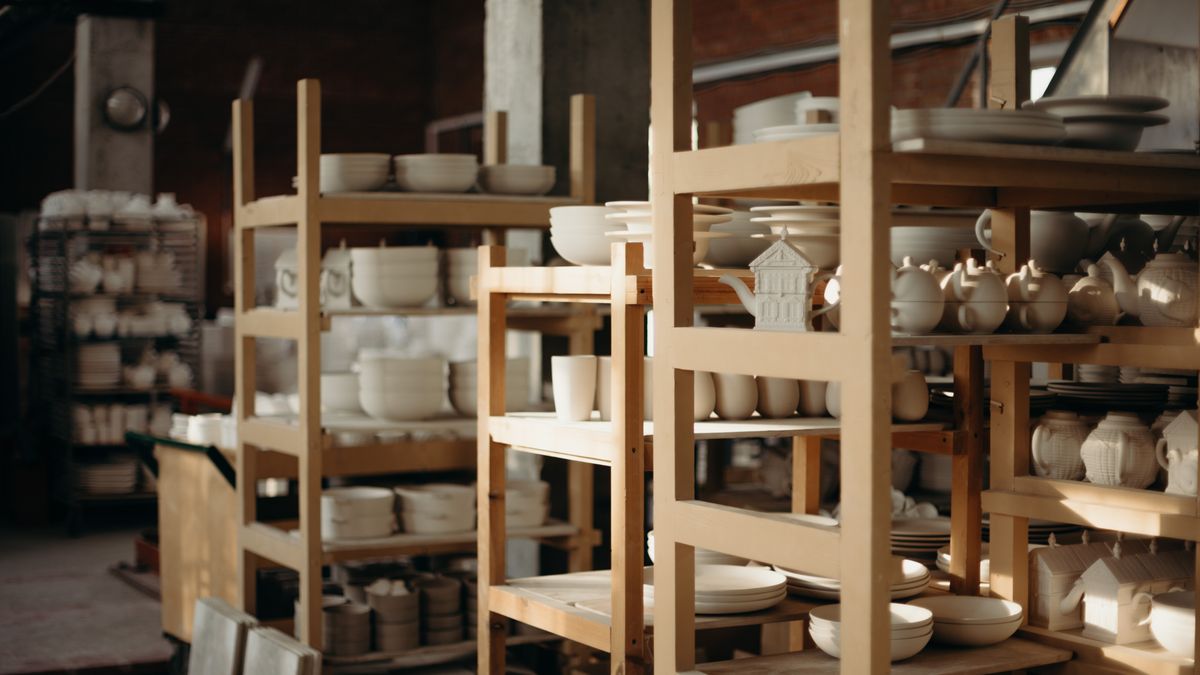
A white stone on a hillside, and four hundred years of kilns that never went out.
Izumiyama quarry
Where to stay
Arita has rooms but not many. Saga is the flexible base — the widest hotel choice and about 30–35 minutes back by limited express — while Imari puts you within reach of the Okawachiyama kiln village.
The exception is the Ceramic Fair over Golden Week, when the whole region fills up. If that is your plan, book two to three months out; JR runs extra trains for it, but the rooms are gone long before the seats are.
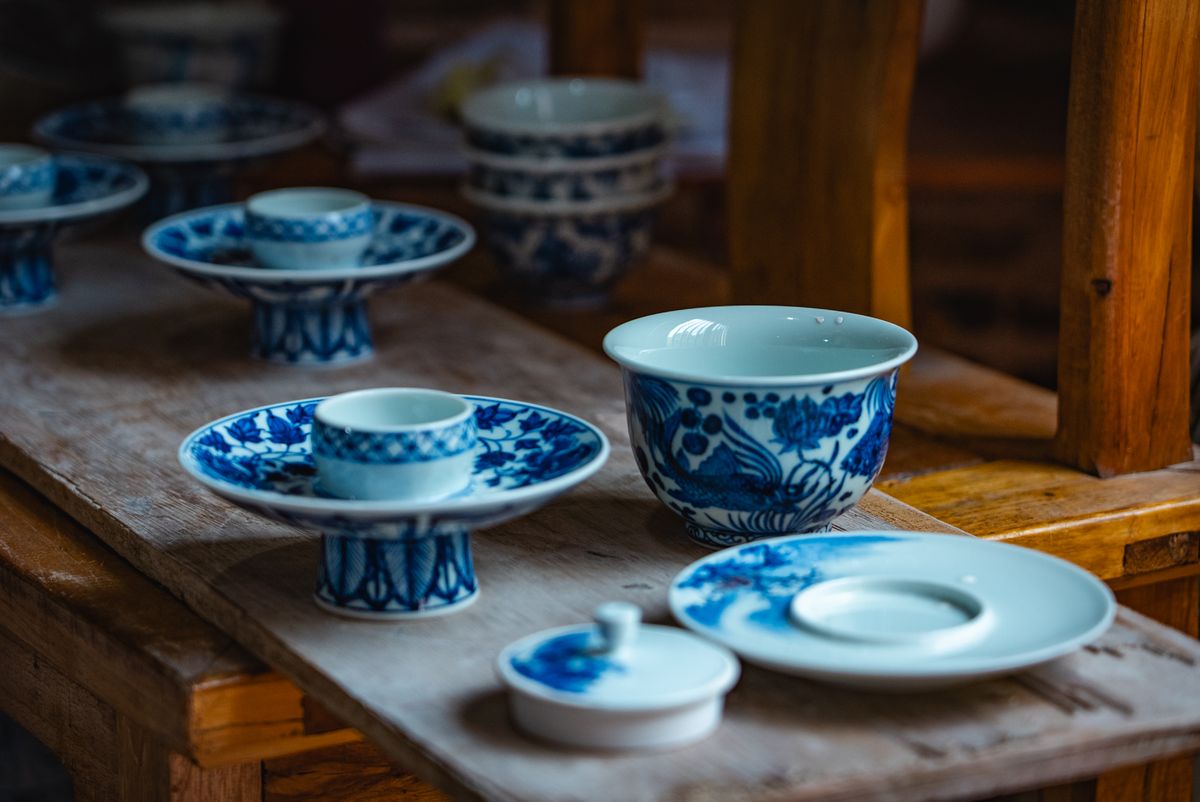
What nobody tells you first
Outside the Ceramic Fair, this is a working town rather than a tourist one. Some of the smaller studios keep limited hours or open only when someone is firing, so treat a closed shutter as normal rather than bad luck and keep walking.
Prices span an enormous range. Mugs and small plates run ¥1,000–3,000; a signature Kakiemon or Nabeshima piece starts around ¥10,000 and can pass ¥100,000. Ask before you handle anything, and let the shop wrap it — they are extremely good at it.
What the full guide adds
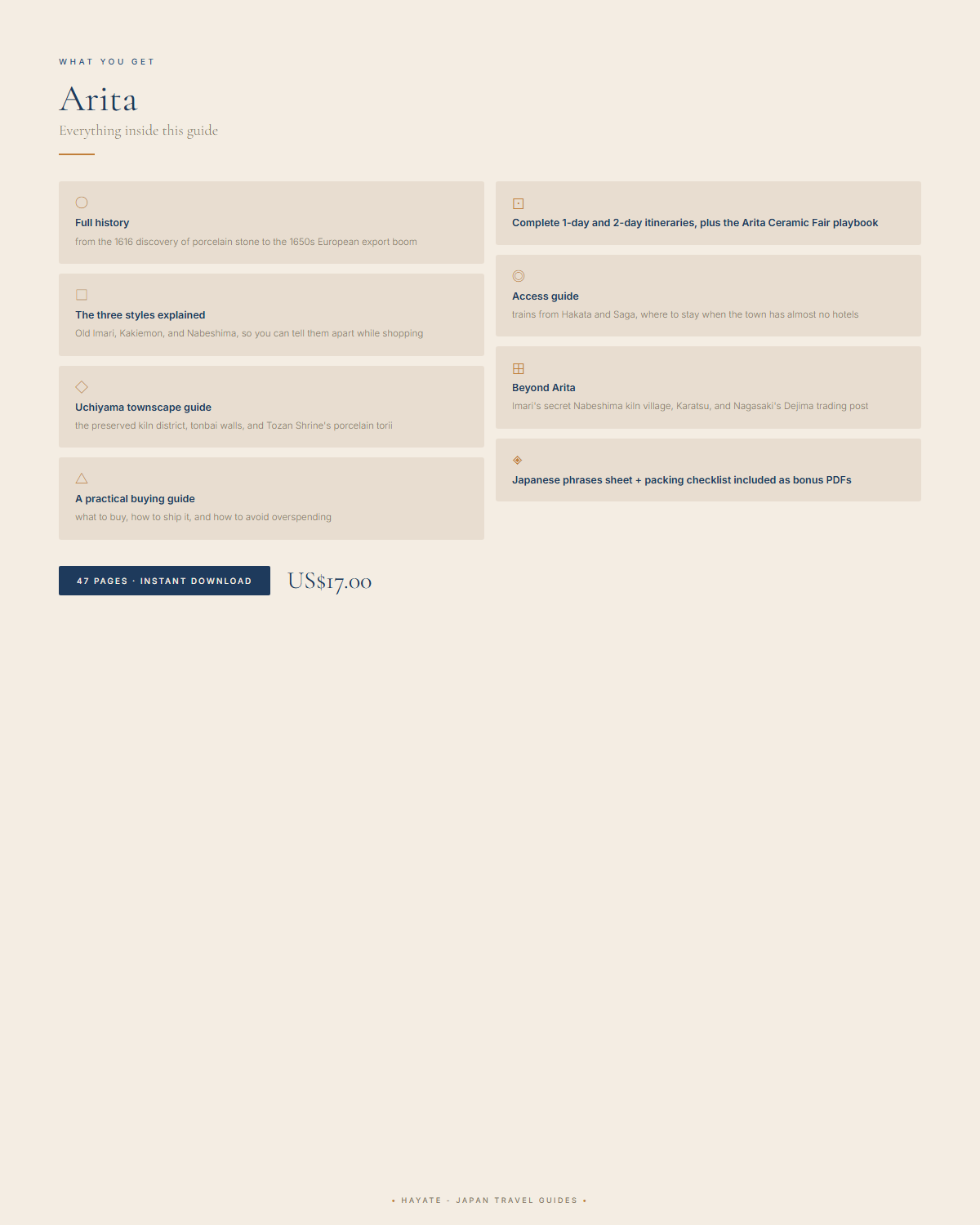
- Full history — from the 1616 discovery of porcelain stone to the 1650s European export boom
- The three styles explained — Old Imari, Kakiemon, and Nabeshima, so you can tell them apart while shopping
- Uchiyama townscape guide — the preserved kiln district, tonbai walls, and Tozan Shrine's porcelain torii
- A practical buying guide — what to buy, how to ship it, and how to avoid overspending
- Complete 1-day and 2-day itineraries, plus the Arita Ceramic Fair playbook
- Access guide — trains from Hakata and Saga, where to stay when the town has almost no hotels
- Beyond Arita — Imari's secret Nabeshima kiln village, Karatsu, and Nagasaki's Dejima trading post
- Japanese phrases sheet + packing checklist included as bonus PDFs
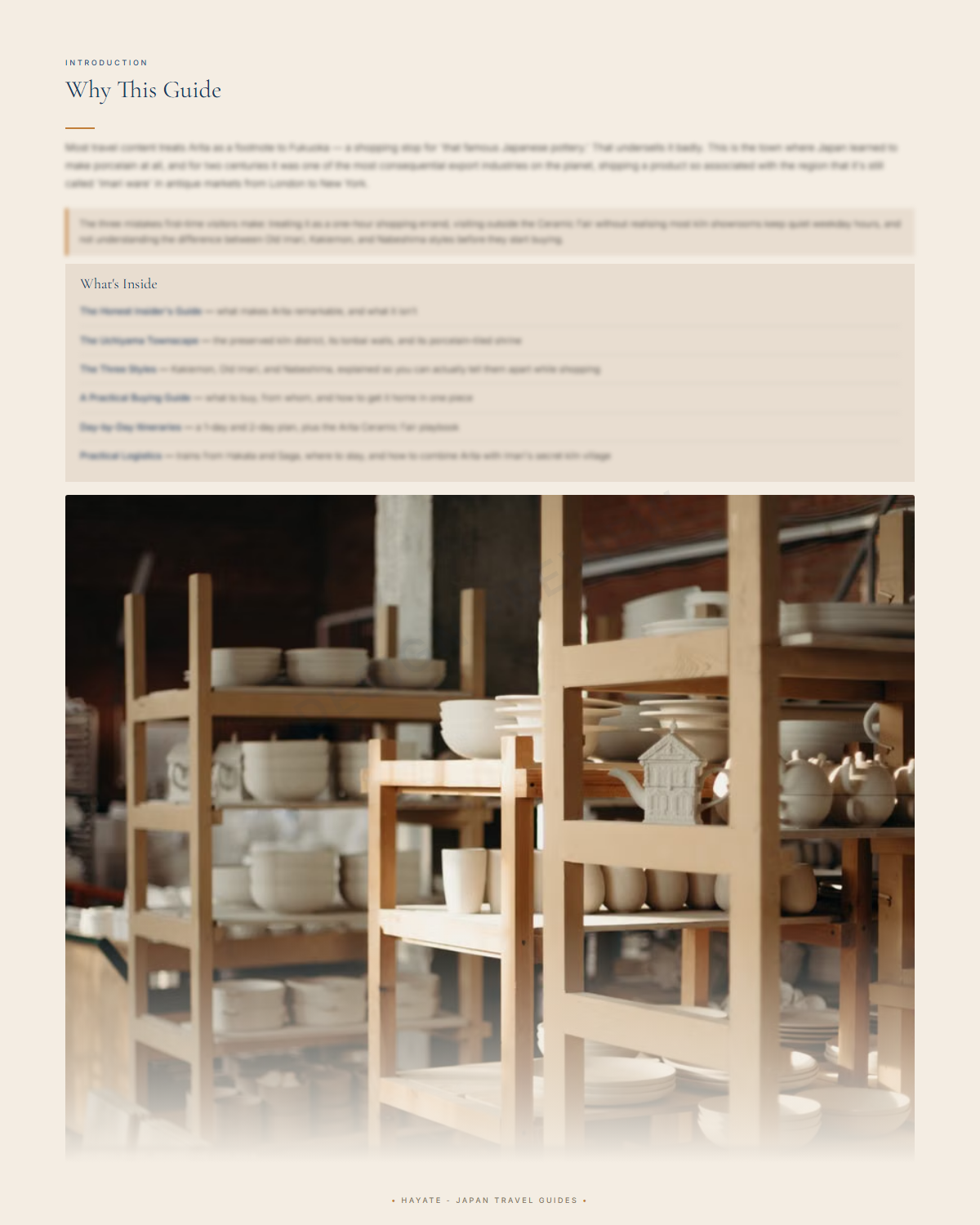
Sample pages

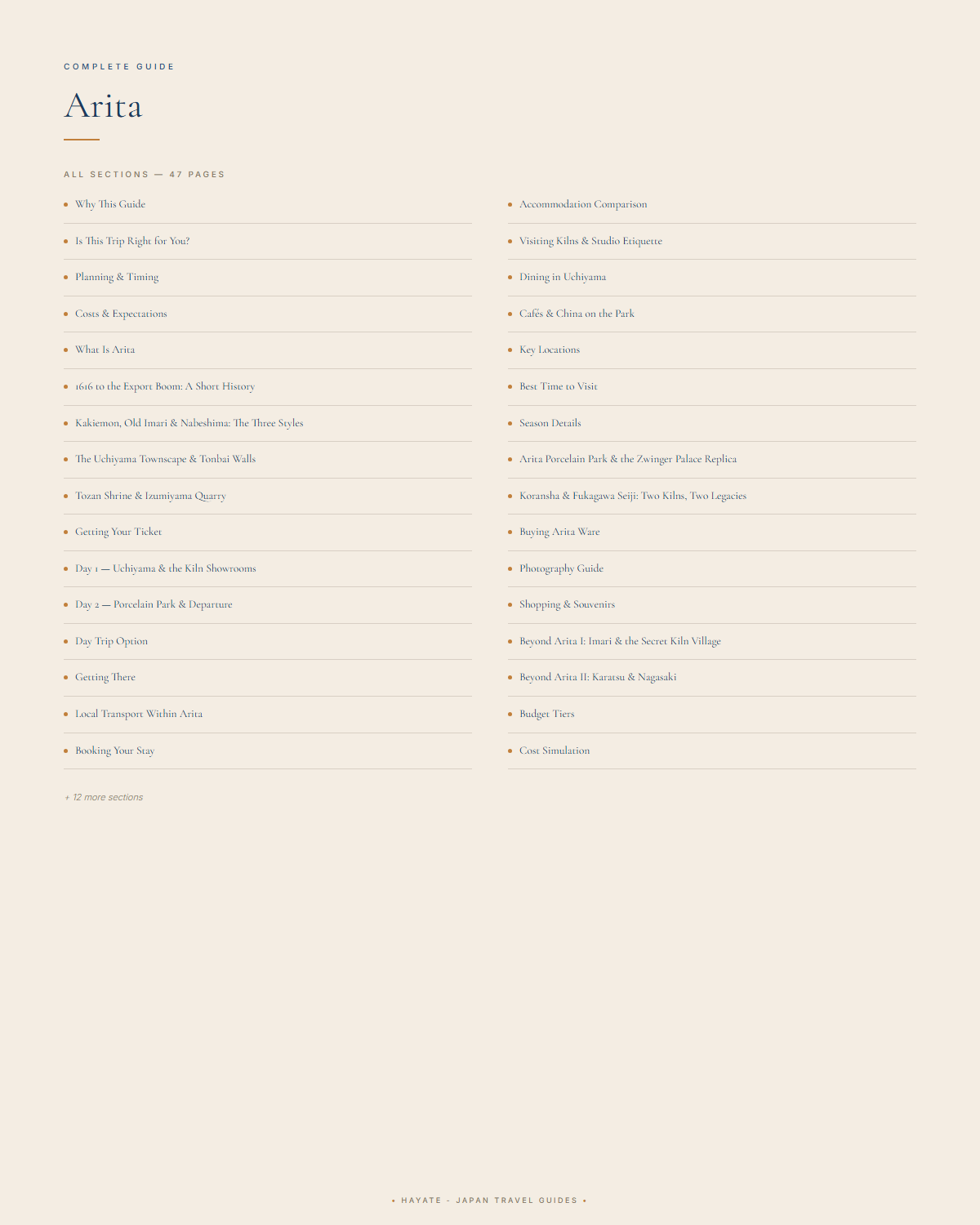
The complete Arita guide
Kiln by kiln through Uchiyama, the three signature styles told apart, and what a piece is actually worth.
Get the guide — US$17 Instant download · 30-day money-back guarantee