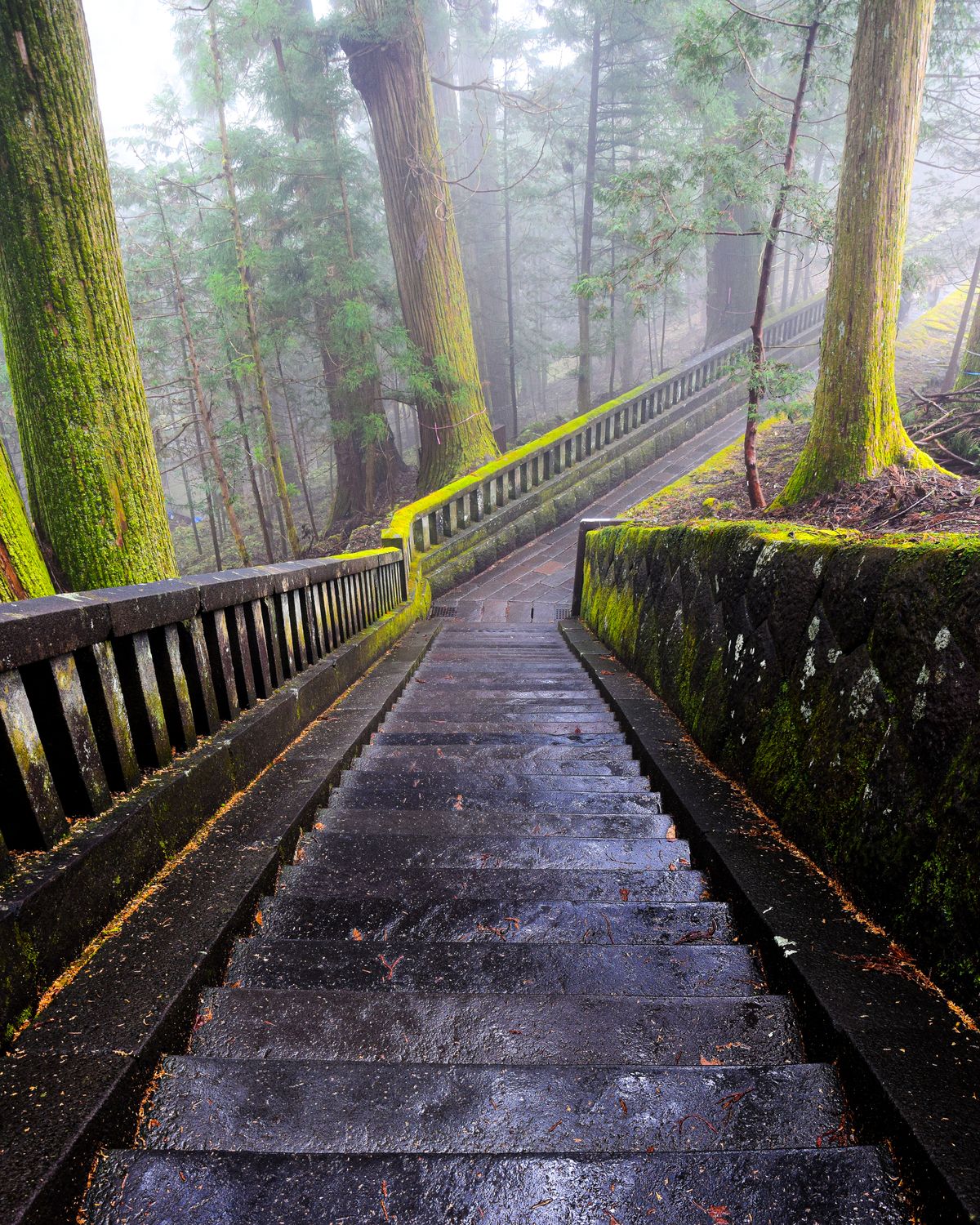
Two thousand four hundred and forty-six stone steps, a National Treasure pagoda nobody ever painted red, and a shrine where photography is forbidden — one of Japan's oldest living pilgrimages.
- Get there4 hrs from Tokyo
- SeeHaguro · Gassan · Yudono
- StayShukubo on Haguro
- Time1–3 days
Getting there
Everything starts at Tsuruoka, in the Shonai region of Yamagata. From Tokyo the rail route is the Joetsu Shinkansen to Niigata, then the limited express Inaho up the Sea of Japan coast — about four hours in total, around ¥14,000.
There are two cheaper or faster alternatives. Overnight buses run from Tokyo in seven or eight hours for roughly ¥8,000, arriving at Tsuruoka Station early enough to climb the same morning. ANA flies Haneda to Shonai Airport in about an hour, four times a day, with a ¥760 shuttle covering the last 30 minutes.
From Tsuruoka Station the bus toward Haguro reaches Zuishinmon, the trailhead gate, in 35–40 minutes for ¥820. The same route continues to the summit for ¥1,210–1,400 if you would rather skip the stairway — but the stairway is the reason to come.
- From Tokyo (rail)
- Shinkansen to Niigata + Inaho limited express — about 4 hours, ~¥14,000
- From Tokyo (bus)
- Overnight bus, 7–8 hours, about ¥8,000 one way
- By air
- ANA Haneda–Shonai, about 1 hour, 4 flights daily + ¥760 shuttle
- To the trailhead
- Bus from Tsuruoka to Zuishinmon — 35–40 min, ¥820
- Gassan 8th station
- Seasonal bus, July to early October only
What to actually see
The three mountains are read as one journey: Haguro-san the present, Gassan the past, Yudono-san the future. Walking them in that order is the pilgrimage, and each has a completely different character.
Haguro-san is the one you can do any day of the year. From Zuishinmon, 2,446 uneven stone steps climb through an avenue of cedars 300 to 600 years old — roughly an hour of continuous climbing, longer if you stop, and slick when wet. About a third of the way up stands the five-story pagoda, 29 metres of bare weathered wood built without nails, and the only National Treasure pagoda of its kind in Tohoku. Nobody ever painted it red; that austerity is the point.
Gassan is a genuine mountain day — two to three hours from the 8th station to the 1,984 m summit, past a boardwalk wetland that turns red and gold in autumn, with a ¥500 purification fee at the top. The descent toward Yudono-san is steep and rope-assisted in places.
Yudono-san has no shrine building at all — just a large hot-spring-fed rock that pilgrims approach barefoot after paying the purification fee. Photography is forbidden, and by tradition you do not describe what you see there afterwards. That rule is taken seriously, and it is worth respecting rather than testing.
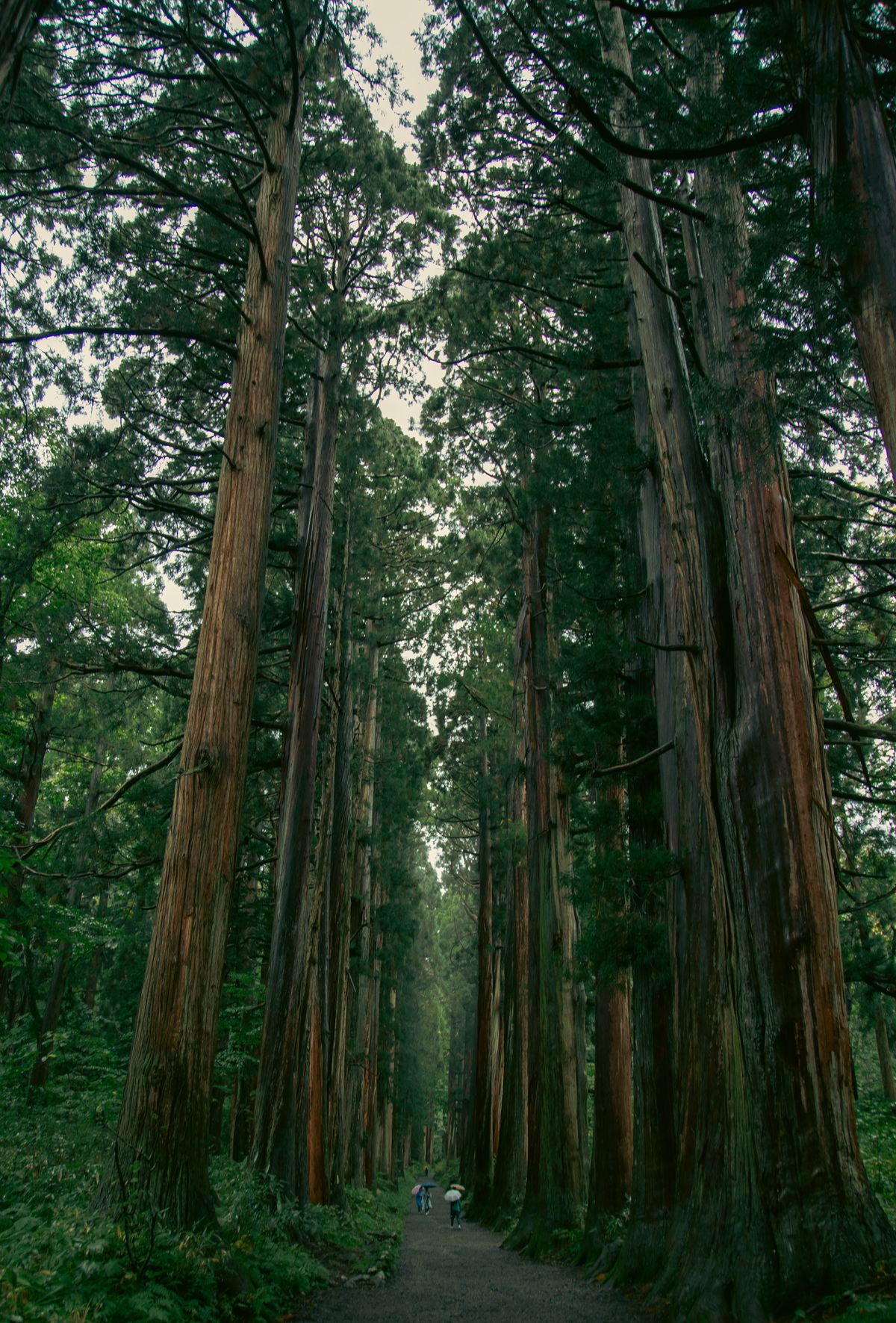
The steps are not optional scenery. Climbing them is the visit.
Haguro-san, before dawn
Where to stay
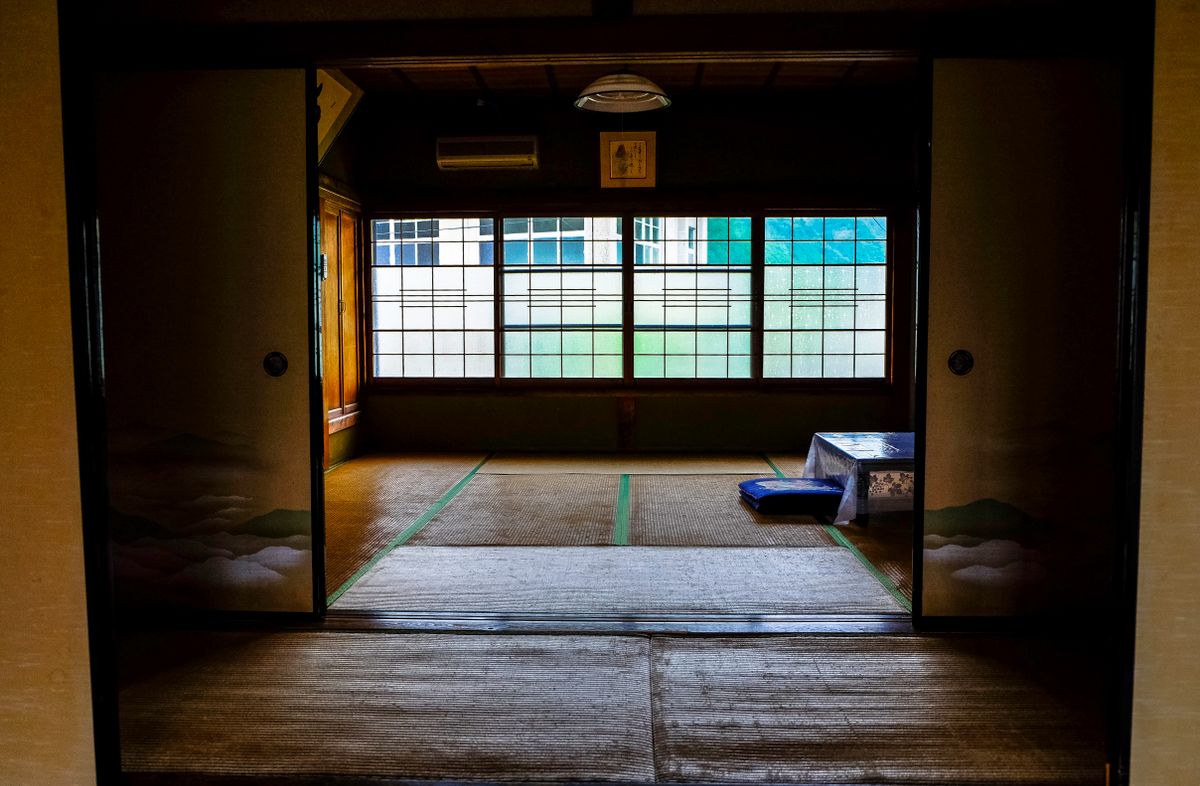
The proper way to do this is a night in a shukubo, a pilgrim lodge on Haguro-san. There are more than fifty; expect ¥10,000–25,000 per person with two meals, a futon on tatami, communal bathing on a set schedule, and a morning that runs on prayer times rather than yours.
Dinner is shojin ryori — the vegetarian cooking of the mountain, built on tofu, wild vegetables and rice, usually with the lodge's own sesame tofu. Many shukubo include an evening prayer or a talk with the resident priest; ask at check-in.
Only a handful are comfortable hosting guests with no Japanese, and those fill weeks ahead for the September–October foliage season. Book the lodge before you book the flights. If you would rather sleep in town, Tsuruoka is the base — and it was named Japan's first UNESCO Creative City of Gastronomy in 2014, so eat well there on the way in.
What nobody tells you first
Gassan is closed most of the year. The access road and trail are snowbound outside roughly 1 July to early October, which hard-caps when all three mountains are possible. Outside that window the honest plan is Haguro-san alone — open year-round, and a complete visit in its own right rather than a consolation prize.
The rest is physical and cultural rather than logistical. The steps are uneven and there is no way to shortcut them on foot; the Gassan-to-Yudono descent needs knees you trust; buses are infrequent and English signage thins out fast. Go early — the first buses from Tsuruoka reach the gate before 8 AM, and an empty stairway is a different experience entirely.
What the full guide adds
- Full day-by-day itinerary across all three mountains, with a shorter Haguro-only option
- Shukubo comparison table — 5 lodges, real per-night pricing, English support rated honestly
- Complete access guide from Tokyo — Shinkansen, night bus, and flight options with real costs
- Month-by-month planning grid, including Gassan's hard July–October access window
- Cultural guide to Shugendo, shrine etiquette, and the Yudono-san taboo, explained properly
- Where to eat in Tsuruoka, Japan's first UNESCO Creative City of Gastronomy
- QR-code navigation grid linking every major point straight to Google Maps
- Budget breakdown and full trip cost simulation across three spending styles
Sample pages




The complete Dewa Sanzan guide
Day-by-day route across all three mountains, five shukubo compared with real prices, and the Gassan access window that decides your dates.
Get the guide — US$14 Instant download · 30-day money-back guarantee