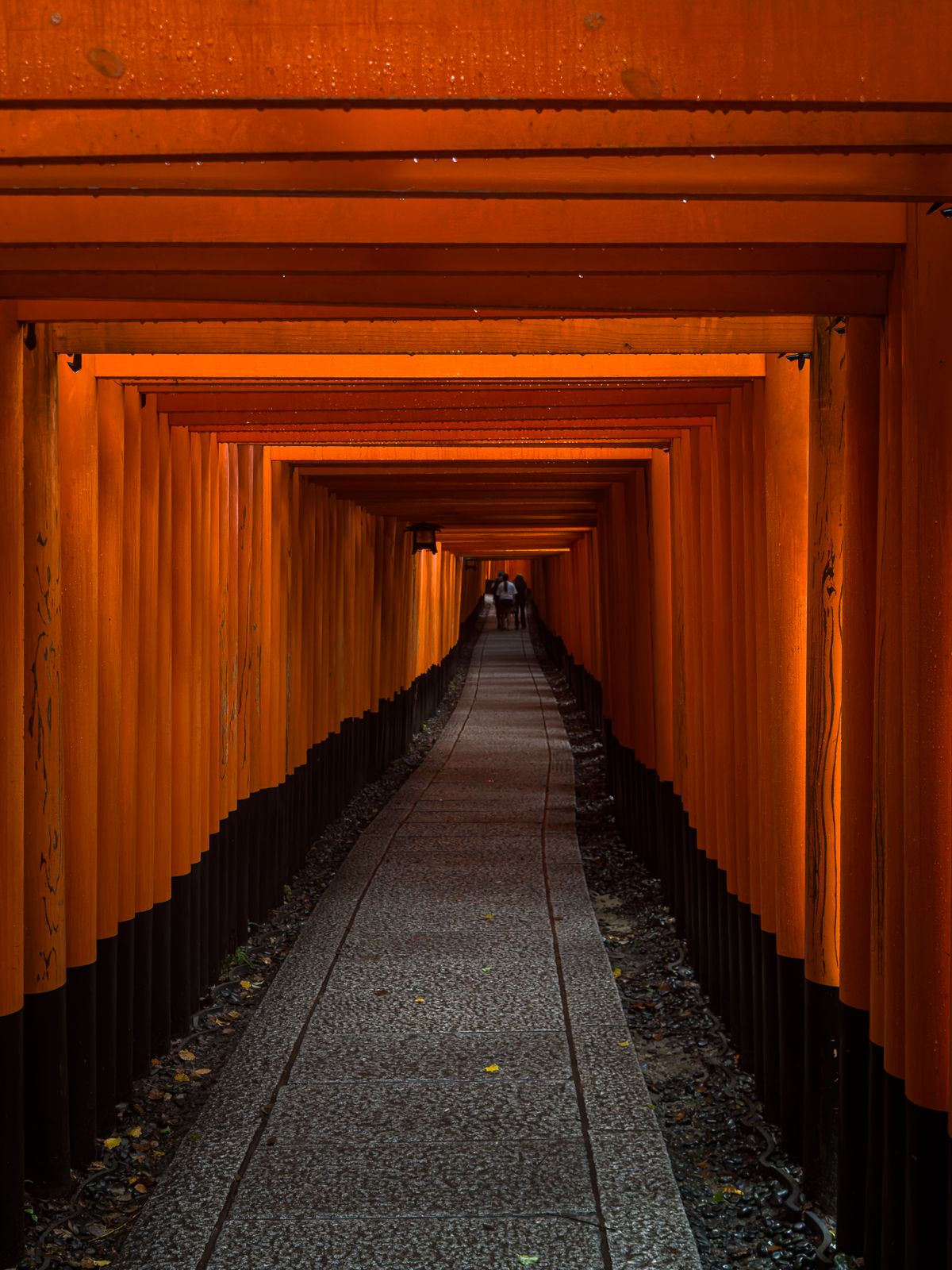
Every photo of Fushimi Inari shows the same twenty metres of tunnel. Behind it is a four-kilometre pilgrimage mountain with thirty-two sub-shrines — free to enter, open all night, and nearly empty an hour after the crowds turn back.
- Get there5 min from Kyoto Stn.
- SeeSenbon Torii · summit
- StayCentral Kyoto
- Time2–3 hrs, before 8 AM
Getting there
This is the easiest famous site in Kyoto to reach. From Kyoto Station, take the JR Nara Line local two stops to JR Inari Station — five minutes, ¥150, and the shrine gate is directly across the street. Rapid trains skip Inari, so let them go and take the local (普通).
The Keihan Main Line also stops at Fushimi Inari Station, about five minutes' walk from the entrance — useful if you're coming from Gion-Shijo rather than Kyoto Station, though the Japan Rail Pass doesn't cover it. One warning worth repeating: JR Fushimi Station is a different station on the same line, for the sake district. You want Inari.
- From Kyoto Stn.
- JR Nara Line local to Inari — 5 min, ¥150, JR Pass valid
- From Gion
- Keihan Main Line to Fushimi Inari — 5 min walk to the gate, no JR Pass
- Admission
- Free — no ticket, no reservation, open 24 hours all year
- Best hours
- Before 8 AM or after 5 PM; 10 AM–4 PM is a bottleneck
- Full circuit
- 4 km, 233 m of climbing — 2 to 3 hours at a normal pace
What to actually see
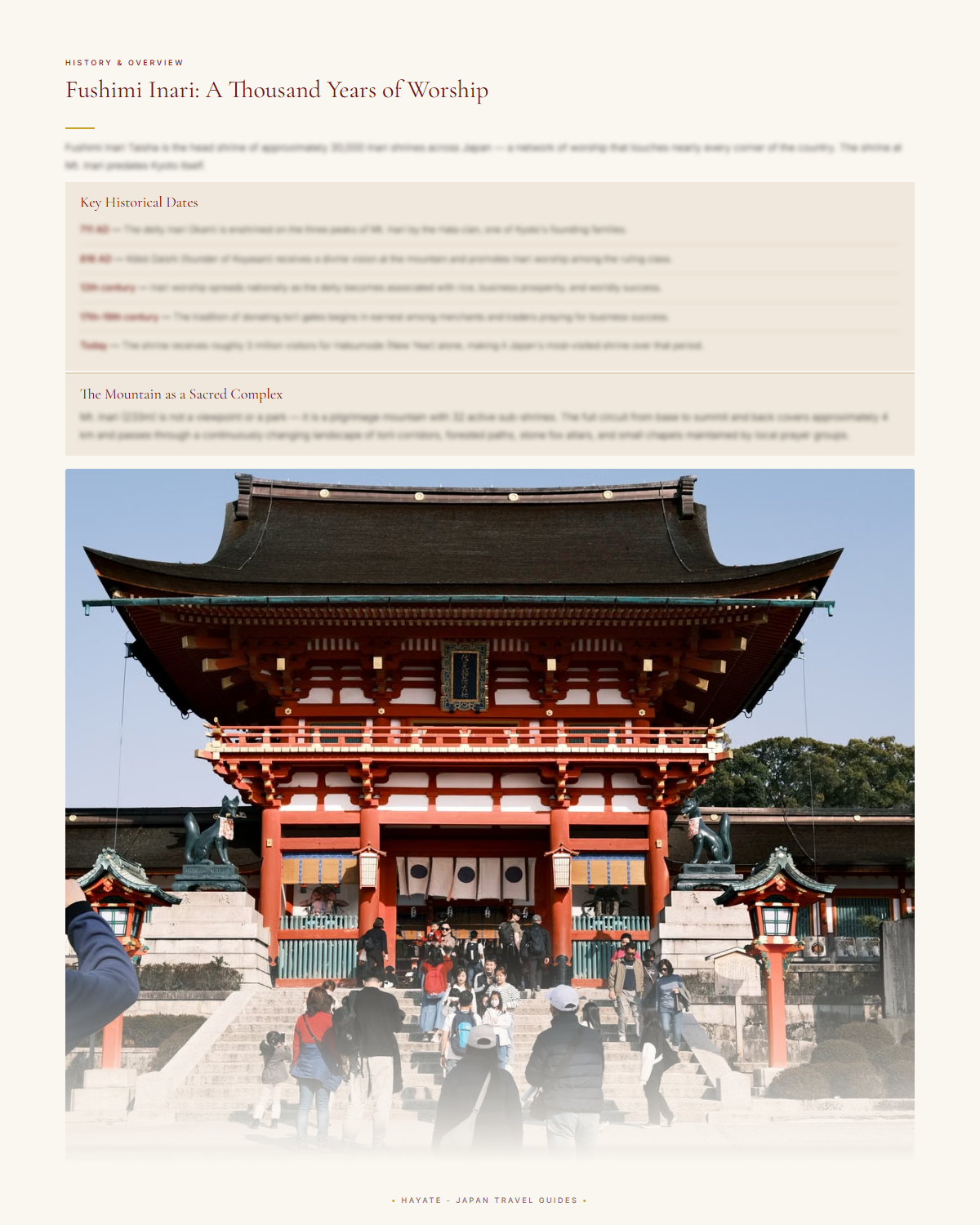
Before the gates, there's a shrine complex most people walk straight through: the Romon gate, the main hall of 1499, and a courtyard where miniature votive torii are stacked in rows. Give it twenty minutes — it's the part that explains everything above it.
Then the Senbon Torii, the famous corridor, which splits into two parallel tunnels a few minutes past the main hall. Every gate here was paid for by someone: a small one costs around ¥175,000 and a large ceremonial gate over a million yen, each one a prayer for a business to succeed, with the donor's name on the back.
At the top of that section the path forks, and this is where most visitors turn around. Keep climbing. Forty minutes from the base you reach Yotsutsuji, a junction with an open view west across the Kyoto basin — and past it the crowds thin by around eighty per cent. The summit is another 30–40 minutes up through older, more weathered gates and small fox altars tended by neighbourhood groups.
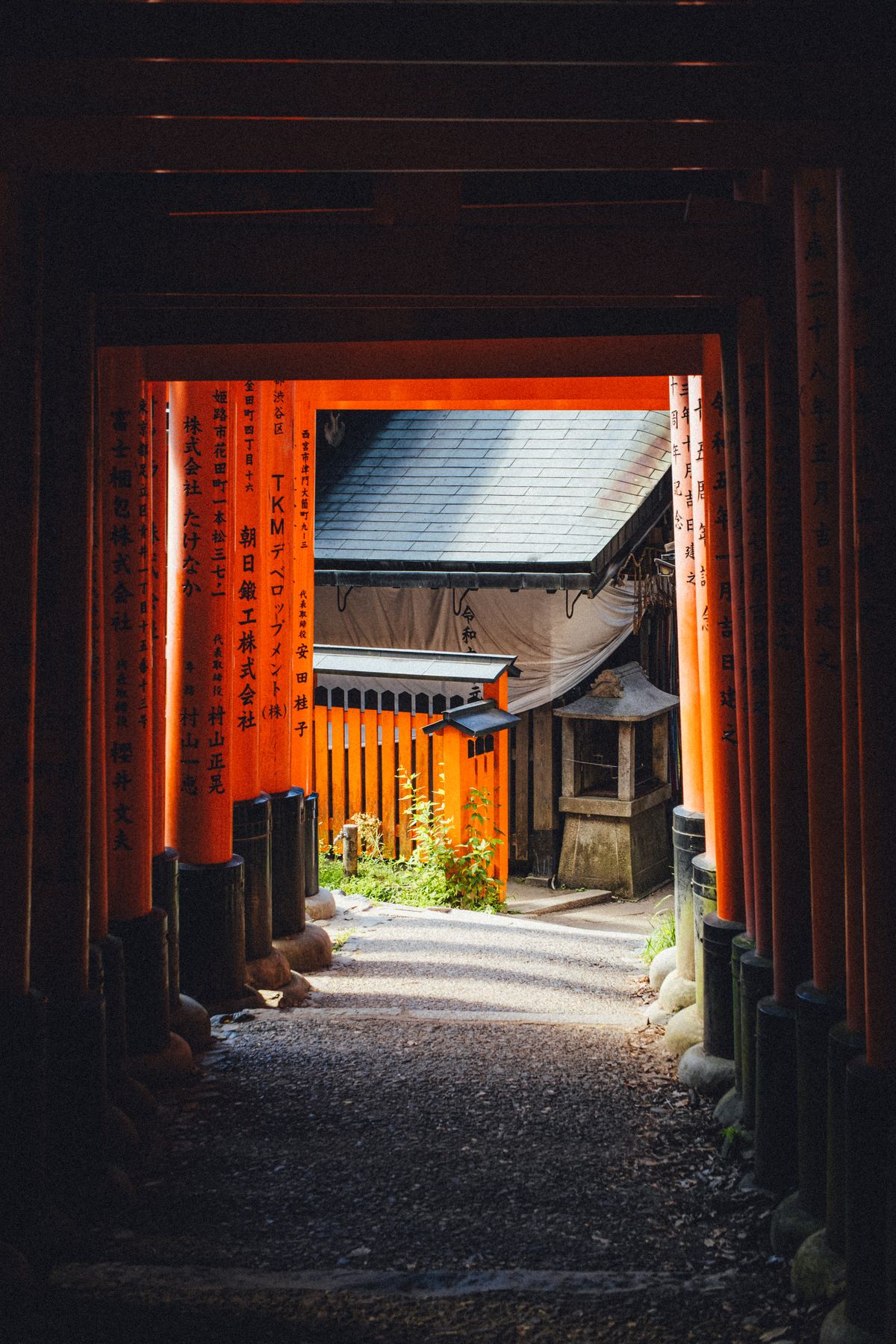
Every one of these ten thousand gates was paid for by someone who wanted something.
Senbon Torii
Where to stay
Fushimi Inari has very little accommodation of its own — a handful of guesthouses and mid-range hotels, and no real reason to base yourself here. Stay in central Kyoto instead and treat the shrine as a five-minute train ride you make before breakfast.
Kyoto runs roughly ¥4,000–8,000 a night for a business hotel and ¥12,000–25,000 for a traditional ryokan. If you want to be out the door and on a 6:30 AM train with no fuss, somewhere near Kyoto Station is the practical choice.
What nobody tells you first
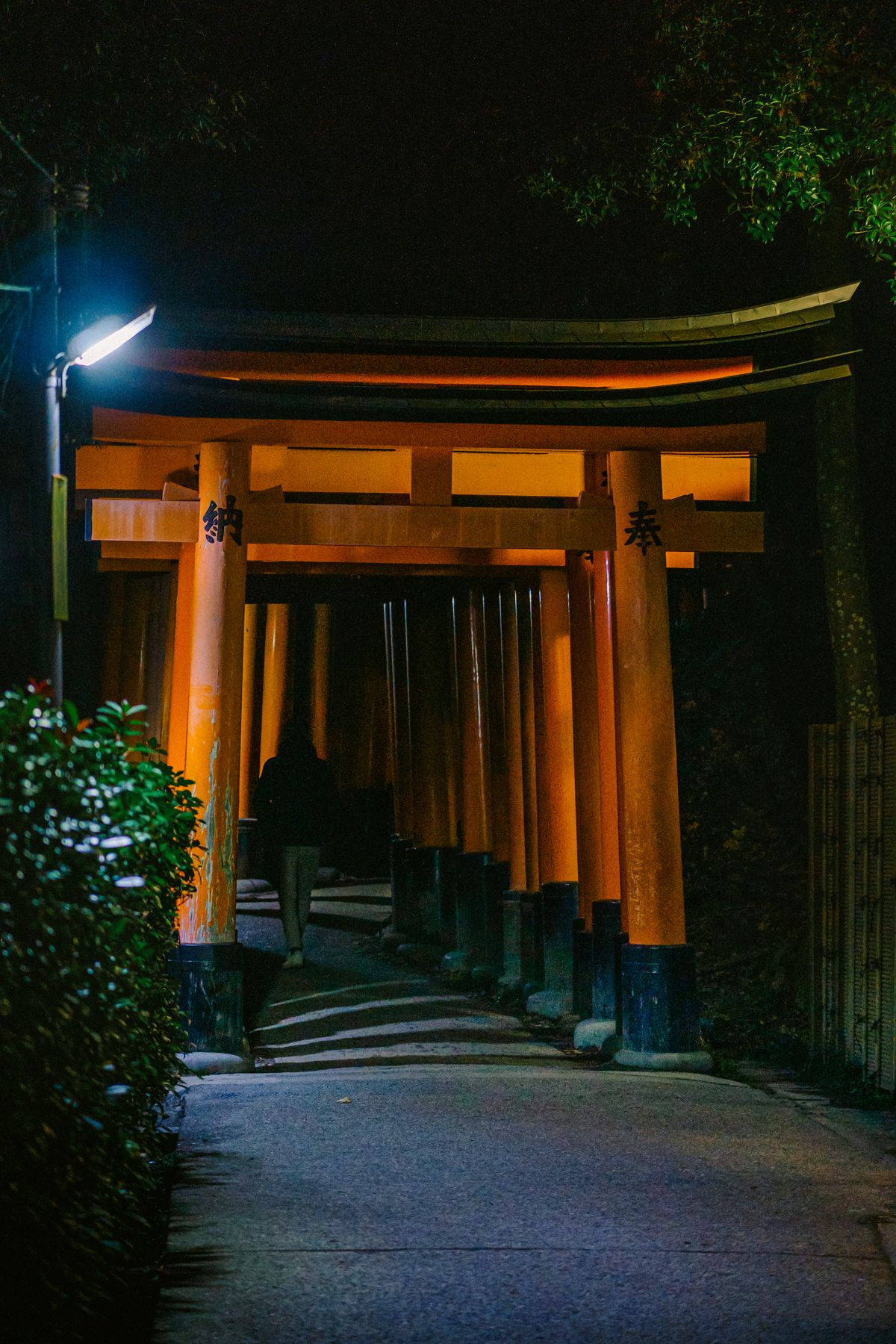
The shrine never closes, so the only thing that decides your visit is what time you arrive. Before 8 AM the tunnels are nearly empty; by mid-morning the Senbon Torii is a queue. The trade-off for going early is that the food stalls — inari-zushi, kitsune udon — don't open until about 8:00.
Above Yotsutsuji there is no water and there are no vending machines. Carry at least 500 ml per person, a litre in summer, and wear shoes you can climb stone steps in. This is a mountain, not a photo stop.
What the full guide adds
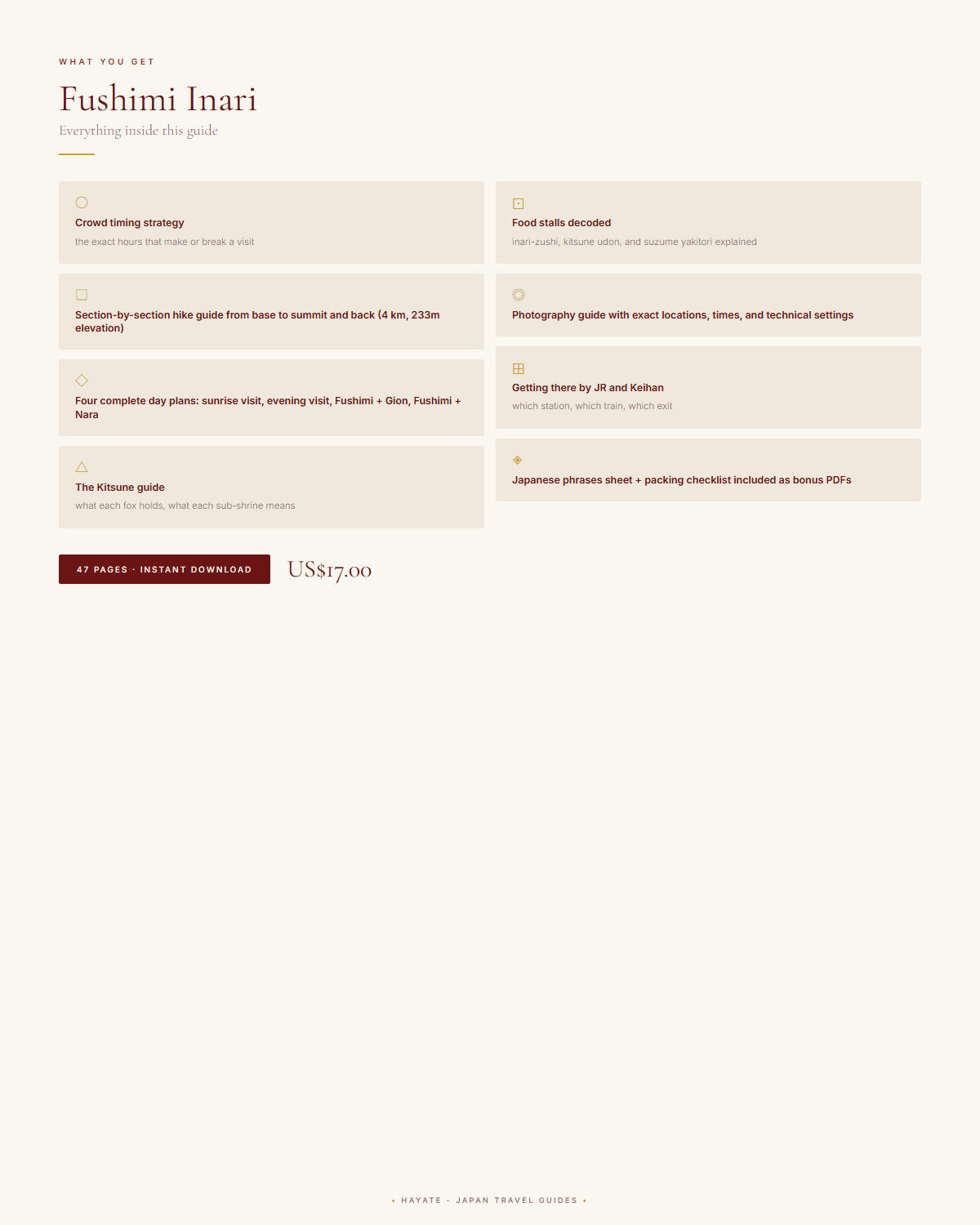
- Crowd timing strategy — the exact hours that make or break a visit
- Section-by-section hike guide from base to summit and back (4 km, 233m elevation)
- Four complete day plans: sunrise visit, evening visit, Fushimi + Gion, Fushimi + Nara
- The Kitsune guide — what each fox holds, what each sub-shrine means
- Food stalls decoded — inari-zushi, kitsune udon, and suzume yakitori explained
- Photography guide with exact locations, times, and technical settings
- Getting there by JR and Keihan — which station, which train, which exit
- Japanese phrases sheet + packing checklist included as bonus PDFs
Sample pages
The complete Fushimi Inari Taisha guide
Crowd timing hour by hour, the full hike from base to summit, and the fox and torii system explained.
Get the guide — US$17 Instant download · 30-day money-back guarantee