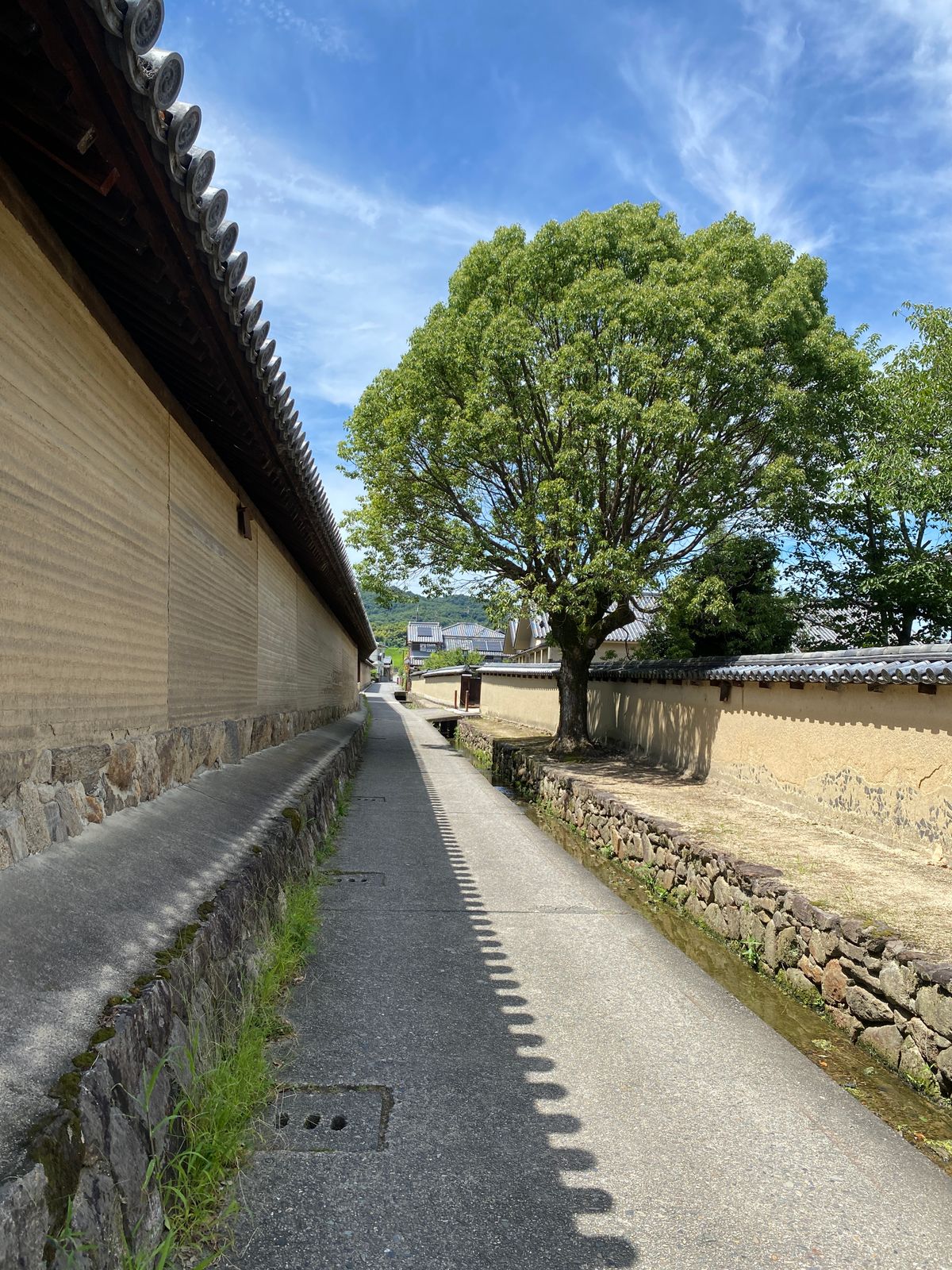
The map of Hagi has not really changed since 1604 — an intact grid of samurai and merchant streets on the Sea of Japan coast, and the schoolroom where a teacher under house arrest taught the students who ended feudal Japan.
- Get thereSuper Hagi bus, ~1 hr
- SeeHoriuchi · Shokasonjuku · kilns
- StayMachiya guesthouse
- Time1–2 nights
Getting there
Hagi sits on the San'in coast, on the far side of the mountains from the main shinkansen line, so the last leg is a bus. The usual approach is to take the shinkansen to the nearest station on the San'yo side and change to the Super Hagi highway bus, which reaches the town in about an hour. Trains on the JR San'in Line and the small local airport are the other ways in, but they are slower and less frequent, and most visitors arrive by that one bus connection.
The bus timetable shapes the whole trip: departures are spaced out across the day, so decide your return before you set off rather than after. Exact fares and departure times are not listed here — check the current Super Hagi and JR schedules close to your travel date.
What to actually see
Hagi is three districts, and they read as a sequence. Horiuchi, the old samurai quarter inside the former castle moat, is the one to walk first — earthen walls topped with grey tile, water channels underfoot, and natsumikan oranges hanging over the walls. It runs into Jokamachi, the merchant streets, a tighter grid of former shops and townhouses. The castle itself is gone: the townspeople pulled it down in 1874, and only the stone base and moat remain at the foot of Mount Shizuki.
Across the river is the Shoin side — temples and the Meiji Restoration sites. Shokasonjuku, the small wooden schoolroom where Yoshida Shoin taught low-ranking samurai that the shogunate had to go, still stands; two of his students became prime ministers. This is also where you can walk into working Hagi-yaki kilns — the tea ceramics founded by Korean potters four centuries ago and still made in the town. Distances between the three districts are enough that a rental bicycle is the sensible way to cover them in a day.
Where to stay
Staying the night is what the samurai lanes at dawn are for, before the day visitors arrive. There are three kinds of base: plain hotels near the station for an early departure, machiya guesthouses inside the old merchant grid, and seafood ryokan out on the coast built around the day's catch. A guesthouse in Jokamachi or Horiuchi puts you inside the town plan rather than commuting into it.
What nobody tells you first
The bus timetable, not your energy, sets the length of the day, so check the return time first. Bring cash. And treat Hagi as a whole feudal city to move through slowly by bike, not a single photogenic wall to tick off — the town rewards the extra half-day.
What the full guide adds
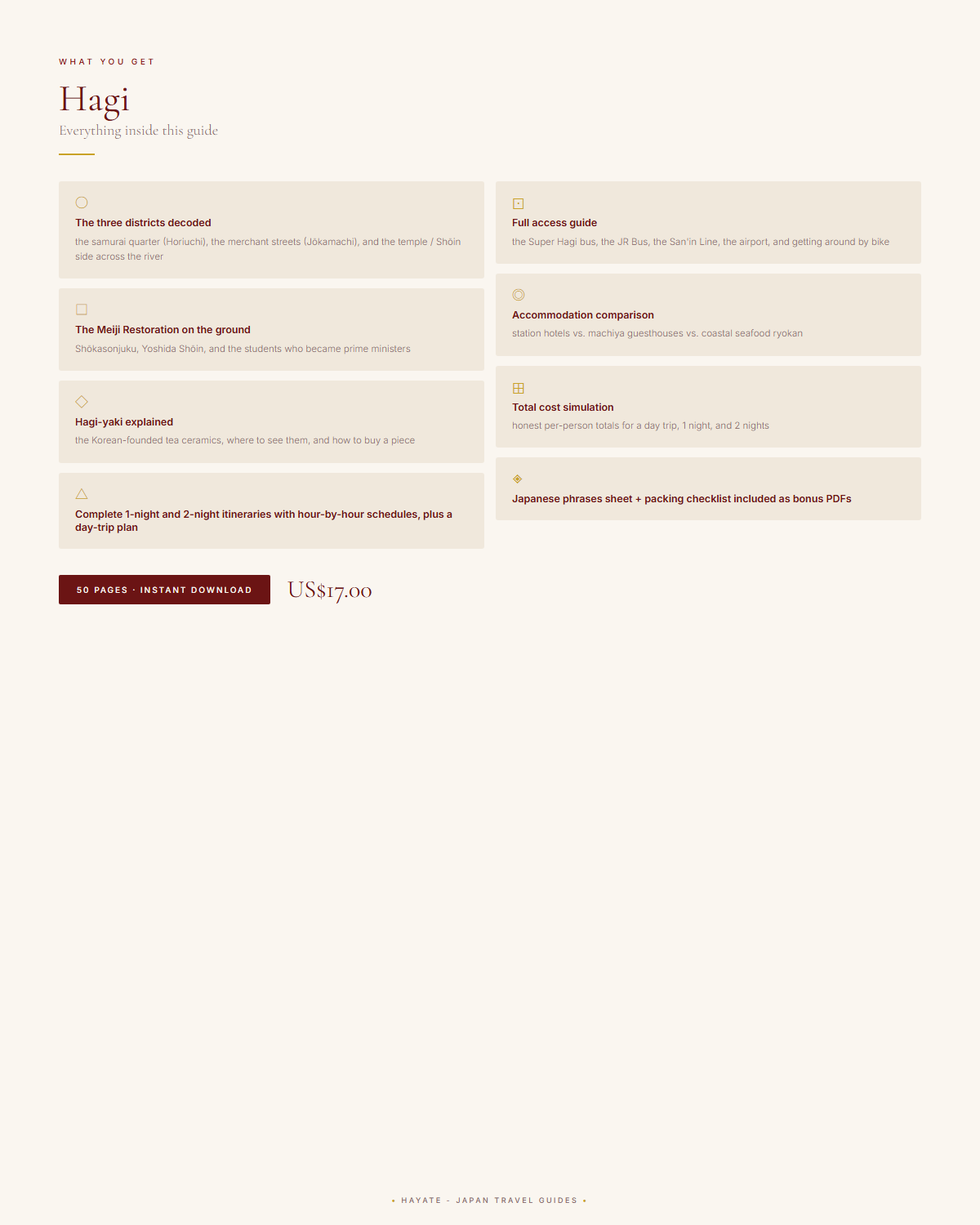
- The three districts decoded — the samurai quarter (Horiuchi), the merchant streets (Jokamachi), and the temple / Shoin side across the river
- The Meiji Restoration on the ground — Shokasonjuku, Yoshida Shoin, and the students who became prime ministers
- Hagi-yaki explained — the Korean-founded tea ceramics, where to see them, and how to buy a piece
- Complete 1-night and 2-night itineraries with hour-by-hour schedules, plus a day-trip plan
- Full access guide — the Super Hagi bus, the JR Bus, the San'in Line, the airport, and getting around by bike
- Accommodation comparison — station hotels vs. machiya guesthouses vs. coastal seafood ryokan
- Total cost simulation — honest per-person totals for a day trip, 1 night, and 2 nights
- Japanese phrases sheet + packing checklist included as bonus PDFs
Sample pages
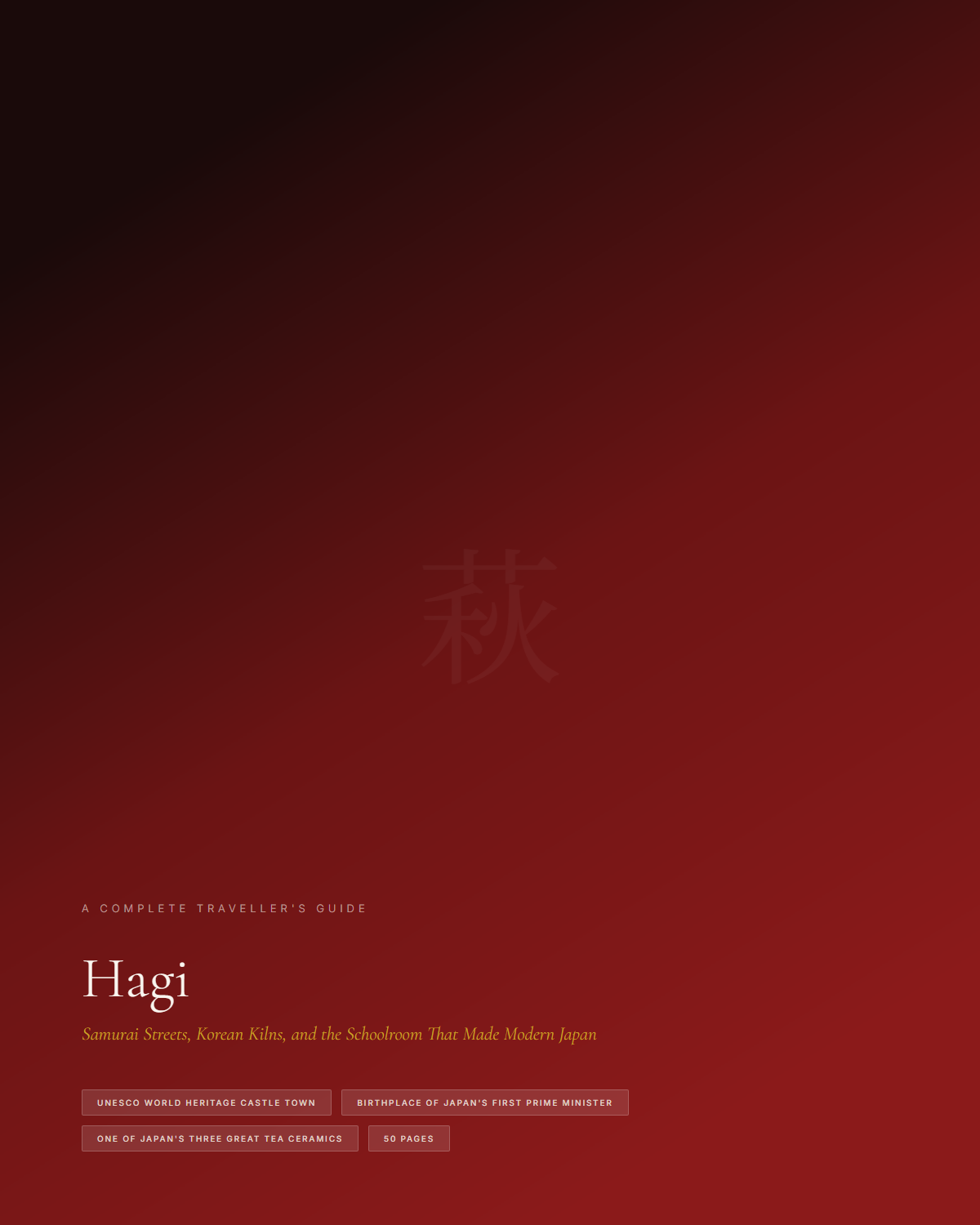
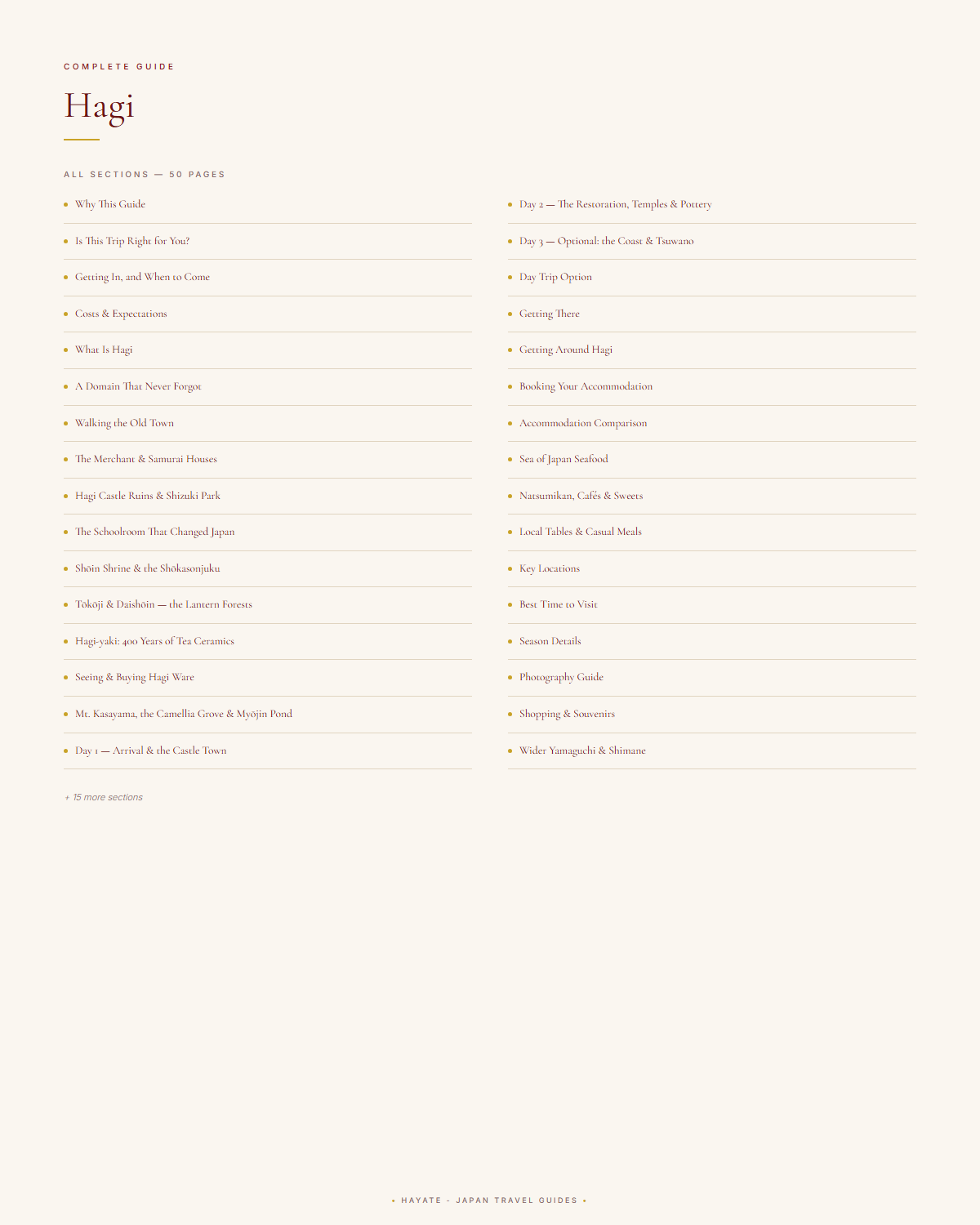
The complete Hagi guide
Hour-by-hour itineraries, the bus timetable decoded, the three districts explained, and where to stay compared side by side.
Get the guide — US$17 US$17.00 (or equivalent in your local currency) · instant download · 30-day money-back guarantee