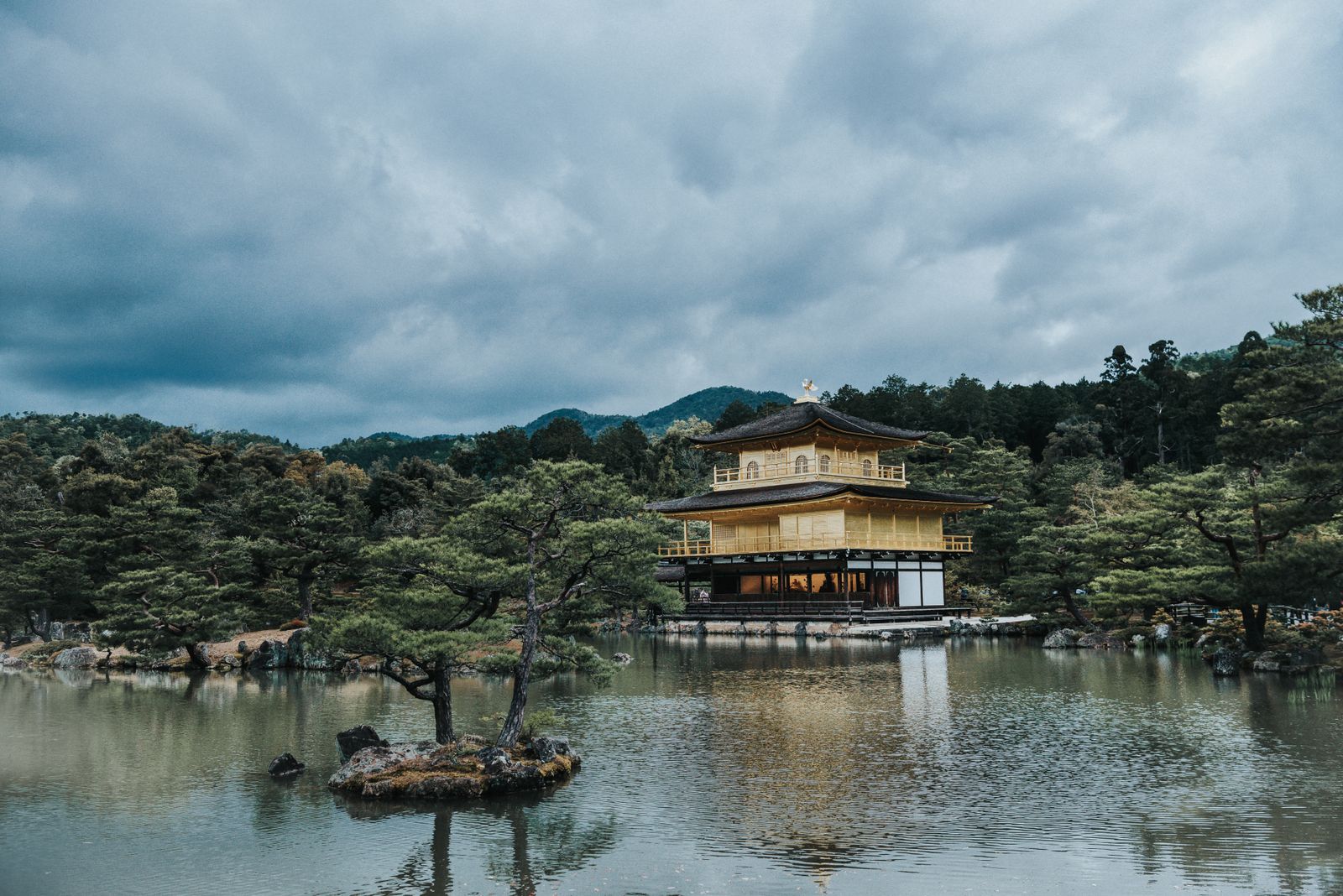
Everyone photographs the same reflection. The one decision that changes the visit is being at the gate when it opens at 9:00 — after that the pond rail is three deep.
- Get thereBus 205, ¥230
- SeePavilion · Ryoan-ji
- StayCentral Kyoto
- TimeHalf a day
Getting there
Kinkaku-ji is in north-west Kyoto, away from any train line, so the bus is the standard approach — and simpler than it first looks. From Kyoto Station, City Bus 205 runs direct to the Kinkakuji-michi stop for a flat ¥230.
If the queue at the station terminal looks grim, the faster move is the Karasuma subway to Kitaōji, then City Bus 102 (the Kinkaku-ji & Ginkaku-ji tourist line) or a short taxi from there — roughly ten minutes. From downtown, a taxi runs ¥1,500–2,500 and is worth it for two or more people, particularly if you are trying to make the 9:00 opening.
- From Kyoto Stn.
- City Bus 205 to Kinkakuji-michi — ¥230 flat
- Faster option
- Karasuma subway to Kitaōji, then Bus 102 or a ~10 min taxi
- By taxi
- ¥1,500–2,500 from downtown Kyoto
- Admission
- ¥500 · open 9:00–17:00 daily
- On site
- One-way path, 30–40 minutes at an unhurried pace
Route numbers verified against Kyoto City's official tourism-site announcement of the 2024-06-01 bus reorganization, 18 Aug 2026: the previous "City Bus 101" no longer serves Kinkaku-ji (it now runs as tourist route EX101 toward Kiyomizu-dera); route 205 remains direct from Kyoto Station, and new route 102 covers the Kitaoji–Kinkaku-ji–Ginkaku-ji corridor. The ride time from Kyoto Station could not be confirmed against a reliable single source and is intentionally omitted — allow 30–45 minutes depending on traffic.
What to actually see
The pavilion is a one-way path with no interior and no backtracking, which is why timing matters more than stamina. Between 10 AM and 2 PM the pond rail is packed with tour groups; at opening it is not. In mid-November foliage season, even 9:00 is busy — arrive twenty minutes before the gate.
Your ¥500 ticket is a paper ofuda talisman rather than a stub, so keep it. Past the pond, ninety per cent of visitors give the rest of the route about four minutes — which leaves the Rikushu pine, a 600-year-old tree trained into the shape of a boat, effectively to yourself.
The best use of the remaining morning is the Kinukake-no-Michi road: a flat walk to Ryoan-ji and its rock garden (¥600, 45–60 minutes) and on to Ninna-ji, where the grounds are free and the palace and pagoda are ¥500–800. Three World Heritage sites, done before lunch.
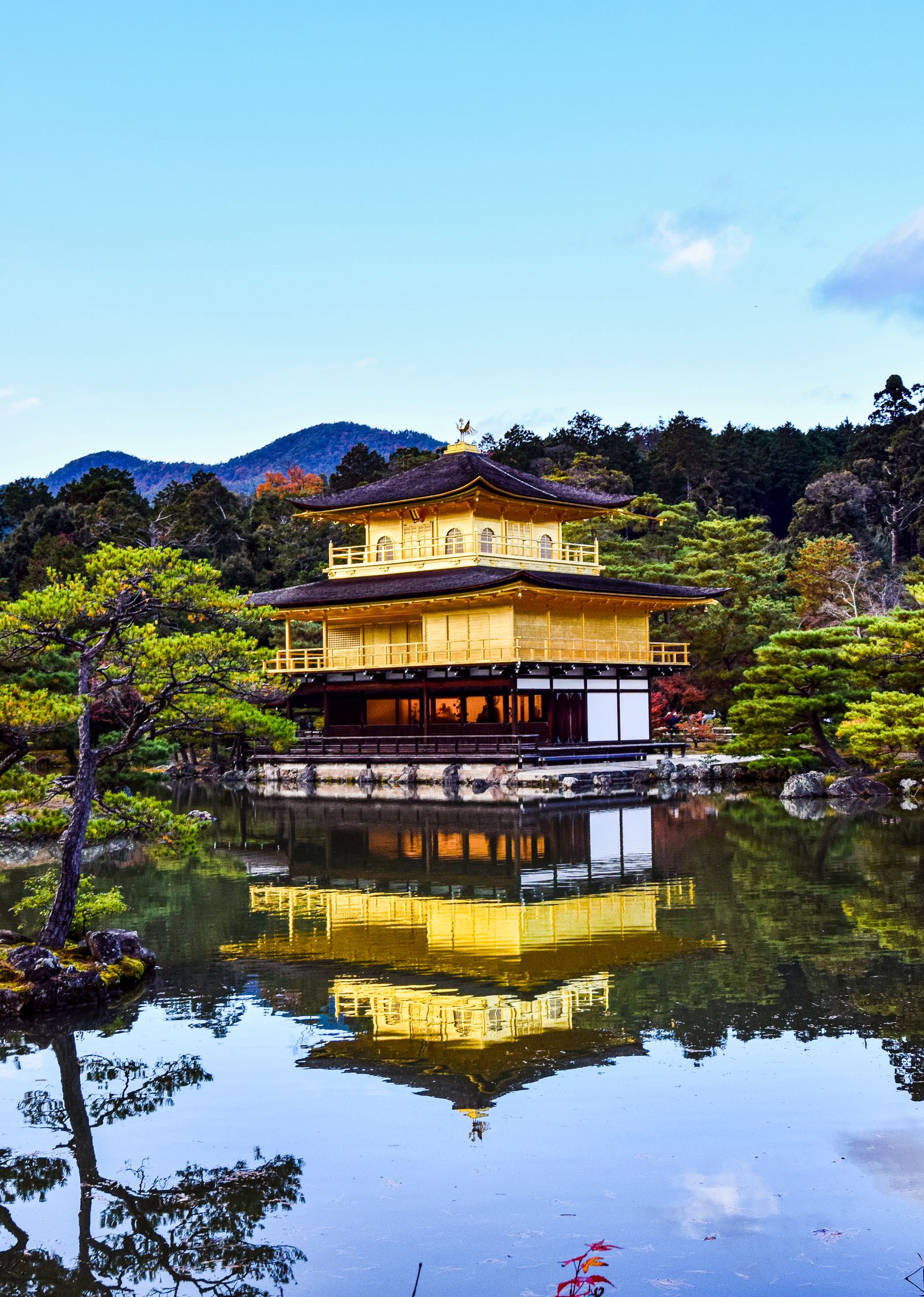
There is no interior and no going back around. Kinkaku-ji rewards understanding, not time spent.
The one-way path
Where to stay
Nobody stays at Kinkaku-ji. It is a half-day out of a Kyoto trip, and the district around it is residential — the practical base is anywhere central with a bus or subway connection north.
What that buys you is the 9:00 opening without a stressful start: from most of central Kyoto you need about 45 minutes door to gate, and the whole north-west temple line is finished by lunchtime.
What nobody tells you first
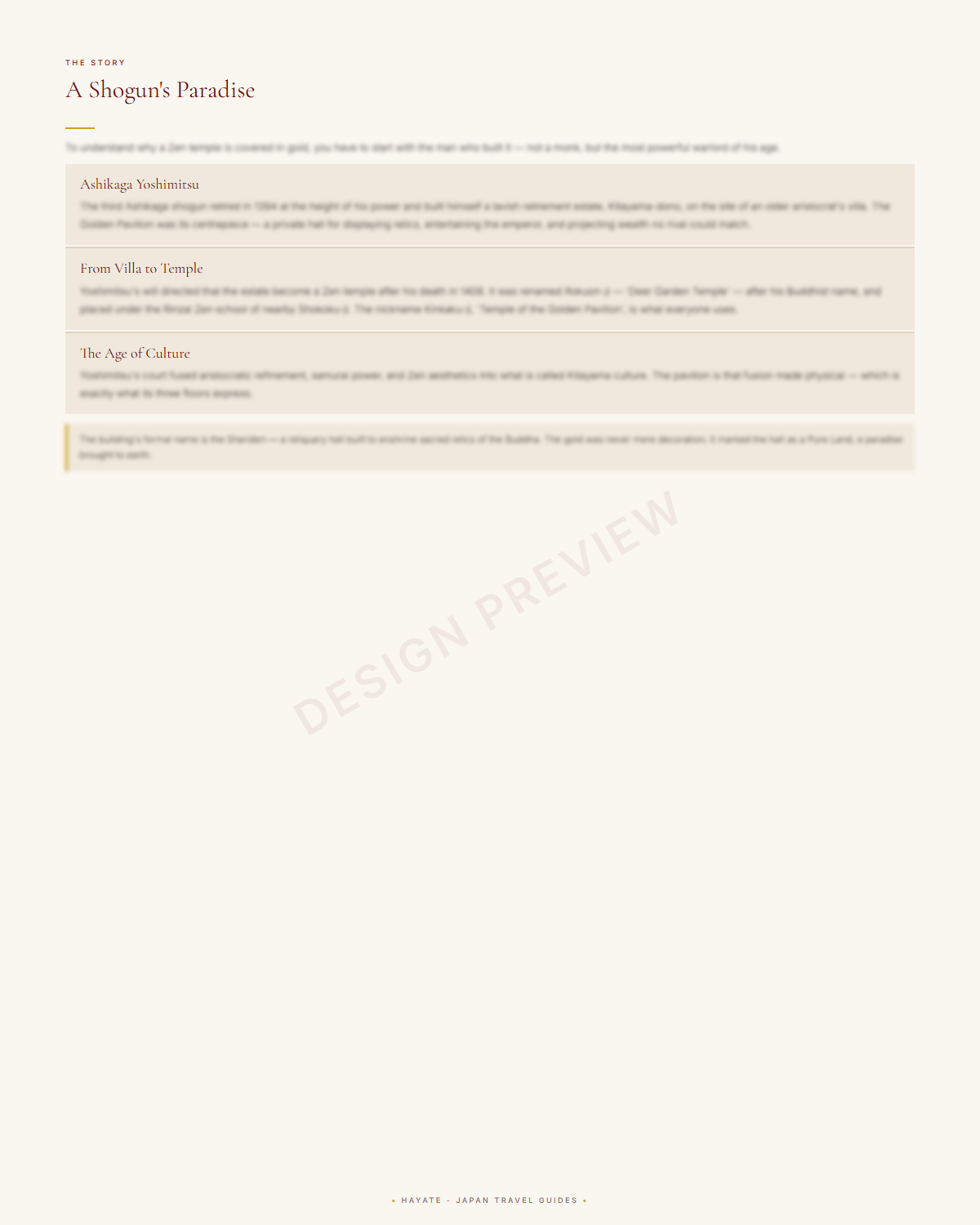
The building you photograph is a 1955 reconstruction — the original was burned down by a novice monk in 1950, an event Mishima turned into a novel. The gold leaf is real, and was renewed in 1987; knowing the date does nothing to diminish the view, but it does explain why nothing here is worn.
Budget roughly ¥1,600–1,900 for the three temples plus ¥230 a bus ride, carry small change, and do not plan anything demanding for the afternoon — the crowds you dodged in the morning will be everywhere else by then.
What the full guide adds
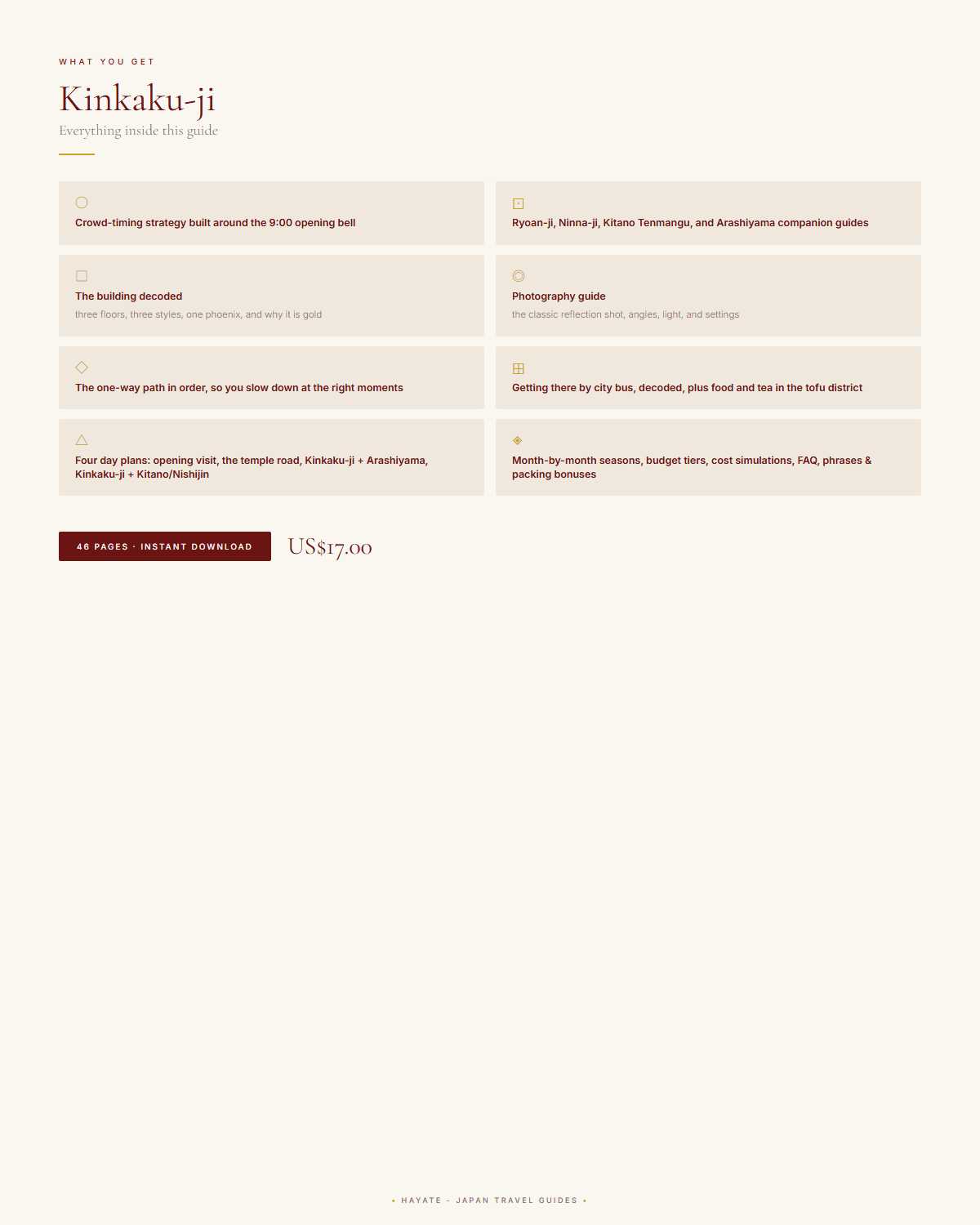
- Crowd-timing strategy built around the 9:00 opening bell
- The building decoded — three floors, three styles, one phoenix, and why it is gold
- The one-way path in order, so you slow down at the right moments
- Four day plans: opening visit, the temple road, Kinkaku-ji + Arashiyama, Kinkaku-ji + Kitano/Nishijin
- Ryoan-ji, Ninna-ji, Kitano Tenmangu, and Arashiyama companion guides
- Photography guide — the classic reflection shot, angles, light, and settings
- Getting there by city bus, decoded, plus food and tea in the tofu district
- Month-by-month seasons, budget tiers, cost simulations, FAQ, phrases & packing bonuses
Sample pages

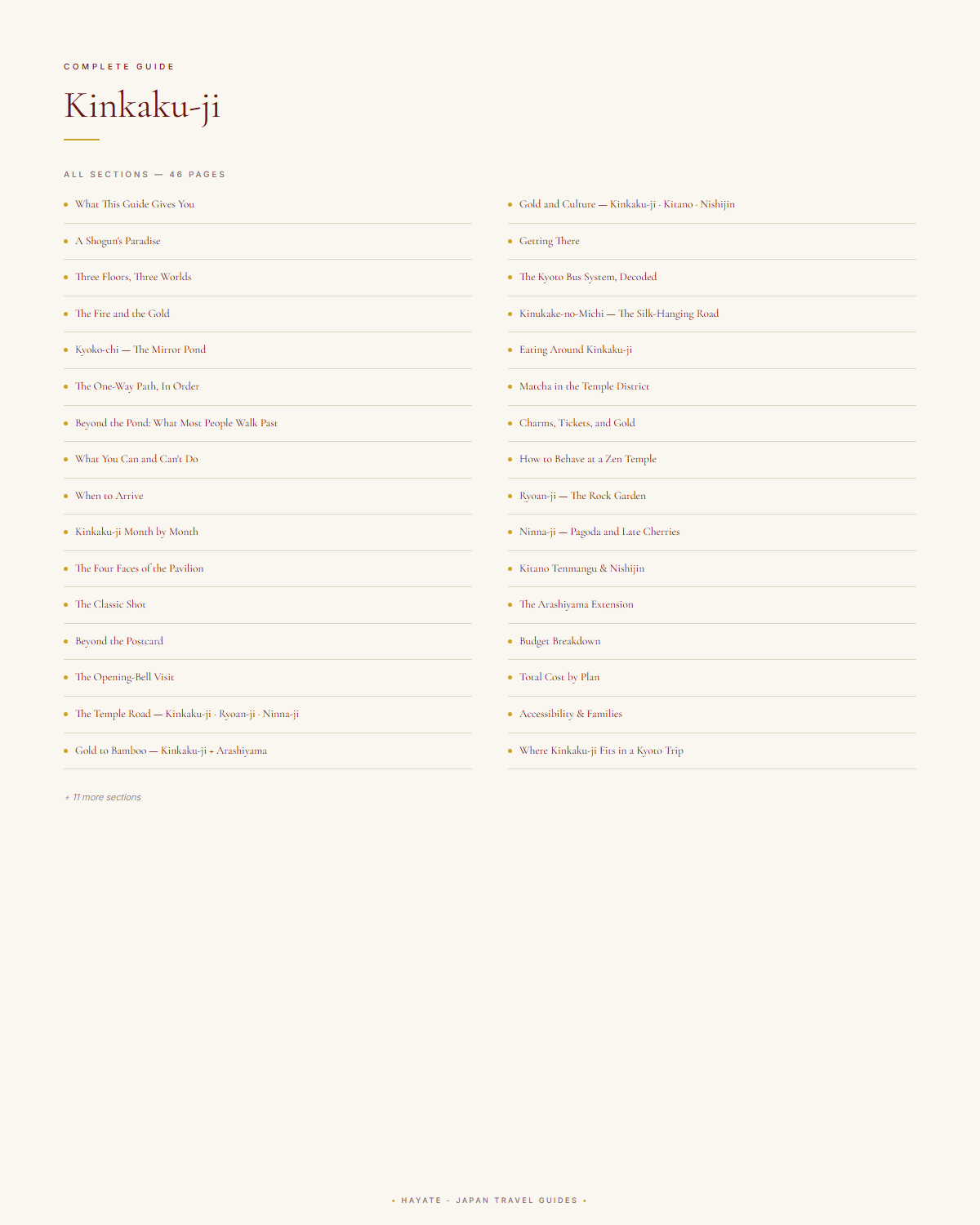
The complete Kinkaku-ji guide
Crowd timing, the one-way route explained, and three more World Heritage temples on the same walk.
Get the guide — US$17 Instant download · 30-day money-back guarantee