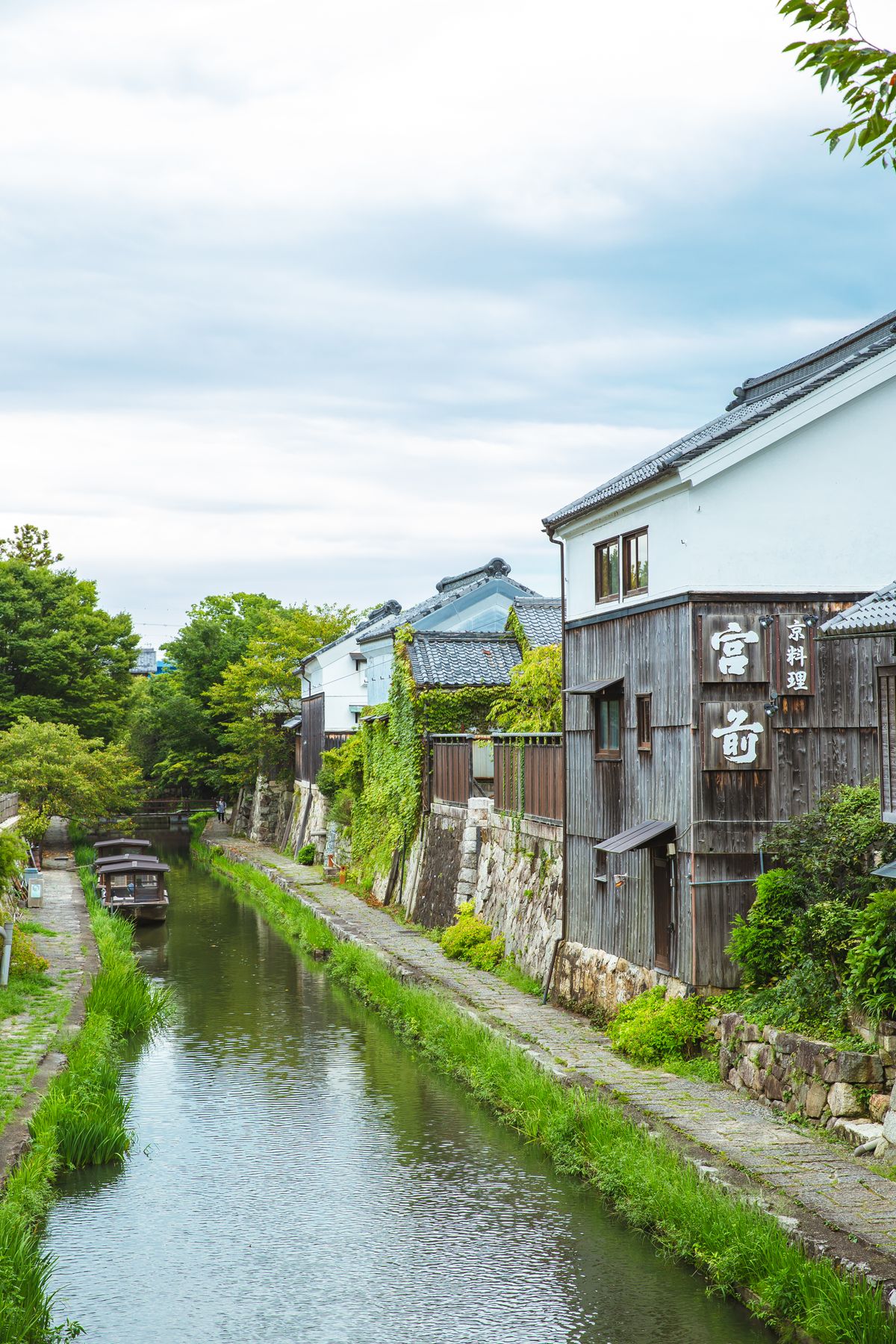
The yukata comes with the room, a wooden pass opens all seven public bathhouses, and by dusk the street belongs to guests in geta walking between them.
- Get there2h45 from Osaka
- SeeSeven soto-yu baths
- StayRyokan (essential)
- Time1 night, 2 better
Getting there
Kinosaki sits on the Japan Sea side of Hyogo, and the approach is a single limited express — about 2 hours 45 minutes from Osaka, arriving at Kinosaki Onsen Station in the middle of the town rather than on its edge.
Once you are off the train there is nothing else to arrange. The town runs roughly 800 metres along its canal, which is ten minutes on foot end to end, and every bathhouse, restaurant and ryokan sits along it. Bags go to the ryokan; you go out in a yukata.
- From Osaka
- JR limited express — about 2h45 to Kinosaki Onsen Station
- Town size
- About 800 m end to end — 10 minutes' walk
- Bathhouses
- Seven, generally 07:00–23:00, last entry 22:30
- Bath pass
- Included in most ryokan rates; otherwise ¥800–900 per bath
- Best season
- Crab season runs November to March
What to actually see
The thing to do here is the soto-yu meguri — the circuit of the town's seven public bathhouses. Each has its own building, its own water and its own character, from a cave bath to a garden bath, and most guests get through three or four rather than all seven.
Almost every ryokan includes the wooden pass in the room rate, which turns every door in town into a free one. Check it is included when you book; without it each bath is ¥800–900, and Satonoyu asks a further ¥600 on top of the pass.
Timing is the whole game. The cave bath at 7–9 AM is quiet and strange and wonderful; the same bath at 8 PM can mean twenty minutes of queue. Each bathhouse also closes one day a week — the schedule is on the wall at your ryokan.
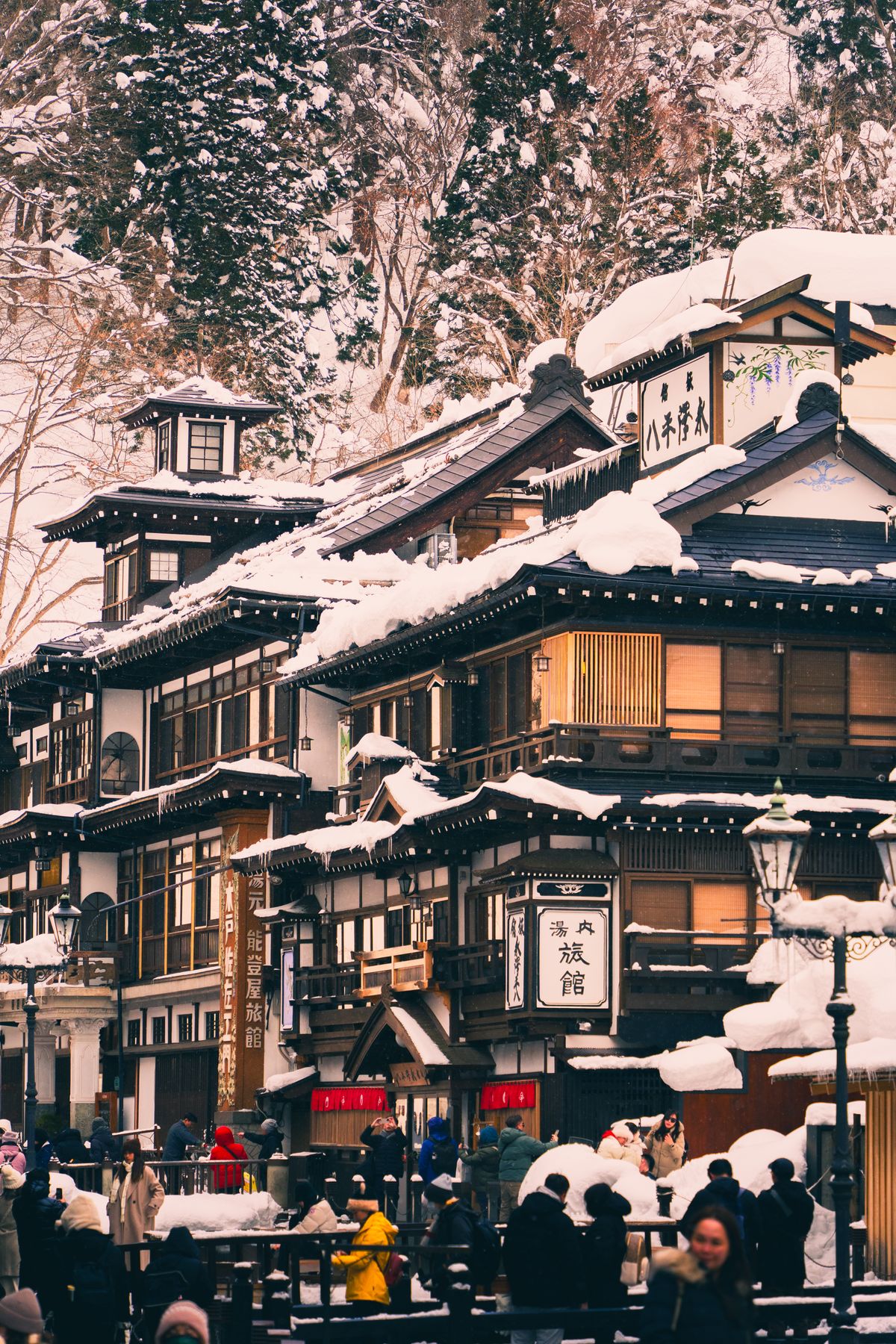
This is not a resort. It is a living tradition, and it expects you to join in properly.
Soto-yu meguri
Where to stay
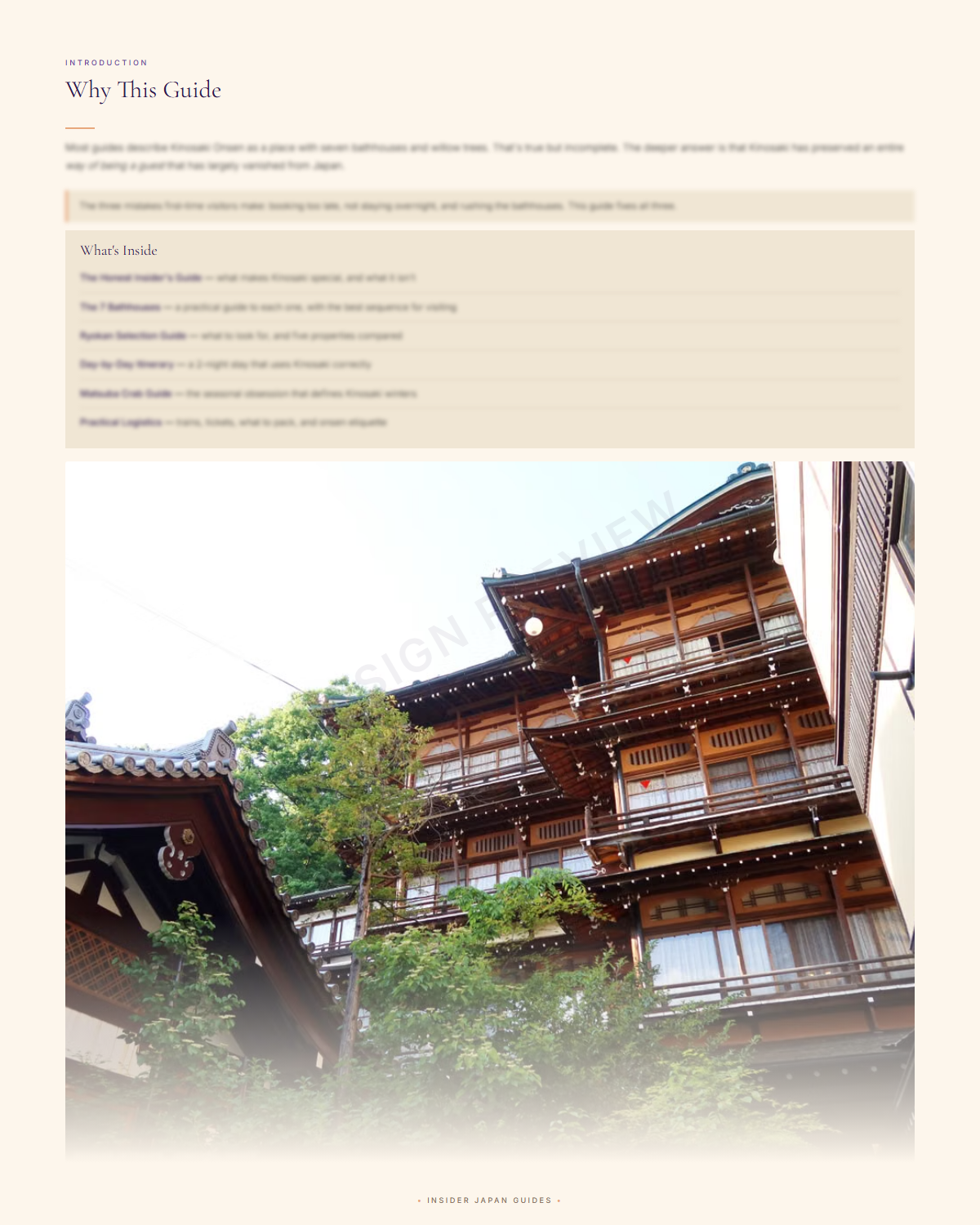
Kinosaki is a town you sleep in, not one you visit. Everything that makes it work — the yukata, the pass, the geta, the dinner — arrives with the room, and a day trip strips all of it out.
Rates are per person with two meals: ¥12,000–18,000 for a basic ryokan, ¥20,000–35,000 for the tier where it becomes genuinely good, and ¥40,000–80,000 and up for private outdoor baths and seasonal cooking. Crab season adds ¥10,000–30,000 for a crab dinner, which is worth doing once. Book six to eight weeks ahead for anything decent.
What nobody tells you first
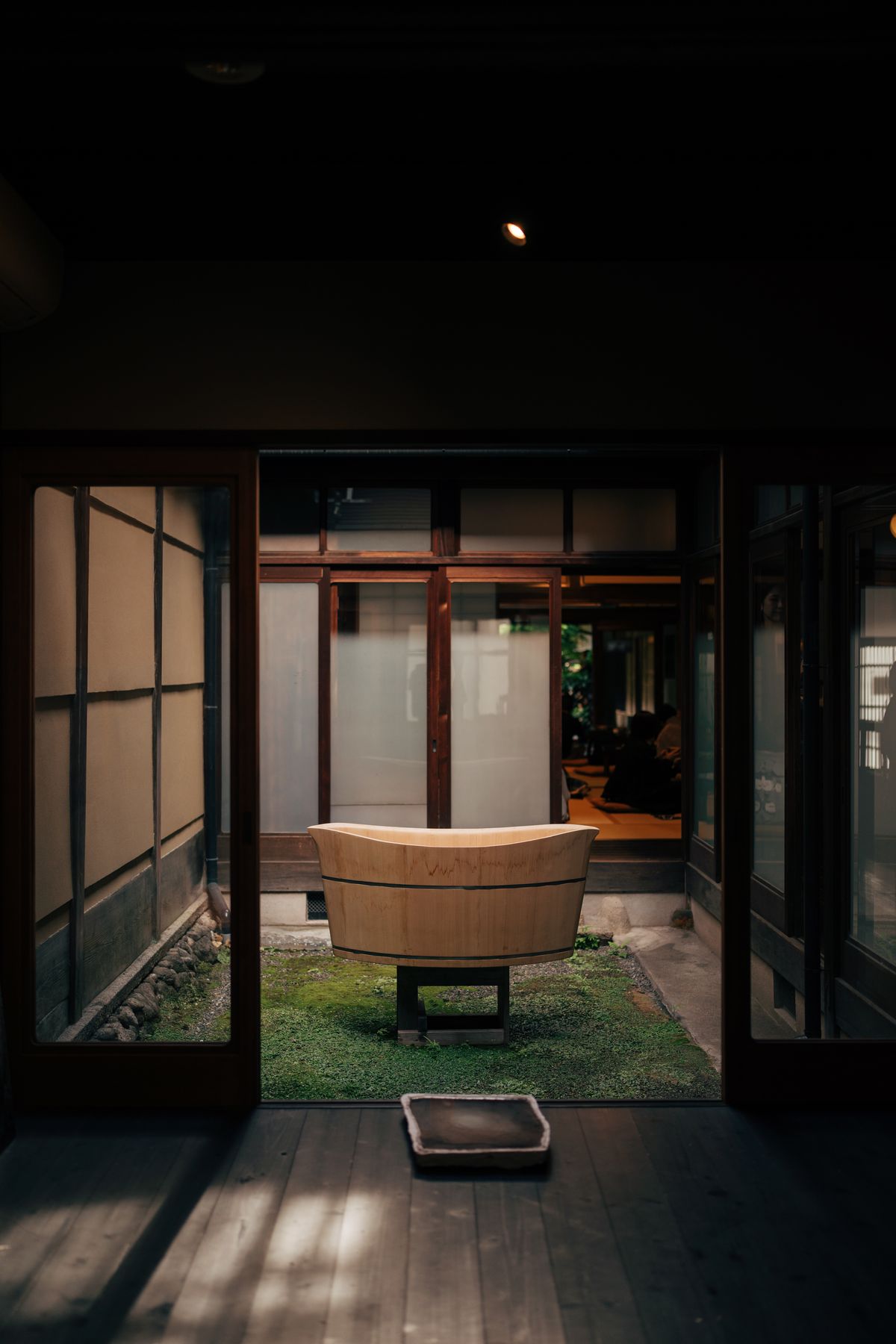
The baths are communal and you enter them without a swimsuit — that is not negotiable, though many ryokan have private baths you can reserve for a fee. Wash and rinse thoroughly at the taps before getting in, and take only the small towel with you; the large one stays at the inn.
The three mistakes visitors make are booking too late, not staying overnight, and trying to tick off all seven baths. Three baths, unhurried, with dinner between them, is the town working as intended.
What the full guide adds
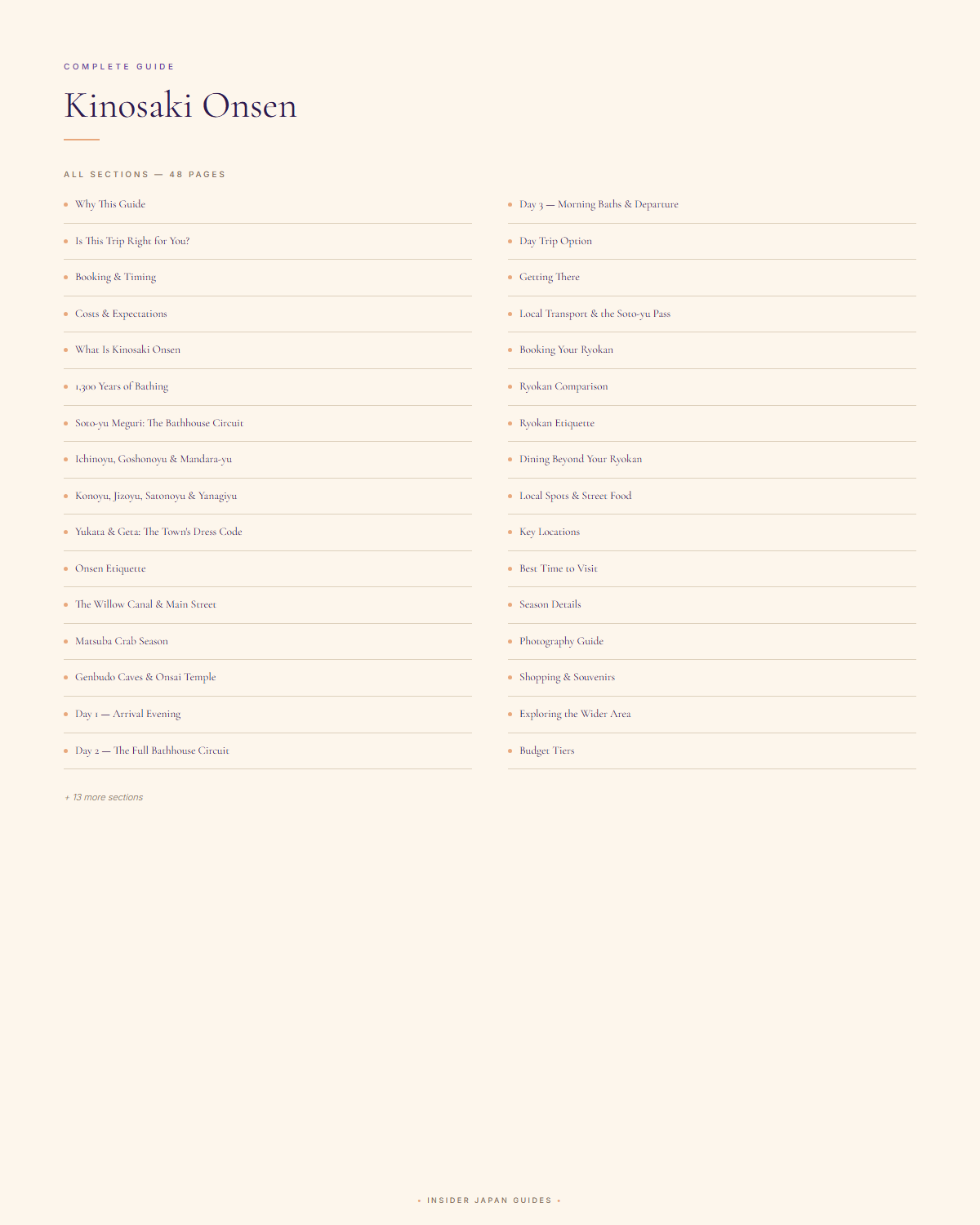
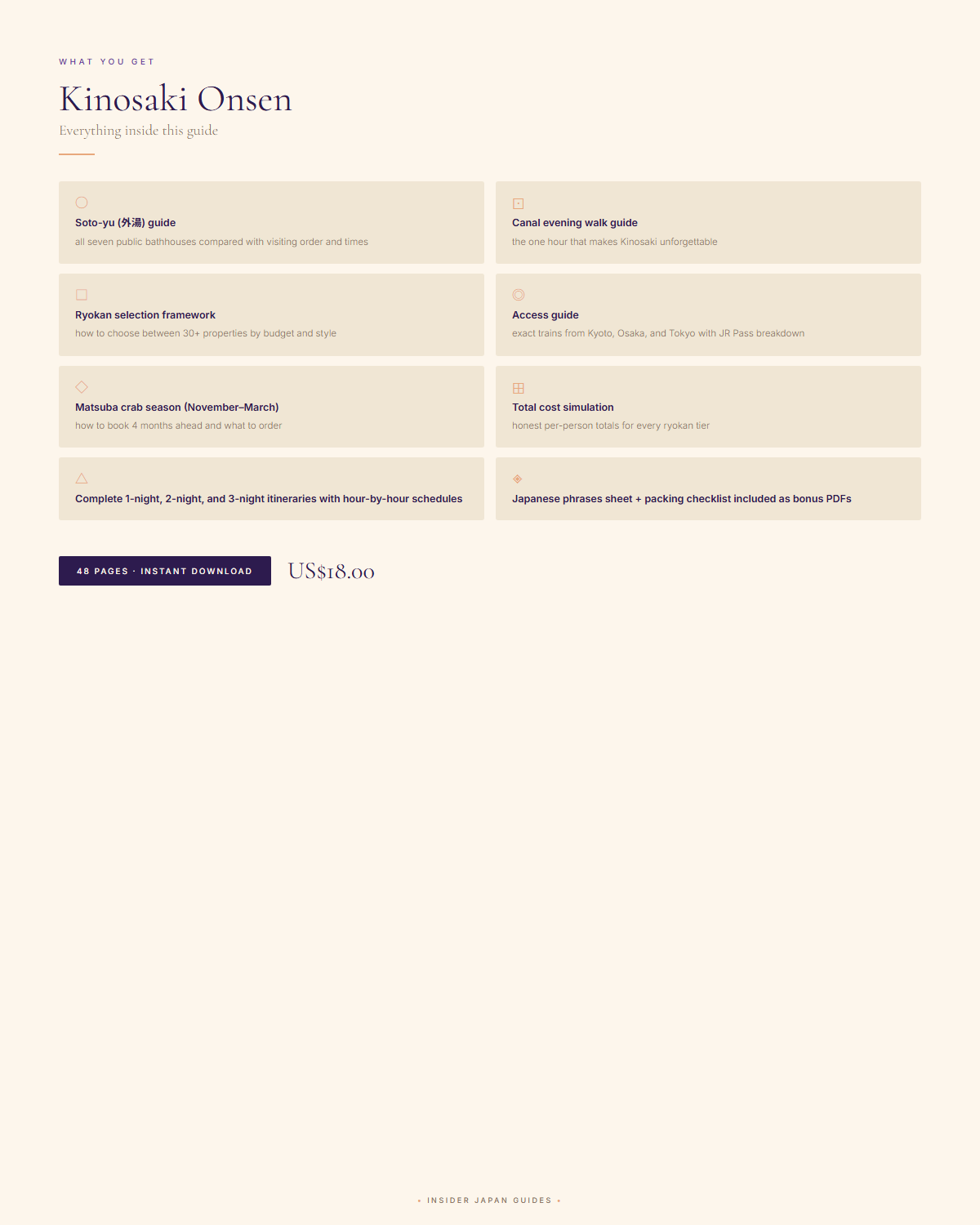
- Soto-yu (外湯) guide — all seven public bathhouses compared with visiting order and times
- Ryokan selection framework — how to choose between 30+ properties by budget and style
- Matsuba crab season (November–March) — how to book 4 months ahead and what to order
- Complete 1-night, 2-night, and 3-night itineraries with hour-by-hour schedules
- Canal evening walk guide — the one hour that makes Kinosaki unforgettable
- Access guide — exact trains from Kyoto, Osaka, and Tokyo with JR Pass breakdown
- Total cost simulation — honest per-person totals for every ryokan tier
- Japanese phrases sheet + packing checklist included as bonus PDFs
Sample pages
The complete Kinosaki Onsen guide
Bathhouse by bathhouse, onsen etiquette, ryokan tiers compared, and the two-night plan that uses the town properly.
Get the guide — US$18 Instant download · 30-day money-back guarantee