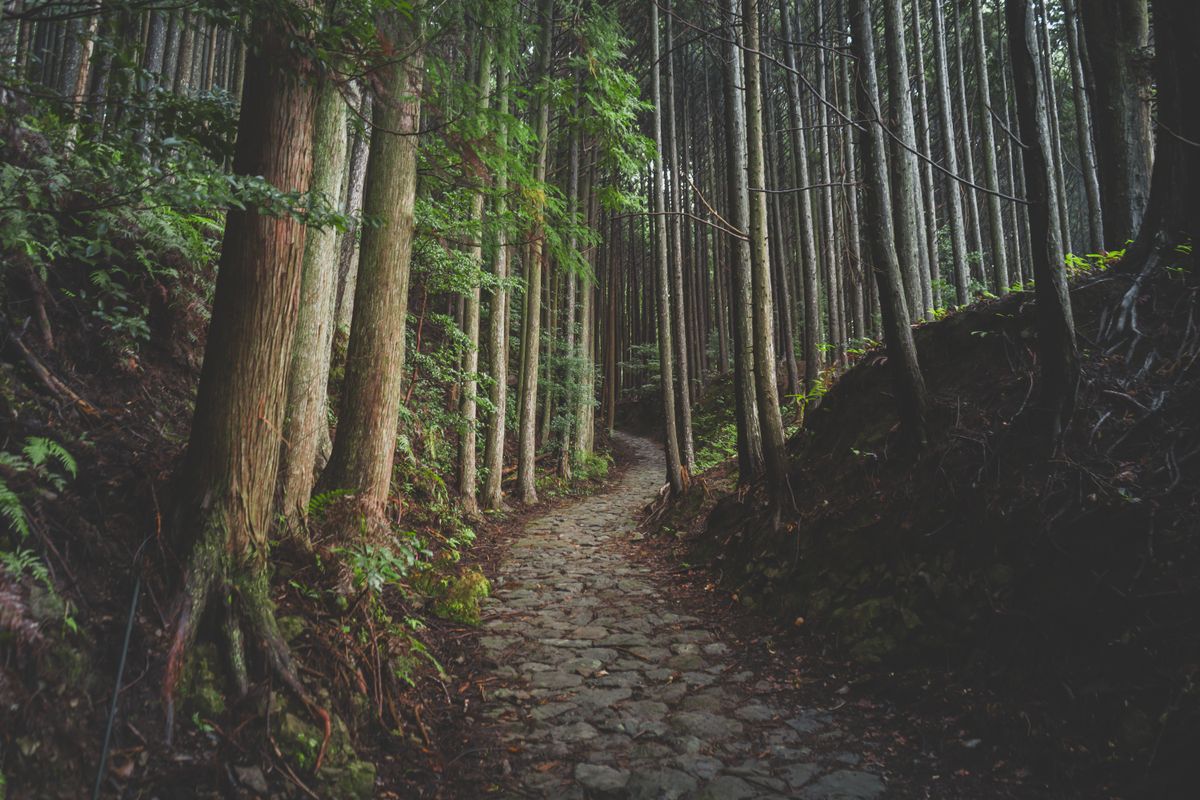
Stone paths worn smooth by a thousand years of pilgrims, guesthouses that feed you because nothing else will, and the great torii of Oyunohara at the end of the third day.
- Get there2h from Osaka
- SeeNakahechi · Nachi Falls
- StayMinshuku on the trail
- Time3 days
Getting there
Everything starts at Kii-Tanabe. The JR Kuroshio limited express runs there from Shin-Osaka in about 2h15–2h20, roughly hourly and covered by the Japan Rail Pass; from Kyoto it is nearer 2h40.
From Kii-Tanabe, the Ryujin bus takes about an hour to Takijiri-oji, the trailhead, for ¥1,180. Take the first one you can: arriving early means walking the first climb in morning light and reaching your guesthouse before dark.
Buses matter more than trains out here. The Kumano Kotsu service between Hongu and Nachi runs four or five times a day, and missing one costs you an afternoon rather than twenty minutes.
- From Osaka
- JR Kuroshio to Kii-Tanabe — about 2h15–2h20, JR Pass valid
- From Kyoto
- Via Tennoji — about 2h40
- To the trail
- Ryujin bus, Kii-Tanabe → Takijiri-oji — about 1 hour, ¥1,180
- Between shrines
- Hongu → Nachi by Kumano Kotsu bus — 4–5 departures a day
- Luggage
- Forwarded ahead by your guesthouse — ¥1,500–2,000 per bag per day
Travel time to Kii-Tanabe verified against JR West's official individual-train timetables (three departures cross-checked), 18 Aug 2026. Fares are intentionally omitted above — multiple sources gave conflicting figures (¥2,500 to ¥5,800+) for the same JR Kuroshio fare and none could be confirmed against an official source. Check JR West's fare search directly before booking.
What to actually see
The classic walk is the Nakahechi, the imperial route from Takijiri-oji over the ridges to Hongu. It is a real hike — several days, steep in places — but the descent from Fushiogami into the Hongu valley, with the great torii of Oyunohara standing in the river flats below, is the image the whole trail is built around. If your knees are complaining, the Hosshinmon-oji to Hongu section can be bused for ¥250 without shame.
At Yunomine Onsen is Tsuboyu, a tiny wooden bathhouse over a hot spring that pilgrims have used for purification for centuries — walk-in only, ¥750 for a 30-minute slot, two people at a time.
The trail ends at Nachi: 267 moss-covered cedar steps up the Daimonzaka, the shrine complex above, and Japan's tallest waterfall behind the pagoda. The combined ticket is ¥600. Tour coaches arrive from 10 AM to 3 PM — walk the steps outside those hours and they are nearly empty.
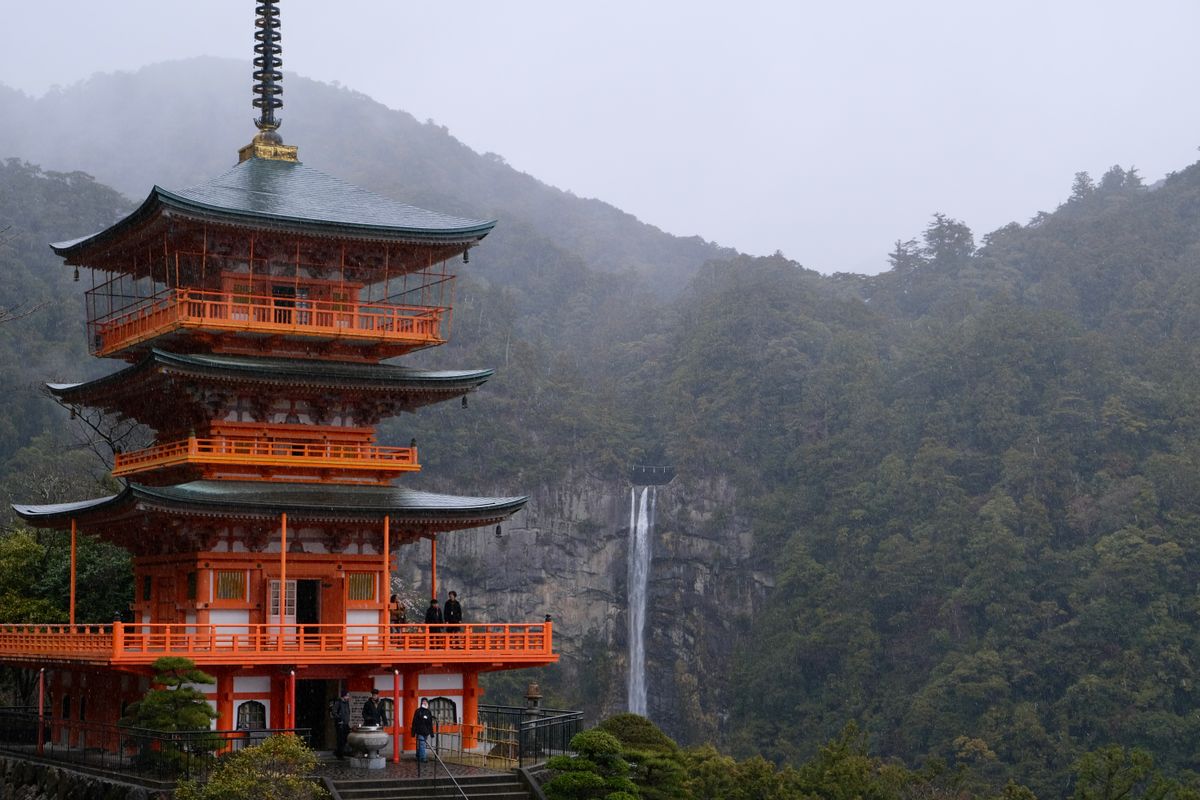
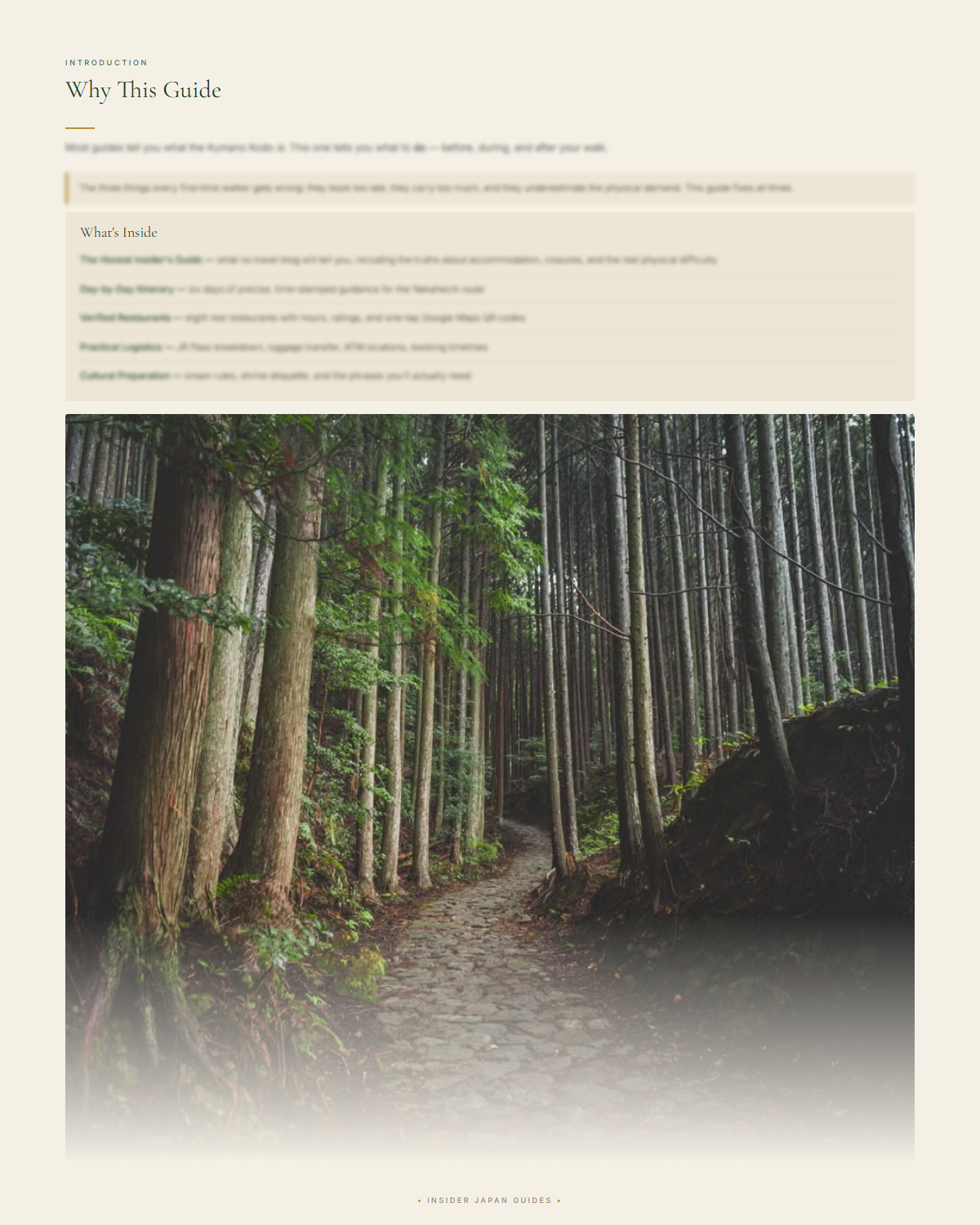
The forest is silent except for your own footsteps on stone worn smooth by a thousand years.
Nakahechi, past dawn
Where to stay
You sleep in minshuku — family guesthouses in villages of a few dozen houses — at ¥8,000–12,000 per person including dinner and breakfast. The meals are not optional extras; in places this small there is nowhere else to eat, and the food is usually the best part of the day.
Book the whole chain of nights before you start, because there are only so many rooms at each stage. Ask each guesthouse the evening before to forward your bag to the next one — ¥1,500–2,000 a bag, and it turns a trek into a walk.
What nobody tells you first
This is a cash trail. Withdraw at least ¥30,000 at the post office ATM by Kii-Tanabe Station before you leave — it takes international cards, and the villages ahead largely do not take anything else.
Eat properly the night before you start, carry more water than feels necessary, and check the return bus times the day before rather than the morning of. The trail is well signed and genuinely walkable; the logistics around it are what catch people out.
What the full guide adds
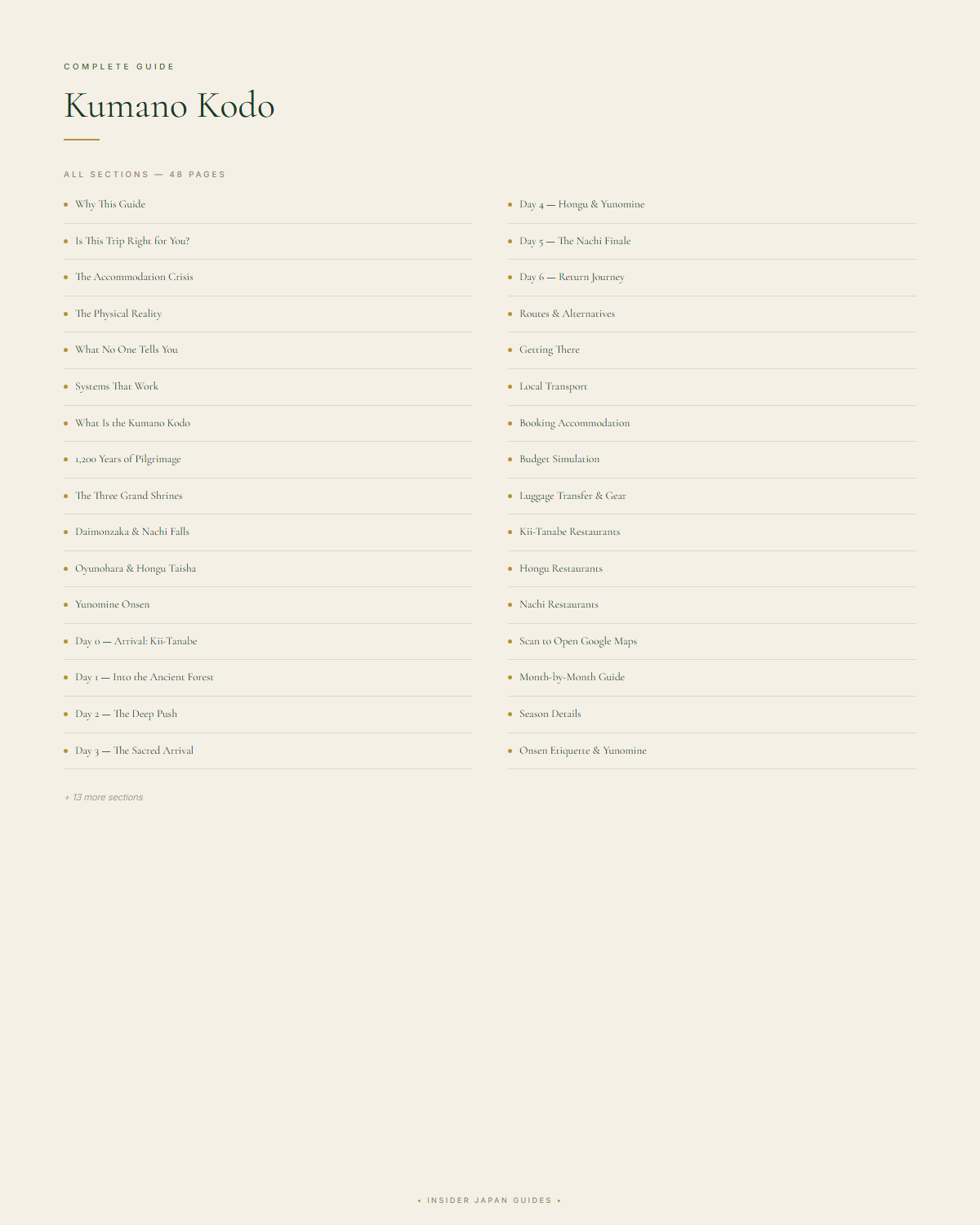
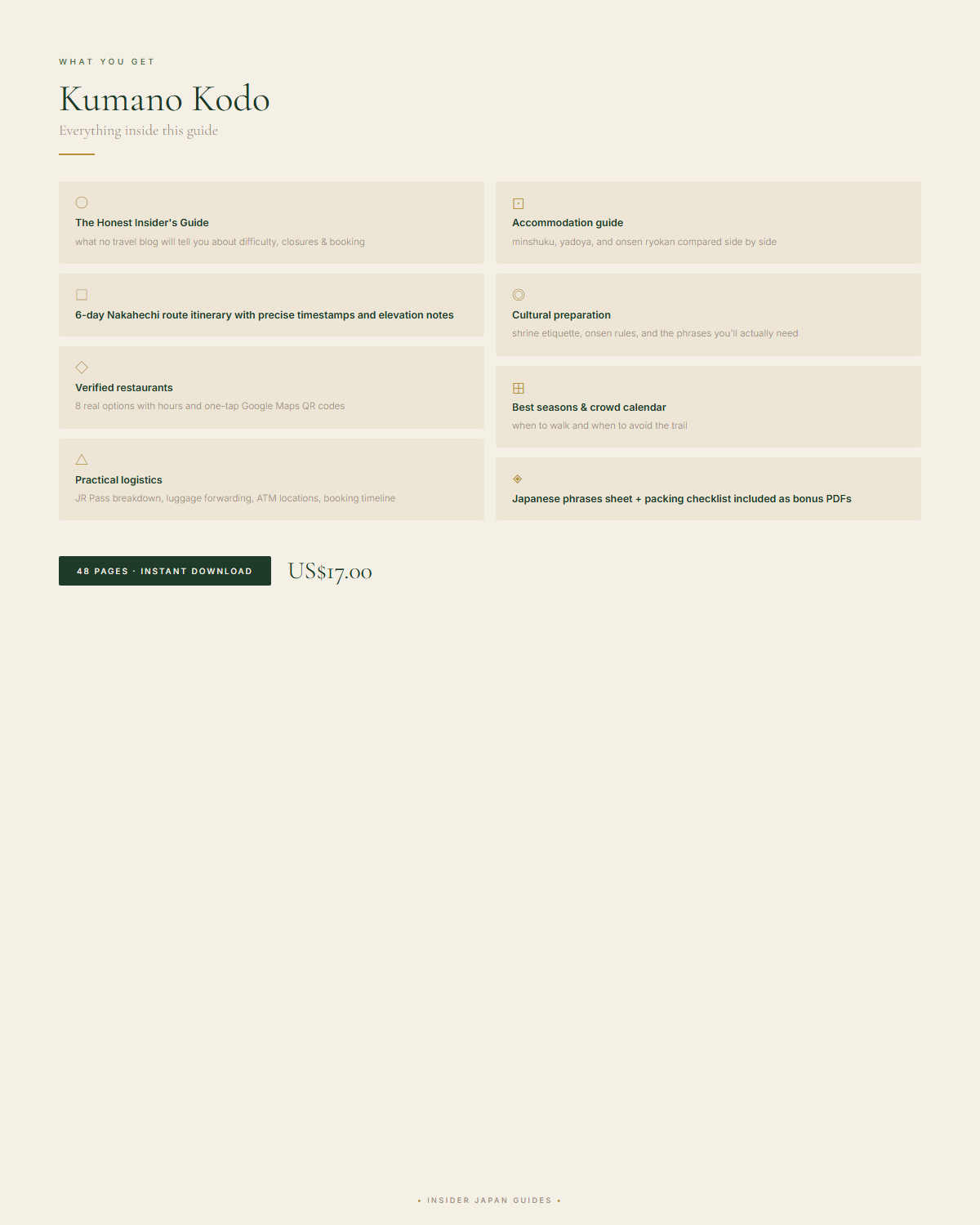
- The Honest Insider's Guide — what no travel blog will tell you about difficulty, closures & booking
- 6-day Nakahechi route itinerary with precise timestamps and elevation notes
- Verified restaurants — 8 real options with hours and one-tap Google Maps QR codes
- Practical logistics — JR Pass breakdown, luggage forwarding, ATM locations, booking timeline
- Accommodation guide — minshuku, yadoya, and onsen ryokan compared side by side
- Cultural preparation — shrine etiquette, onsen rules, and the phrases you'll actually need
- Best seasons & crowd calendar — when to walk and when to avoid the trail
- Japanese phrases sheet + packing checklist included as bonus PDFs
Sample pages
The complete Kumano Kodo guide
Day-by-day trail breakdown, the bus times that actually matter, luggage transfer, and where to sleep each night.
Get the guide — US$17 Instant download · 30-day money-back guarantee