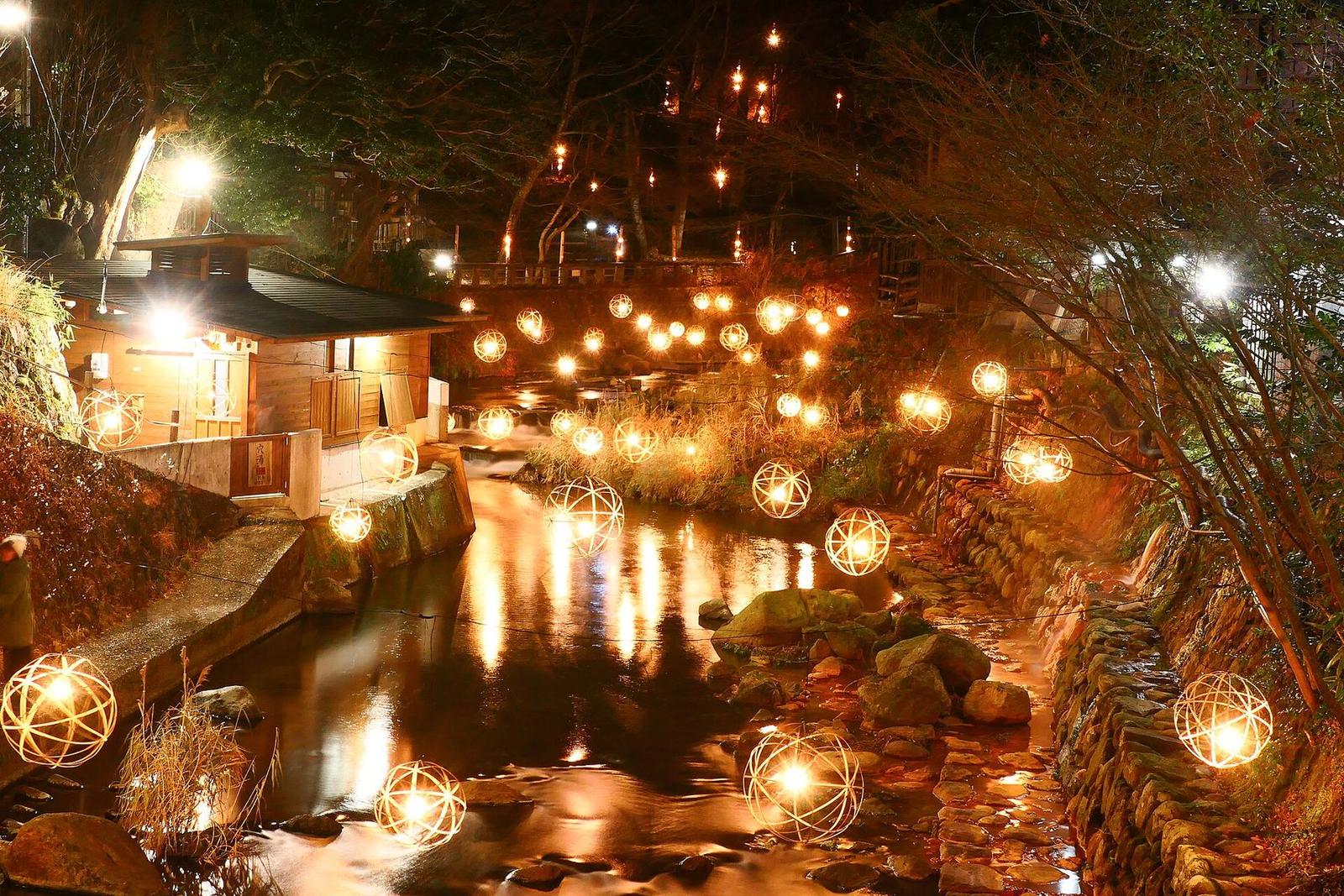
No inn here keeps its best bath to itself. One wooden pass, cut from local cedar, opens the private baths of any three of thirty-plus ryokan — a village that decided in 1986 to work as a single destination rather than thirty competitors.
- Get thereBus from Kumamoto (3h)
- SeeThree baths, one pass
- StayRyokan in the village
- Time1 night
Getting there
There is no train station — the only sensible way in is the Kyushu Odan Bus, which runs from Kumamoto Station, Sakuramachi Bus Terminal and Kumamoto Airport, then carries on across the island toward Yufuin and Beppu. Kumamoto to Kurokawa takes about three hours and costs around ¥3,400 one way. Reserve a seat in advance; bookings close the evening before, and this is not a route with a spare bus an hour later. A direct Nishitetsu bus also runs from Fukuoka and Fukuoka Airport.
What to actually see
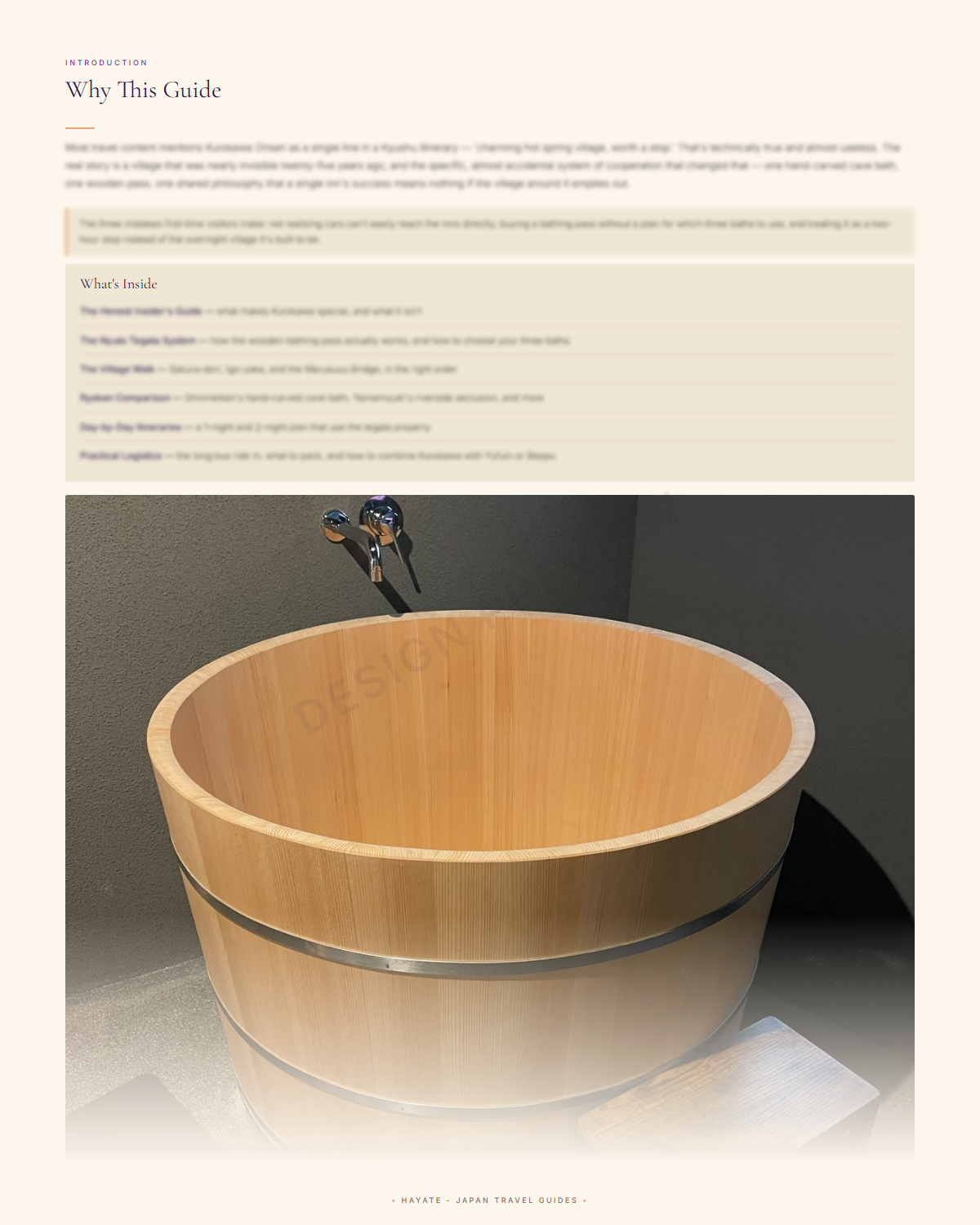
The village itself is the attraction, and it is small enough to walk end to end in twenty minutes. Buy the nyuto tegata — a ¥1,500 cedar pass, good for three baths — at the village information centre or your inn, then spend the afternoon choosing between them: a bath carved into a cave, one hidden up the valley in near-total seclusion, another inn with thirteen of its own. The pass stays valid for six months, so an unused slot is not wasted. In winter, the Yuakari festival lines the river with thousands of bamboo lanterns after dark.
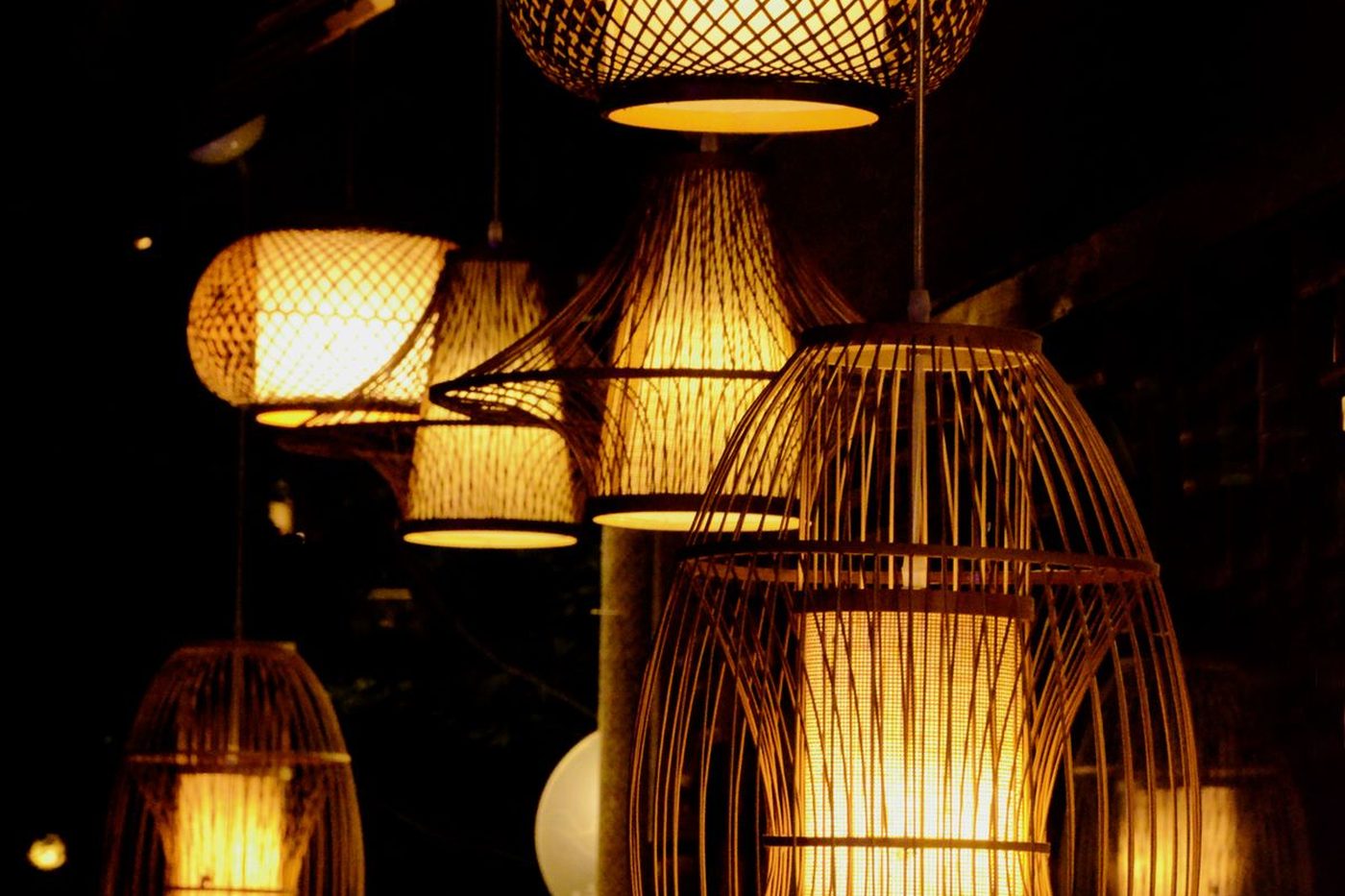
Day trippers get the pass and the walk; guests get the version of the place the photographs are actually of.
Staying the night
Where to stay
Stay in the village. Kurokawa is built around the overnight stay — dinner of Kumamoto akaushi beef, a soak before bed, and the baths at six in the morning when the steam is still sitting on the river. Day trippers get the pass and the walk; guests get the version of the place the photographs are actually of. Rooms are limited and book out months ahead for autumn colour and the winter festival.
What nobody tells you first
At 700 metres in the Aso highlands it is genuinely cold outside bathing season, and the last bus out leaves earlier than you would expect. Many baths are still mixed or single-sex by time slot, several smaller inns remain cash-only, and tattoos are handled inn by inn rather than by one village rule — worth checking before you commit your three stamps.
What the full guide adds
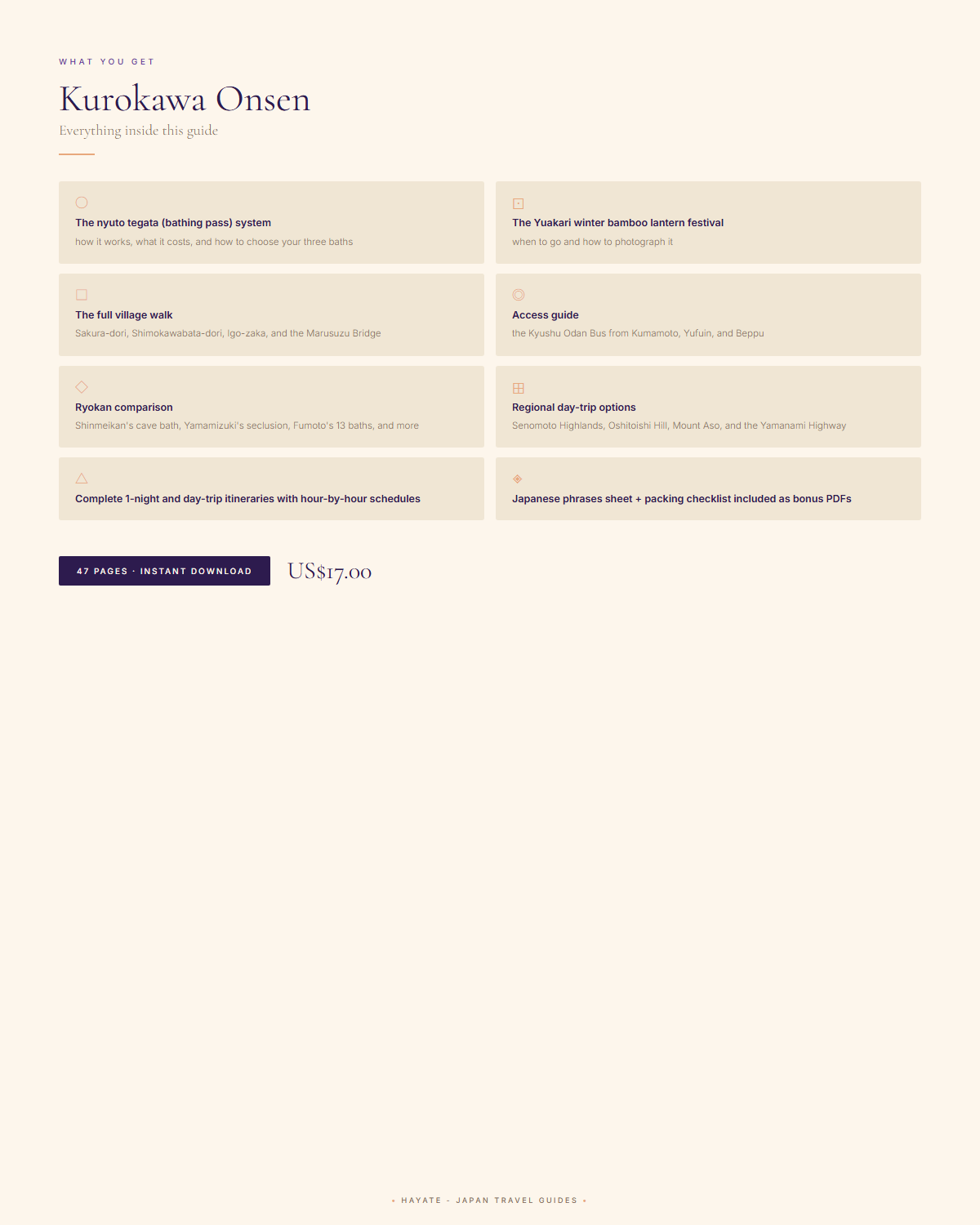
- The nyuto tegata (bathing pass) system — how it works, what it costs, and how to choose your three baths
- The full village walk — Sakura-dori, Shimokawabata-dori, Igo-zaka, and the Marusuzu Bridge
- Ryokan comparison — Shinmeikan's cave bath, Yamamizuki's seclusion, Fumoto's 13 baths, and more
- Complete 1-night and day-trip itineraries with hour-by-hour schedules
- The Yuakari winter bamboo lantern festival — when to go and how to photograph it
- Access guide — the Kyushu Odan Bus from Kumamoto, Yufuin, and Beppu
- Regional day-trip options — Senomoto Highlands, Oshitoishi Hill, Mount Aso, and the Yamanami Highway
- Japanese phrases sheet + packing checklist included as bonus PDFs
Sample pages

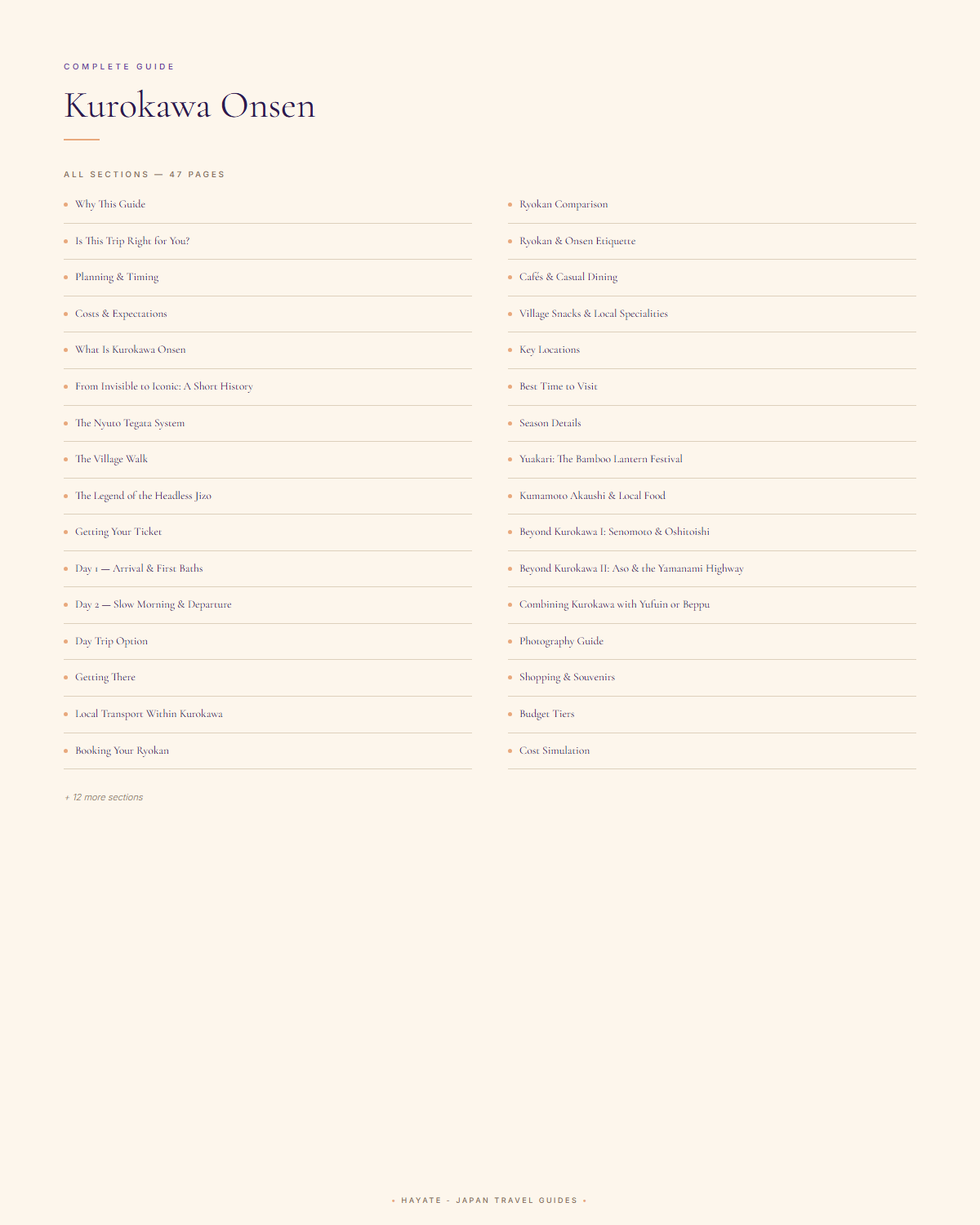
The complete Kurokawa Onsen guide
Which three baths to spend the pass on, the ryokan compared side by side, and the bus timings that decide your whole day.
Get the guide — US$17 Instant download · 30-day money-back guarantee