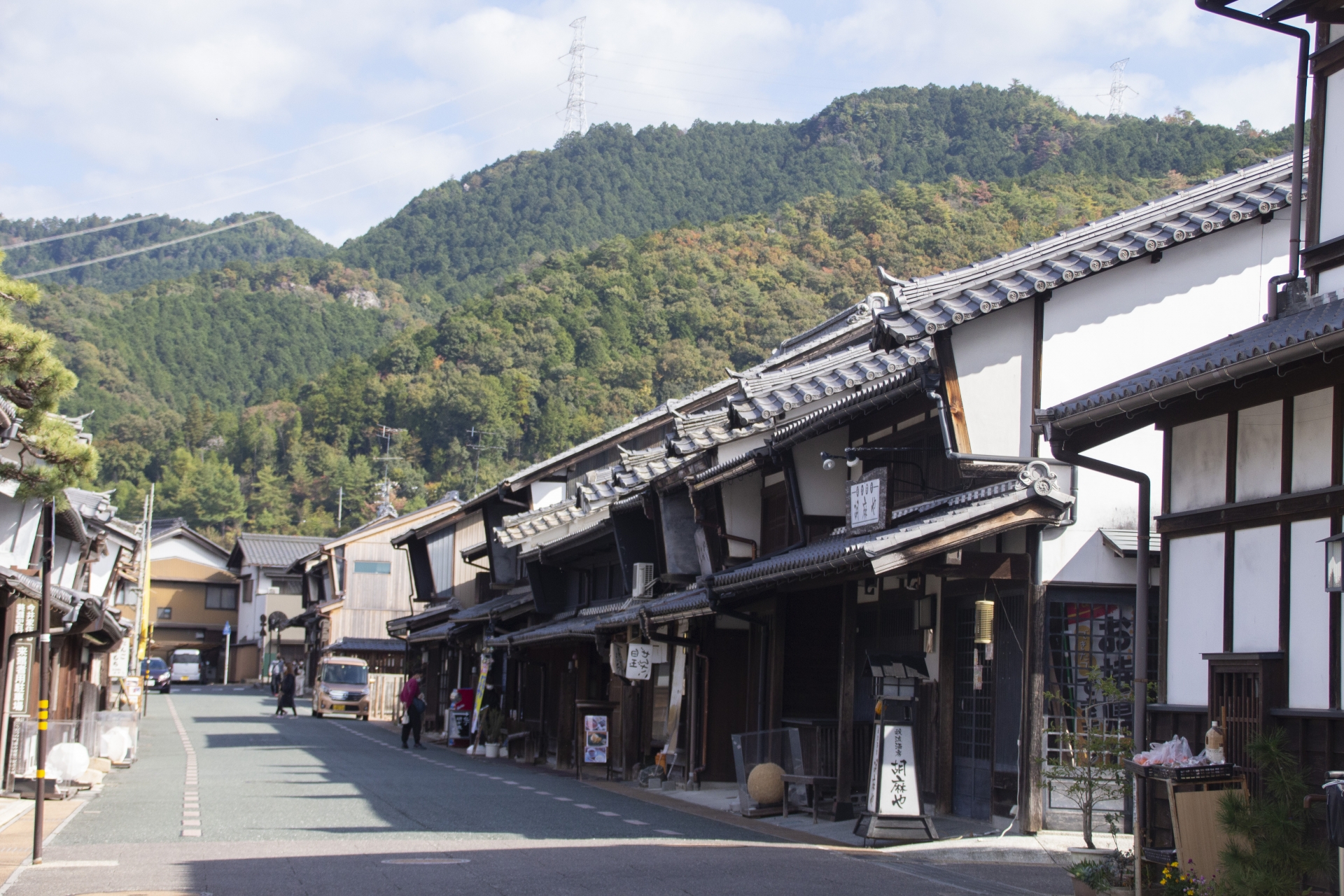
In 1911 this Gifu town took the name of the paper it had been making for 1,300 years. The craft is UNESCO-listed — and for about ¥500 you can sit down and make a sheet of it yourself.
- Get there1 hr from Gifu
- SeeUdatsu street · washi
- StayGifu City or Takayama
- Time1 day
Getting there
Mino sits between Nagoya and Takayama, which is exactly why most itineraries pass it without stopping. From Nagoya the rail route is the JR Tokaido Line to Gifu (about 20 minutes), the JR Takayama Main Line to Mino-Ota (about 30), then the Nagaragawa Railway to Mino-shi Station (about 10).
That last leg is a single-carriage rural line rather than a frequent service, so check the timetable before you set out rather than after. The simpler alternative is the Gifu Bus Mino Line, which runs from Gifu Station directly to the Udatsu-no-Machinami-dori stop with no changes at all.
Coming from Takayama, reverse the JR Hida route through Mino-Ota and change to the Nagaragawa Railway — an easy stop if you are travelling that way anyway. From Mino-shi Station the old town is a flat ten-minute walk.
- From Nagoya
- JR to Gifu (~20 min) → Mino-Ota (~30 min) → Nagaragawa Railway (~10 min)
- From Gifu (bus)
- Gifu Bus Mino Line direct to Udatsu-no-Machinami-dori — one seat, no transfers
- From Takayama
- JR Hida to Mino-Ota, then the Nagaragawa Railway
- On arrival
- Mino-shi Station to the old town — a flat 10-minute walk
- Watch out
- The Nagaragawa Railway is a single-carriage line — confirm times first
What to actually see
The old town is a preserved street of Edo and Meiji merchant houses, protected nationally since 1999 and topped with udatsu — the raised fire walls that merchants built ever more elaborately to outdo each other. Those who could not afford one gave Japanese the phrase udatsu ga agaranai, still used today for someone who never quite gets ahead. Walk the street knowing that and the rooflines read differently.
The former Imai family house holds the oldest udatsu in town, along with the storerooms that once held paper bound for Nagoya. Admission is ¥300 and 20–30 minutes covers it — the one interior here you can properly walk through. Around it, an hour or two of shopfronts: washi notebooks and lampshades, local sake, small galleries.
Ten minutes out by taxi is Mino Washi no Sato Kaikan, the paper museum and workshop hall (¥500). The museum is worth seeing, but the reason to come is the workshop: three courses, ¥500 each, 30–45 minutes, no experience and no Japanese required. You make a sheet and take it home.
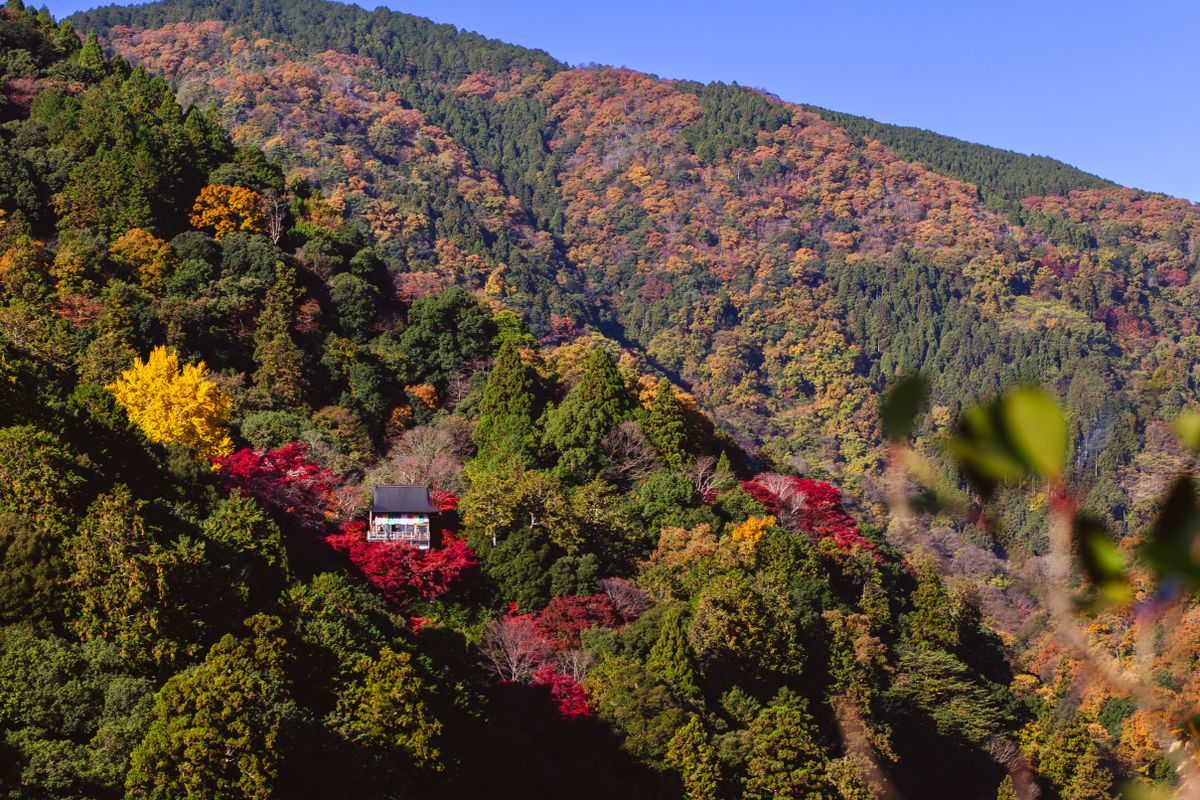
From mid-October to late November the Mino Washi Akari Art Exhibition fills the same streets with hundreds of illuminated paper sculptures after dark. Outside that window the street is still beautiful — it is simply not lit.
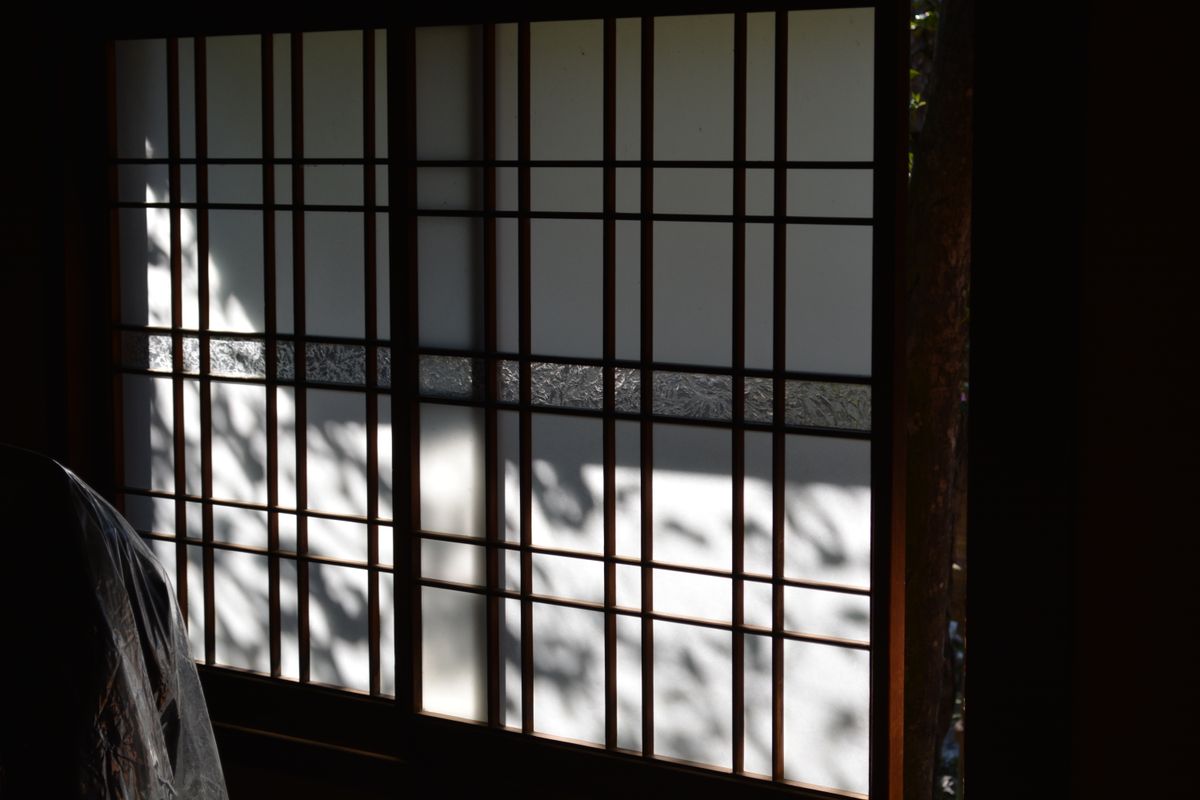
Every udatsu was once a very public statement of success — which is why the language kept the phrase.
Udatsu townscape
Where to stay
Mino is a day, not a base. The old town takes an hour or two, the museum and workshop an afternoon, and the sensible plan is to pair it with Gifu City, 30–40 minutes away, or to slot it into a Nagoya–Takayama route where it costs you almost no detour.
There is one good reason to stay into the evening: during the autumn Akari exhibition the town after dark is a completely different place. Time dinner around ayu, the Nagara River sweetfish, at a riverside restaurant — a full ayu course runs about ¥4,300 — and the day earns the extra hours.
What nobody tells you first
The workshop hall closes on Tuesdays. If making paper is the point of your visit — and it should be — do not build your one day in Mino around a Tuesday. Everything else here is walk-up: tickets, courses and meals need no booking.
English signage thins out quickly beyond the museum and the heritage house, and the workshop staff speak limited English. It matters less than it sounds; the papermaking is demonstrated rather than explained, and following the person next to you works perfectly well. Bring cash for the small entry fees.
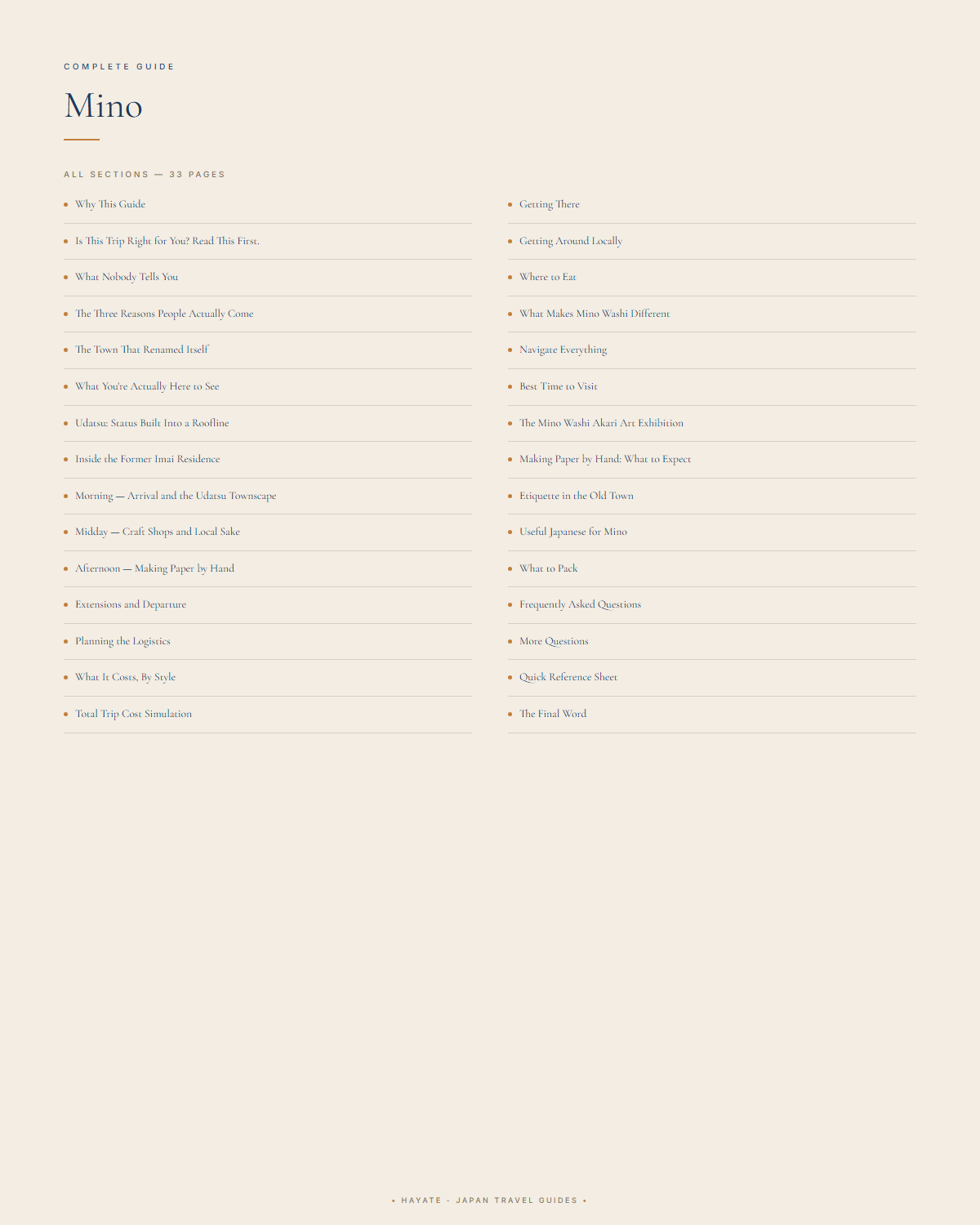
What the full guide adds
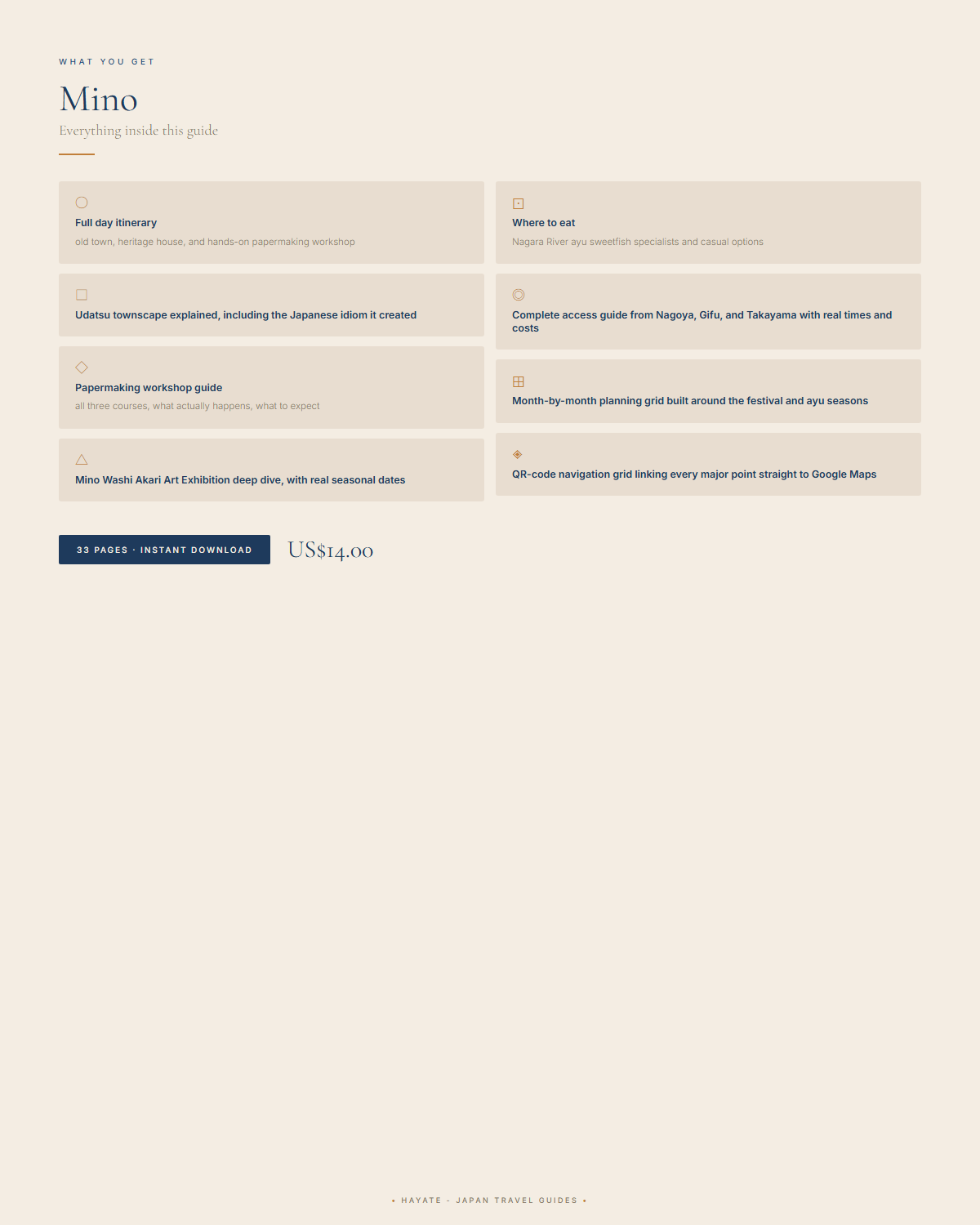
- Full day itinerary — old town, heritage house, and hands-on papermaking workshop
- Udatsu townscape explained, including the Japanese idiom it created
- Papermaking workshop guide — all three courses, what actually happens, what to expect
- Mino Washi Akari Art Exhibition deep dive, with real seasonal dates
- Where to eat — Nagara River ayu sweetfish specialists and casual options
- Complete access guide from Nagoya, Gifu, and Takayama with real times and costs
- Month-by-month planning grid built around the festival and ayu seasons
- QR-code navigation grid linking every major point straight to Google Maps
Sample pages

The complete Mino guide
Full day itinerary, the three papermaking courses compared, the Akari exhibition dates, and where to eat ayu on the Nagara River.
Get the guide — US$14 Instant download · 30-day money-back guarantee