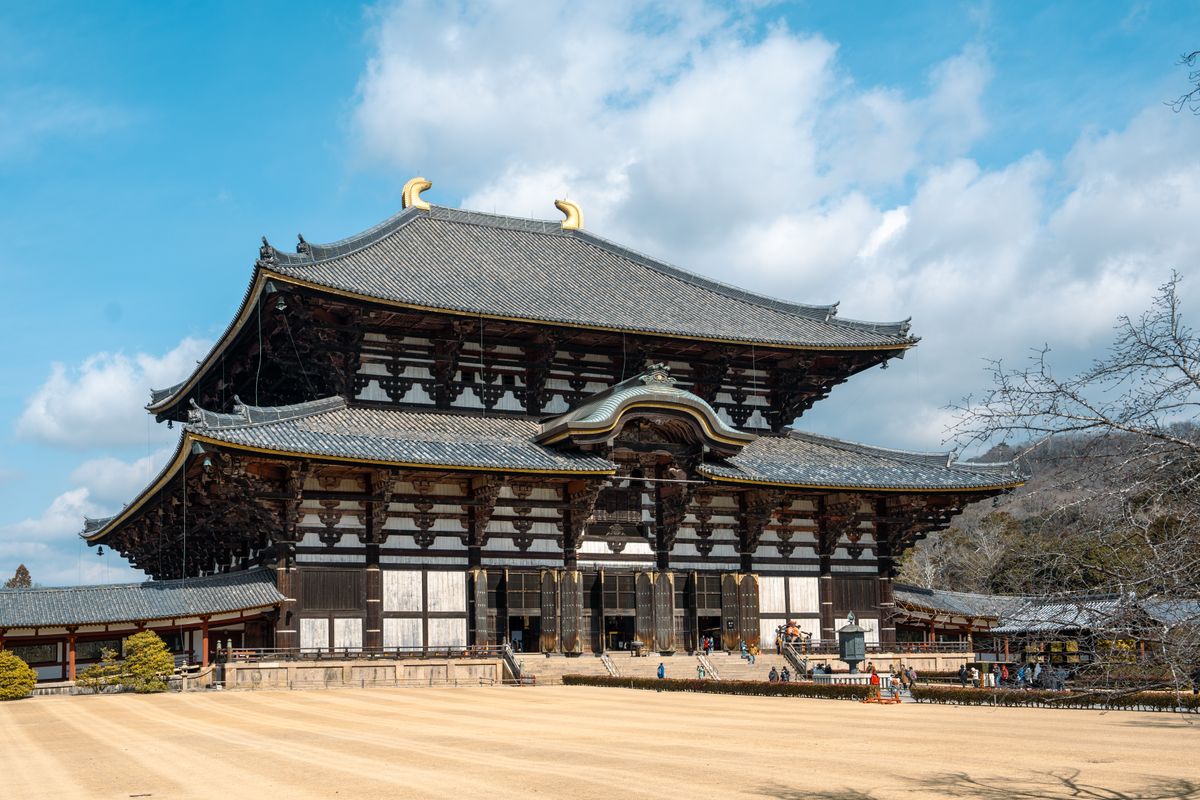
The deer are not in an enclosure, the Great Buddha is not a replica, and the stone lanterns have been standing for a thousand years — all of it within a half-hour walk of the station.
- Get there35 min from Kyoto
- SeeTodai-ji · Kasuga Taisha
- StayCentral Nara
- Time1 day, 2 with Horyuji
Getting there
Nara has two stations, and which one you arrive at changes your first twenty minutes. Kintetsu Nara Station sits on the edge of the old town — Kofuku-ji is visible from the forecourt and Todai-ji is a fifteen-minute walk. JR Nara Station is about five minutes further out, but it's the one the Japan Rail Pass covers.
From Kyoto, the Kintetsu express takes 35–45 minutes; the JR Nara Line rapid takes 45–55 and costs less if you hold a pass. From central Osaka, Kintetsu runs direct from Namba in 40–50 minutes. Nothing about this trip requires an early start on paper — but the Great Buddha Hall is calm at 8 AM and packed by 9:30, so treat the first train as part of the plan.
- From Kyoto
- Kintetsu express to Kintetsu Nara — 35–45 min, ¥760–1,160
- From Kyoto (JR)
- JR Nara Line rapid — 45–55 min, ¥720, JR Pass valid
- From Osaka
- Kintetsu from Namba — 40–50 min, ¥660–1,060 · or JR from Tennoji — 45 min, ¥470
- On arrival
- Everything in the park is walkable; no local transport needed
- Loop bus
- ¥260 per ride — worth it only for the JR Nara → Todai-ji leg
What to actually see
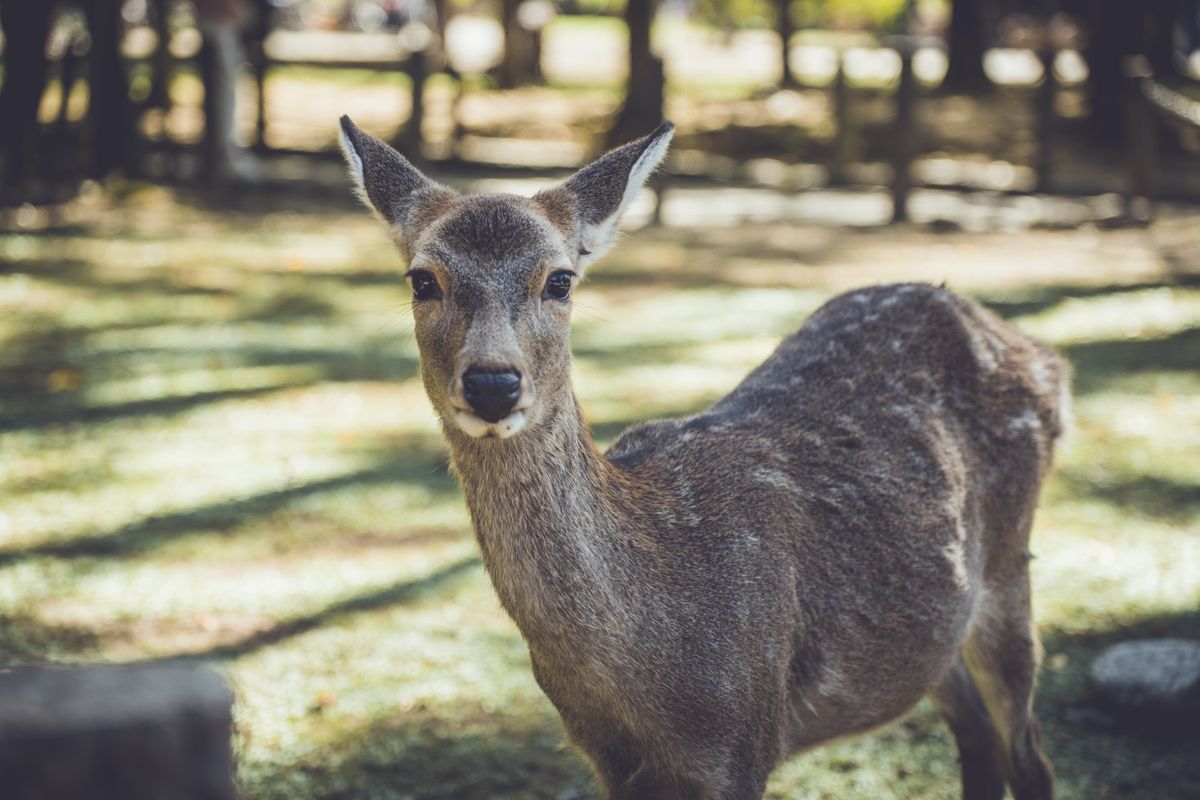
Walk east from the station and the park starts before you notice it — lawns, low trees, and deer standing around as if they own the place. They do, more or less: they're wild animals with the run of the city, and vendors in flat straw hats sell the only food you should give them (shika senbei, ¥200 a bundle). Many have learned to bow for one.
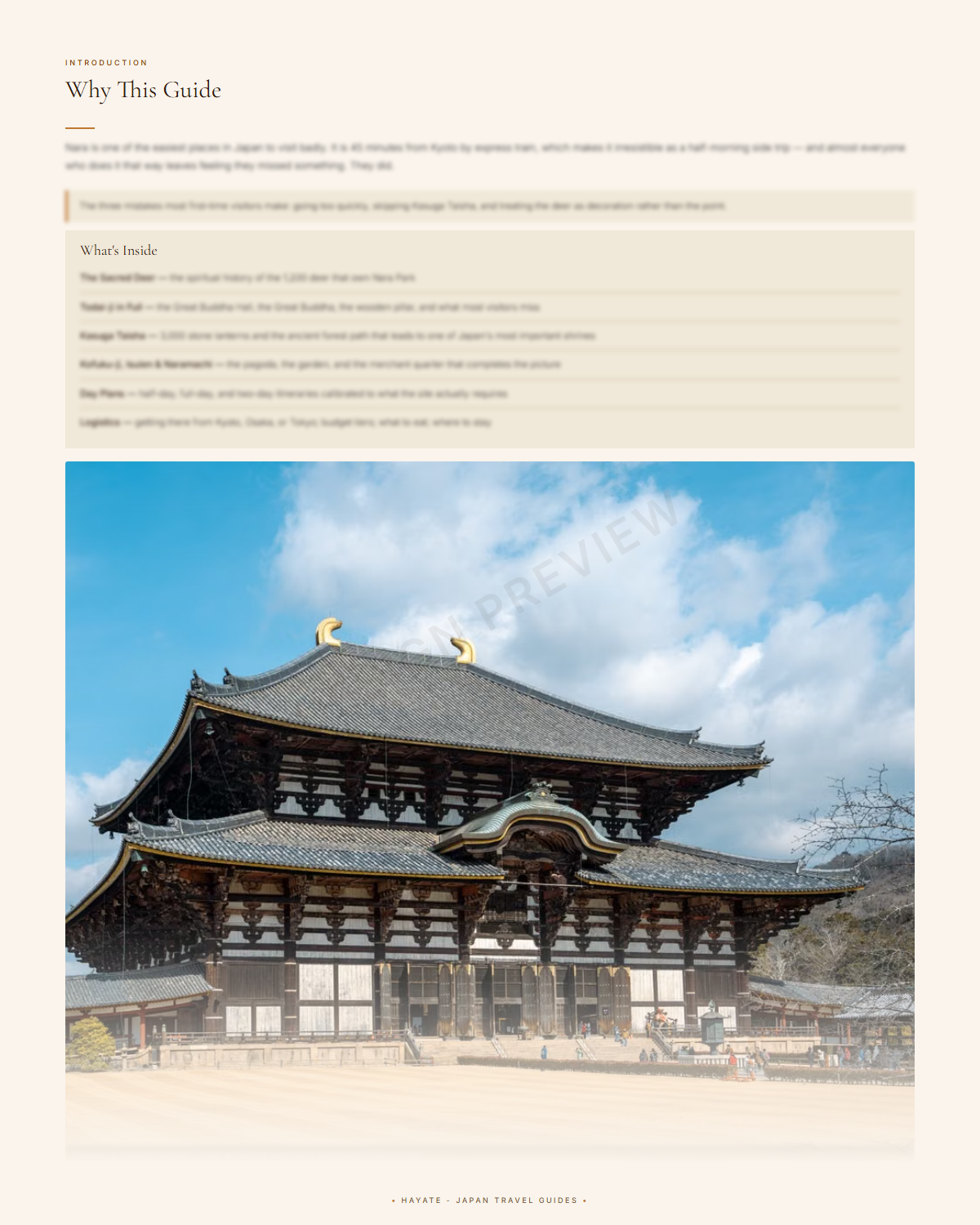
Past the deer stands Todai-ji and its Great Buddha Hall, one of the largest wooden buildings on earth, holding a 15-metre bronze Buddha cast in 752. Admission is ¥800, paid at the inner gate rather than the hall itself. Inside, one of the pillars has a hole cut at its base the size of the Buddha's nostril — children crawl through it, and so do a fair number of adults.
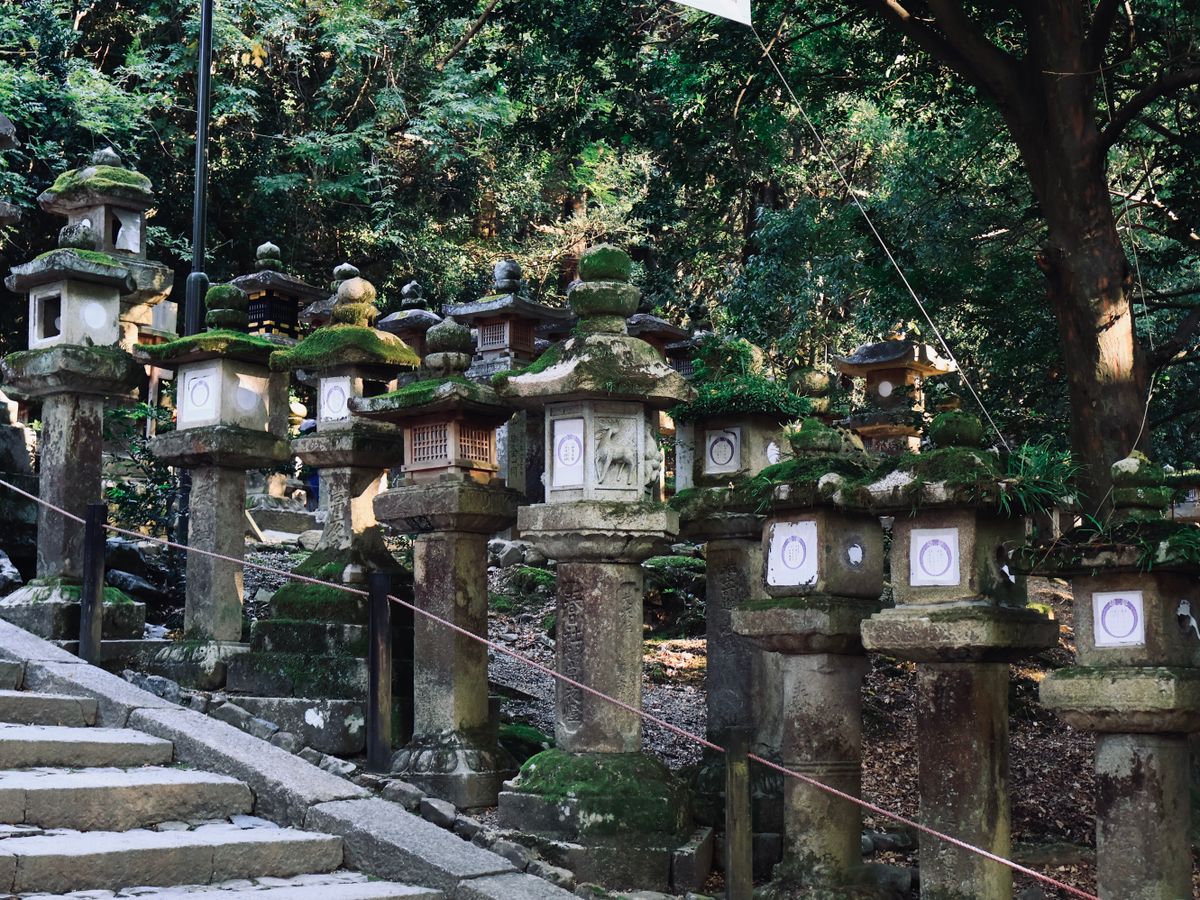
From there the approach to Kasuga Taisha climbs through a primeval forest lined with three thousand stone lanterns. The path and outer shrine are free; the inner precinct, where the lanterns hang in rows under the eaves, is ¥500. If you still have time, Kofuku-ji (¥700) holds the Ashura statue, and Isuien Garden (¥1,200) borrows the Todai-ji roofline as its backdrop.
The deer that bows for its cracker and then, having received it, turns away completely.
Nara Park
Where to stay
Most people do Nara from Kyoto or Osaka, and that works. The argument for staying is the hour before nine: the park at dawn, deer moving in slow herds across empty lawns and low light coming through the trees. You cannot see that on a day trip.
Central Nara has business hotels around both stations from roughly ¥12,000 a room, and the century-old Nara Hotel at the other end of the scale. The stock is thin compared with Kyoto — for any Saturday or holiday, book well ahead.
What nobody tells you first
Nara closes early. The temples shut around 5 PM, restaurants in Naramachi run to about 9, and after that most visitors are on a train back. Plan dinner deliberately or plan to leave.
And the deer are genuinely wild. Keep food sealed and out of sight, never hand-feed anything but the official crackers, and give the stags room during the September–November rutting season, when they are large, antlered, and unbothered by tourists.
What the full guide adds
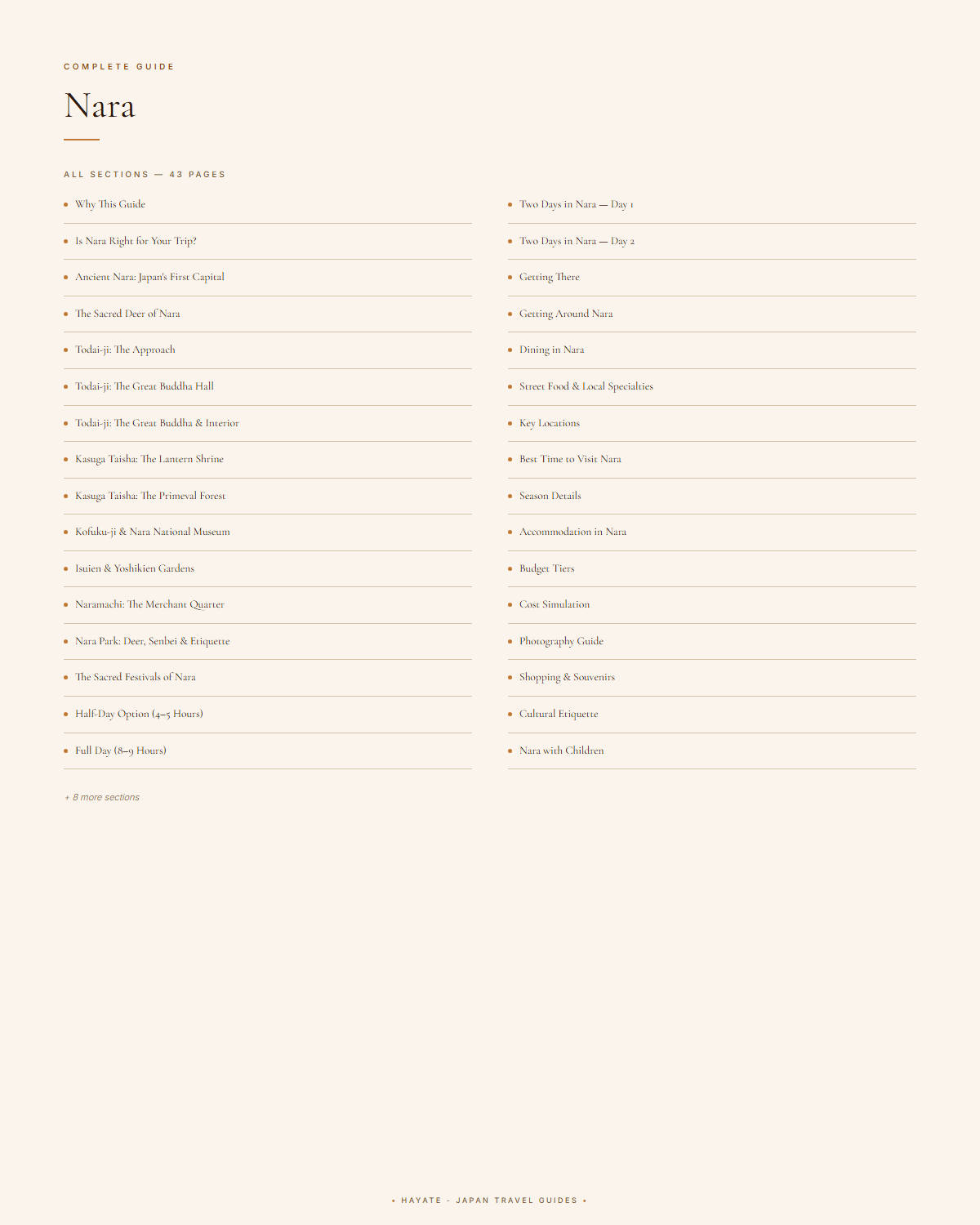
- Todai-ji in full: the Great Buddha Hall, the Daibutsu, and the wooden pillar with the hole in it
- Kasuga Taisha: the stone lantern approach, the inner shrine, the primeval forest, and the Mantoro lantern festivals
- Kofuku-ji, Isuien Garden, and Naramachi — the three stops most day visitors miss
- Complete half-day, full-day, and two-day itineraries with hour-by-hour schedules
- Horyuji — the oldest wooden building in the world, 25 minutes from Nara by train
- Month-by-month seasonal guide, photography tips, and deer etiquette
- Japanese phrases, packing checklist, budget tiers, and cost simulations
Sample pages

The complete Nara guide
Hour-by-hour itineraries, Todai-ji and Kasuga Taisha in full, Horyuji, and the deer etiquette nobody explains.
Get the guide — US$18 Instant download · 30-day money-back guarantee