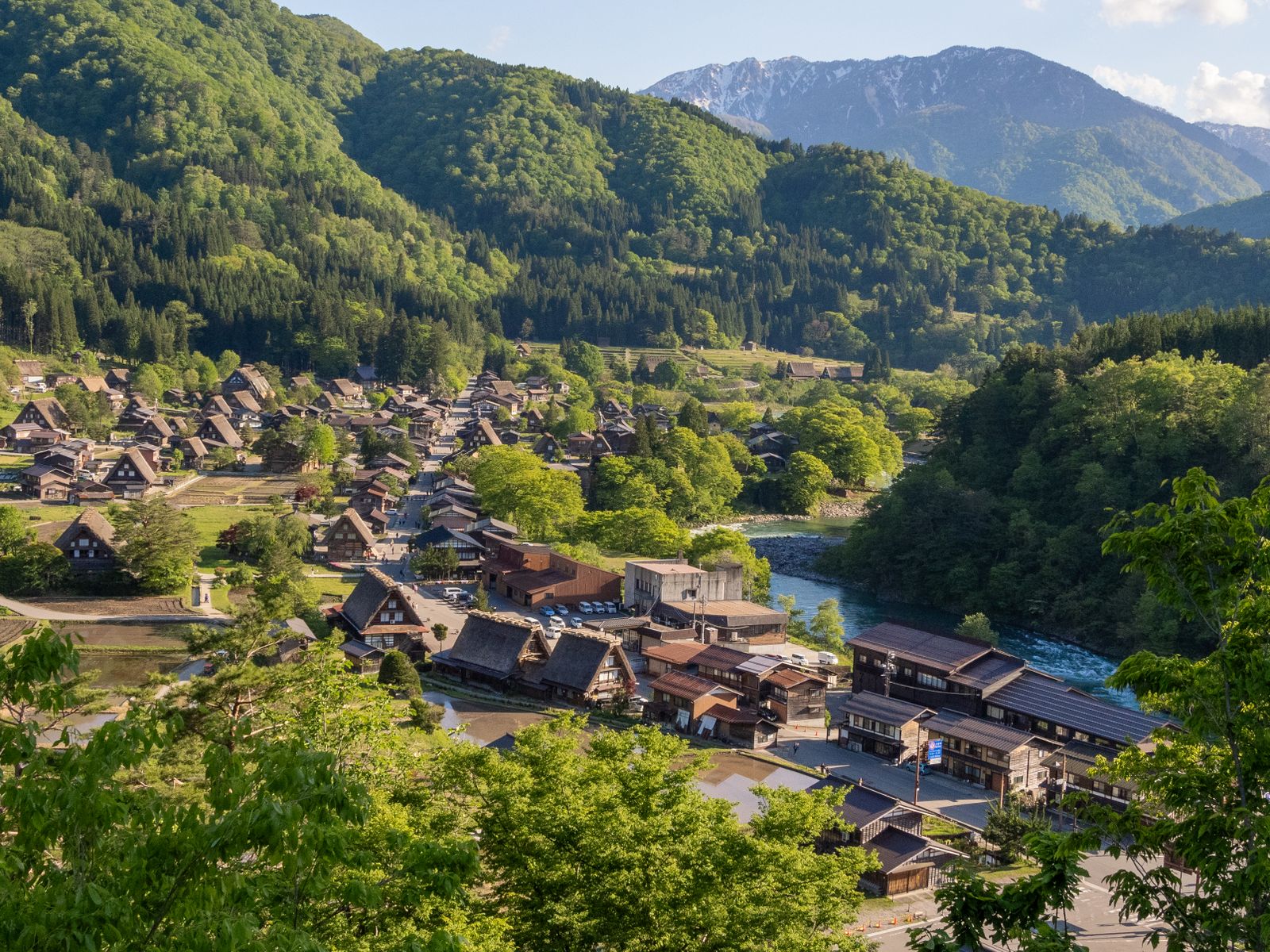
A three-hundred-year-old village still lived in and still farmed — free to walk, ringed by mountains, and a completely different place in the hour before the day coaches arrive.
- Get thereBus only
- SeeOgimachi · Shiroyama
- StayGassho minshuku
- TimeHalf day, or a night
Getting there
No train reaches Shirakawa-go, and that single fact shapes the whole day. The approach is a highway bus: from Kanazawa (east exit, stop 11) for ¥1,900, or from the Meitetsu Bus Center beside Nagoya Station in about 2 hours 40 minutes for ¥2,400, with seven or eight departures a day.
Nagoya services should be reserved ahead — weekends sell out — while most Kanazawa departures can be bought at the counter. The Shirakawa-go & Gokayama Pass from Kanazawa covers both villages for ¥3,800.
The number that actually governs your day is the last bus: roughly 17:00 back to Kanazawa and 17:30 to Nagoya, seasonally. Miss it and you are staying the night, which is not the worst outcome but is an expensive surprise.
- From Kanazawa
- Highway bus from stop 11, east exit — ¥1,900 one way
- From Nagoya
- Meitetsu bus — 2h40, ¥2,400 one way, 7–8 departures daily
- From Tokyo
- Shinkansen to Nagoya, then the Meitetsu bus
- Tickets
- Shirakawa-go & Gokayama Pass (from Kanazawa) ¥3,800
- Last bus
- About 17:00 to Kanazawa, 17:30 to Nagoya — check the timetable
Fares verified against Meitetsu Bus's official route page, 17 Aug 2026. The earlier "round trip saves ¥200–400" claim and the exact Kanazawa-side timing were not independently re-confirmed this pass — treat as approximate and check the current Meitetsu Bus timetable before booking.
What to actually see
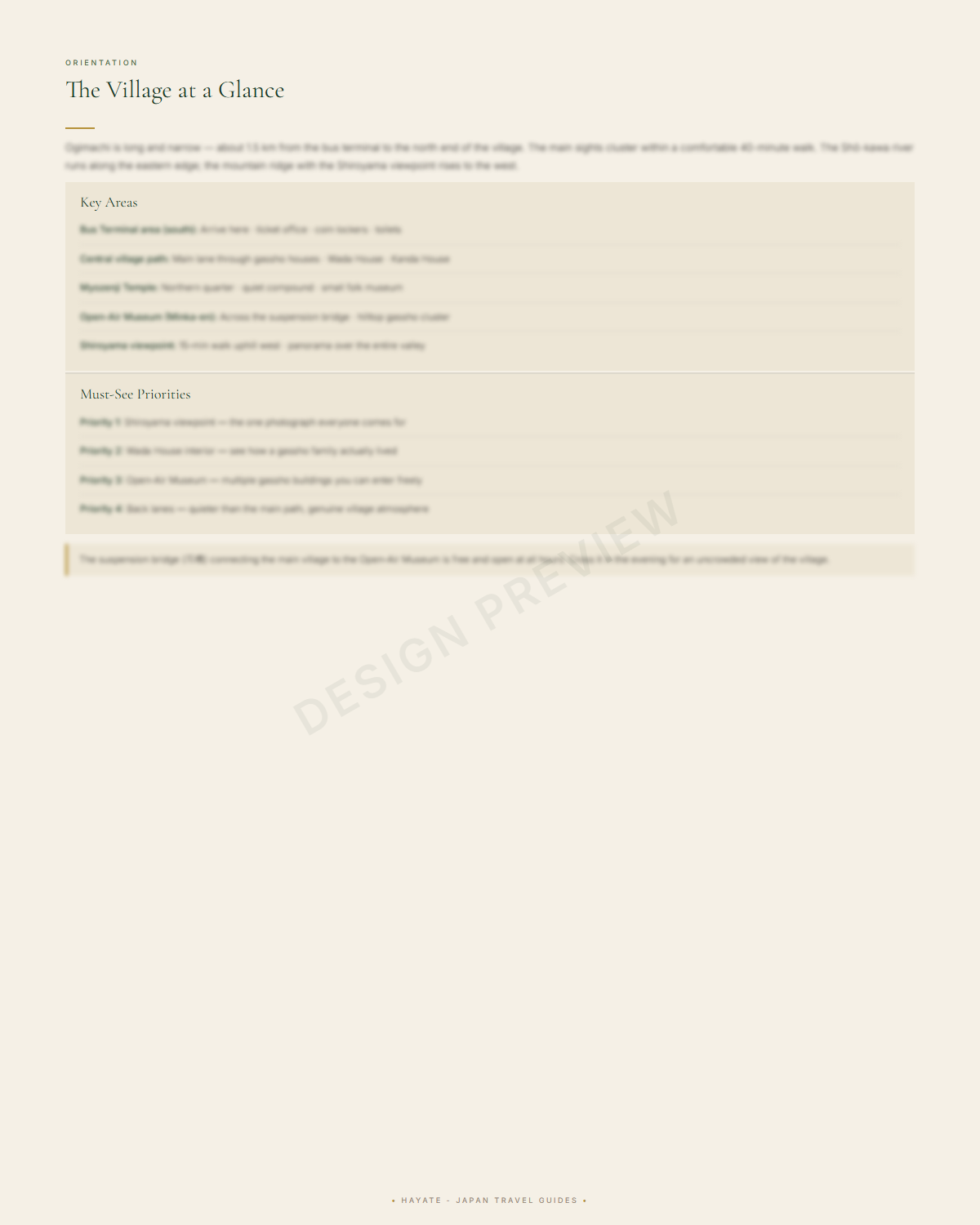
The village of Ogimachi is free to walk; only the individual houses charge, at ¥300–600. Start with Wada House (¥400), the largest of them, and go inside rather than photographing the outside — the point is standing under the roof frame and seeing how a gassho farmhouse is actually built, without a single nail.
The Shiroyama viewpoint is the photograph everyone comes for: fifteen minutes uphill on foot, or ¥200 on the shuttle that runs every twenty minutes in season. Go up, take it, and then come back down — the village at ground level is where the day actually is.
Across the free suspension bridge, the Open-Air Museum gathers farmhouses moved from villages that were flooded by dam projects. Allow 45–60 minutes, and cross the bridge again in the evening when there is nobody on it.
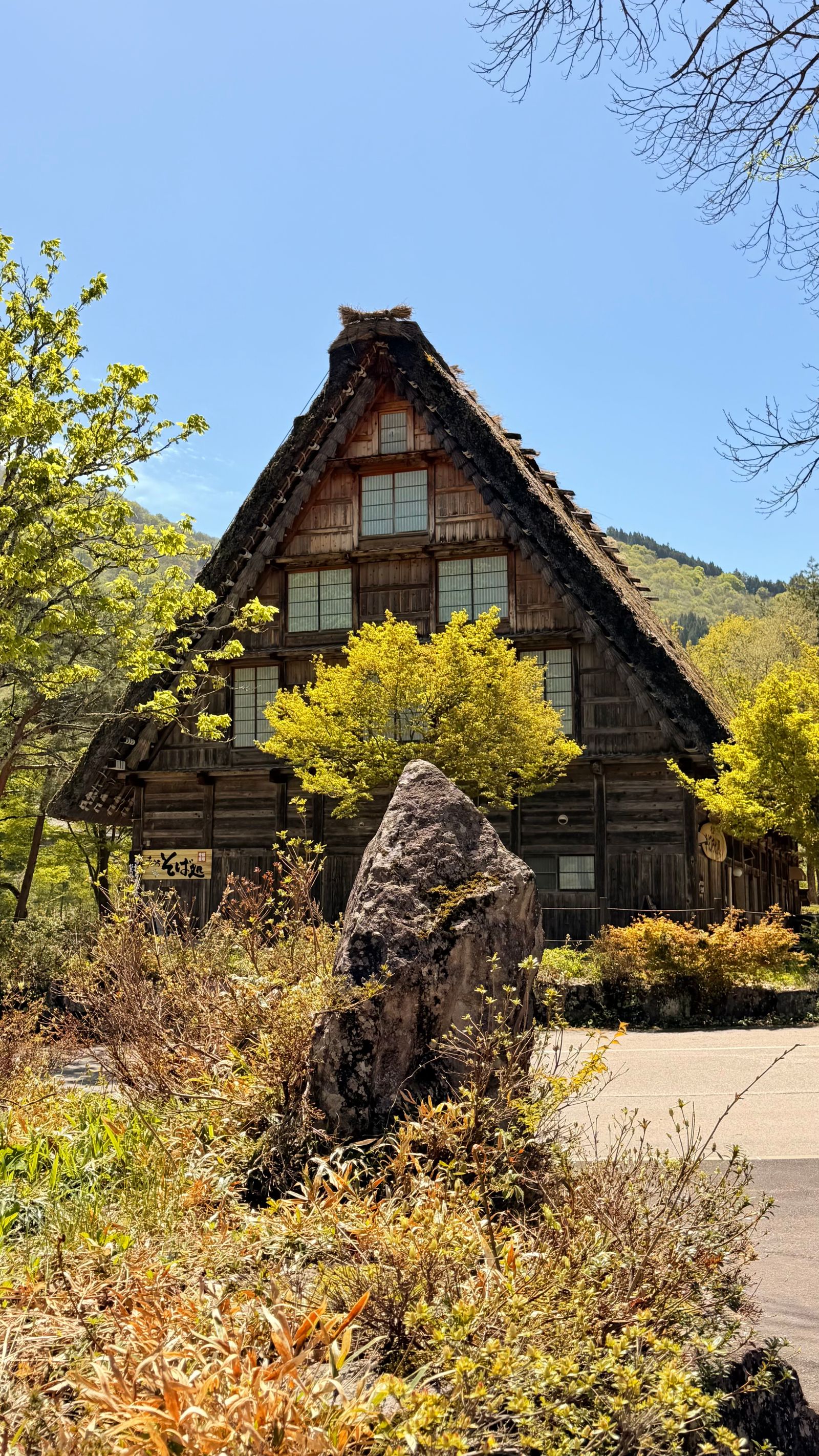
The photograph everyone comes for is taken from the viewpoint. The village itself is down in the lanes.
Ogimachi
Where to stay
The reason to stay is simple arithmetic: the last bus goes at five, and everything after that belongs to the few dozen people sleeping in the village. A gassho minshuku puts you inside one of the farmhouses, usually with dinner and breakfast around a shared table.
Rooms are few, so book as far ahead as you can — and immediately for the January and February light-up nights, whose dates are announced in autumn and whose accommodation and parking sell out within days. Most minshuku will hold your luggage before check-in.
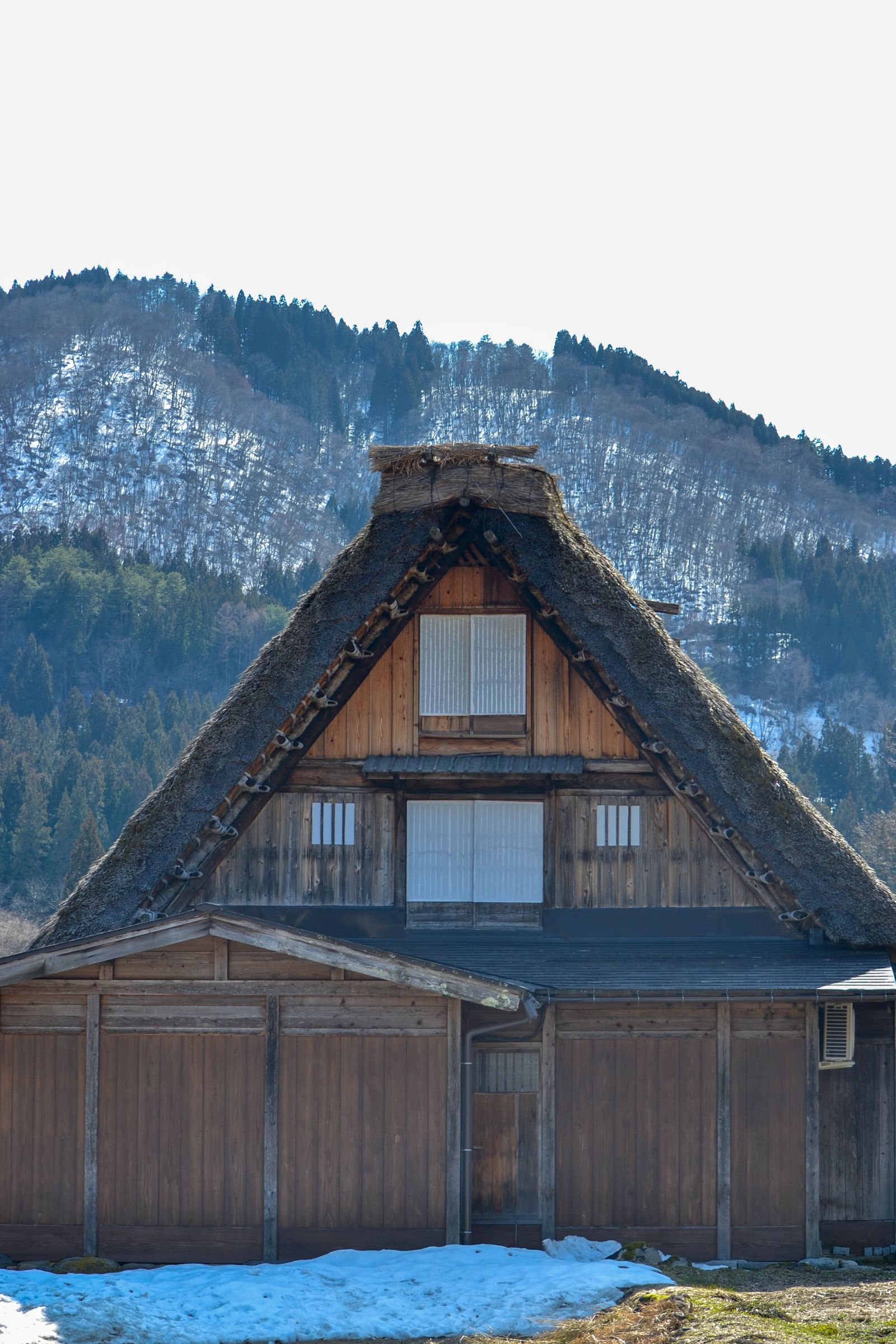
What nobody tells you first
Winter is the famous version of Shirakawa-go and the hardest one to arrange: deep snow, −5°C, and light-up weekends that fill buses months in advance. Autumn is the sweet spot for most travellers, and summer is quietest of all.
Remember that people live here. The lanes run between working houses and private gardens, and the village asks visitors to stay on the paths, keep noise down and not photograph into windows. It is the reason the place still looks the way it does.
What the full guide adds
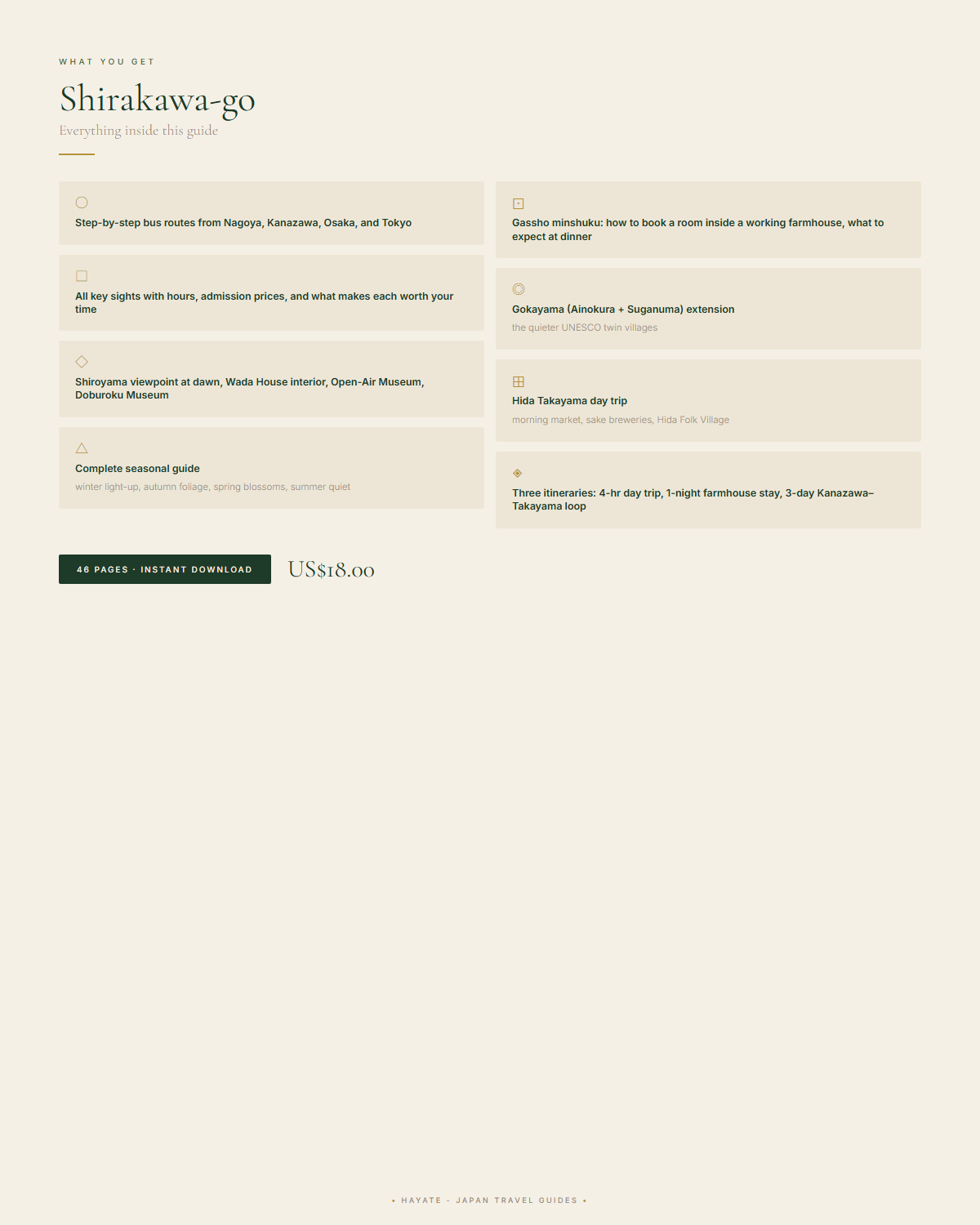
- Step-by-step bus routes from Nagoya, Kanazawa, Osaka, and Tokyo
- All key sights with hours, admission prices, and what makes each worth your time
- Shiroyama viewpoint at dawn, Wada House interior, Open-Air Museum, Doburoku Museum
- Complete seasonal guide — winter light-up, autumn foliage, spring blossoms, summer quiet
- Gassho minshuku: how to book a room inside a working farmhouse, what to expect at dinner
- Gokayama (Ainokura + Suganuma) extension — the quieter UNESCO twin villages
- Hida Takayama day trip — morning market, sake breweries, Hida Folk Village
- Three itineraries: 4-hr day trip, 1-night farmhouse stay, 3-day Kanazawa–Takayama loop
Sample pages
The complete Shirakawa-go guide
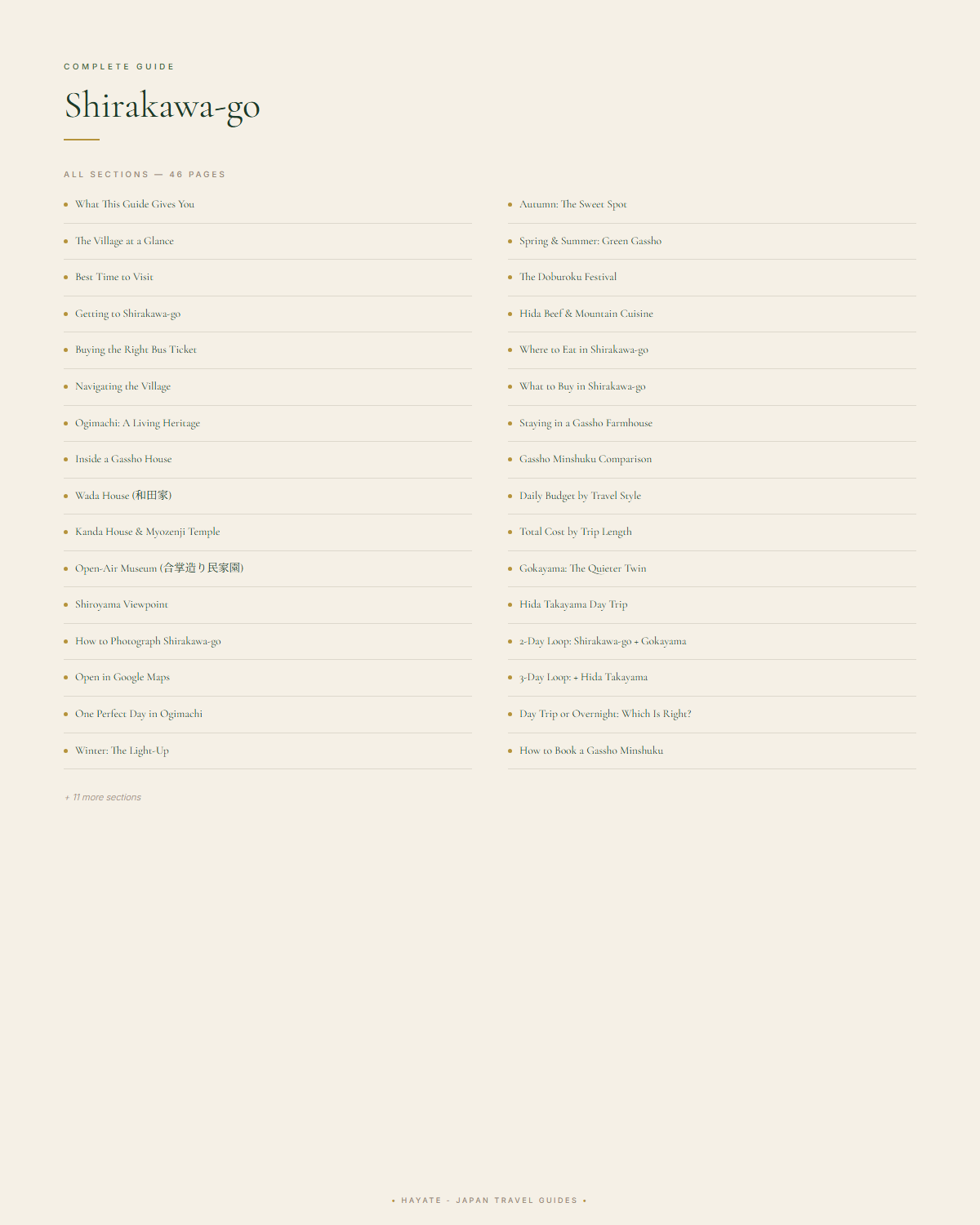
Bus routes and last departures, the village lane by lane, a season-by-season comparison, and how to book a night in a gassho farmhouse.
Get the guide — US$18 Instant download · 30-day money-back guarantee